Home › The Packet Ship
The Packet Ship
AFTER the close of the War of 1812, the renewal of commercial relations between the United States and England demanded increased shipping facilities. To supply this demand, beginning about the year 1816, numerous lines of packet ships came into being.
The packets, ranging from 300 to 500 tons register, were flush-decked, full-bodied vessels. The only permanent structure above deck was a caboose or galley. It was the fashion at first to paint the hulls of these ships black above the water line with bright varnished upper works, while the inside of the bulwarks, galley, etc., was coloured green. The size of the packet ship gradually increased until, at the time they were supplanted by the clippers, many were over 1,000 tons, while one registered as much as 1,439 tons. About the year 1830 the poop deck made its reappearance as a feature of the packets. This structure was given over almost entirely to passenger cabins and immediately became popular. Following this innovation, deck houses were also added, while a topgallant forecastle, small at first, gradually was increased in size until it reached back as far as the main hatch. The fashion in painting also changed. A broad white band, broken by black squares in imitation of the gun port of a warship, was a favourite style, while the inside work was painted in some light colour instead of green. The packet ships carried plenty of sail-studding sails on all the yardarms up to the topgallant, except on the mizzen. Skysails for summer use were set on removable polemasts above the royals. Even under favourable conditions these vessels could not sail much faster than twelve knots on the average, yet so hard were they driven that voyages from New York to Liverpool in sixteen days were not uncommon, while occasionally a trip was made inside of two weeks. The firms owning packet lines had their distinctive emblems, many painted on the sail-another renewal of an oldtime sea custom.
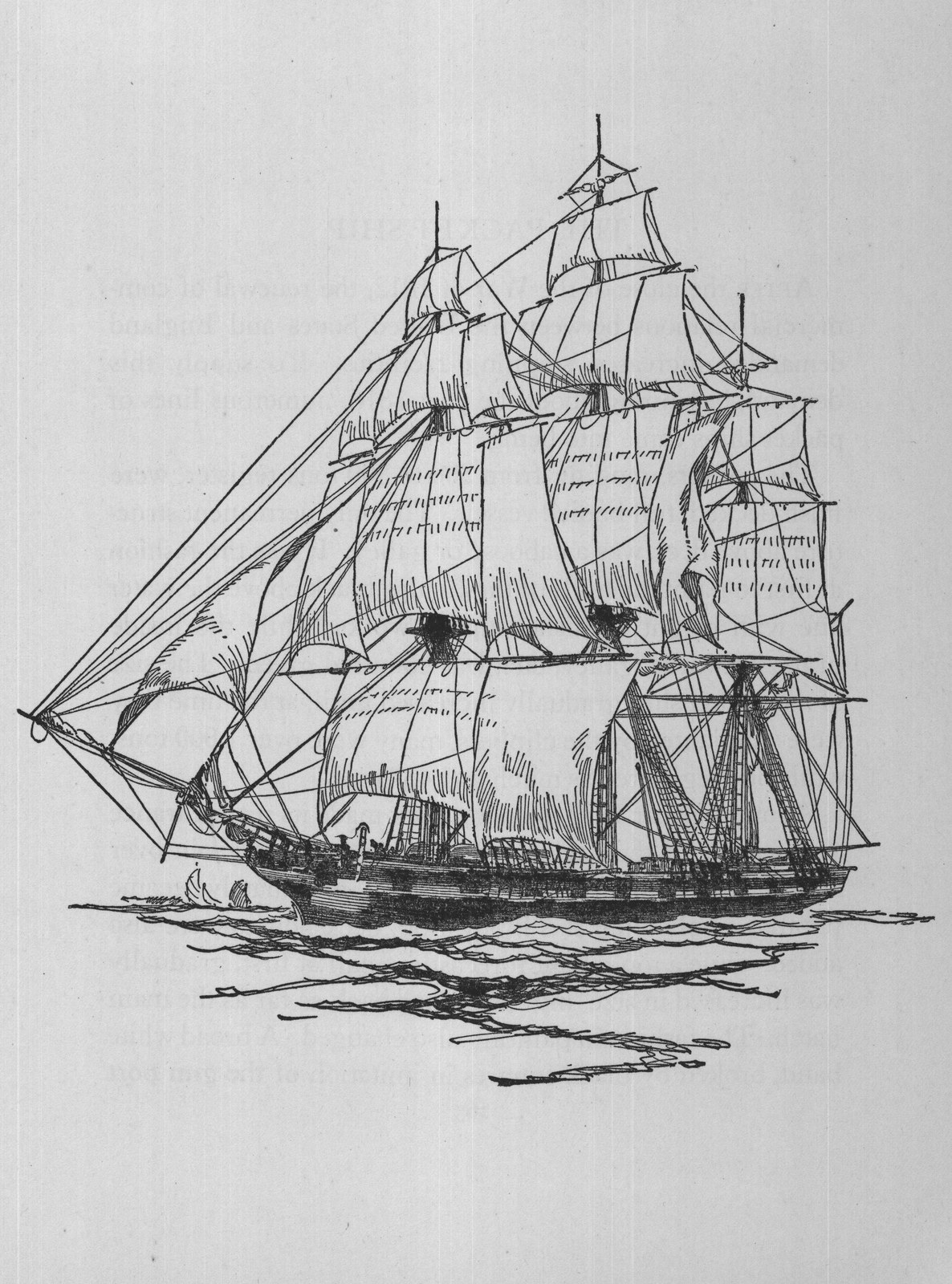
Interesting anecdotes are related about these packet ferries. A favourite yarn slyly circulated by the crew among the ignorant steerage passengers was to the effects that if the weather became bad, the captain would blow a whistle and the ship would be cut in half, the forward part proceeding without the aftermost portion. This appalling possibility kept many a credulous voyager awake night after night, and drove many to sleep unprotected on the forward deck rather than risk being left behind.
Irish emigration was at its height during the period of the packet ships, and many were the romances both ended and begun when Paddy of Terrence shouldered his bundle, stepped aboard the packet, and was "off for Philadelphia in the mornin'."