Home › The Felucca
The Felucca
The Mediterranean Sea has been one of the great mothers of ships. Her children have been quite as numerous as the proverbial old woman who lived in a shoe. But unlike that prolific but futile female, she has known exactly what to do with her children during all the ages.
From the earliest times to the present the landlocked, tideless sea has developed and multiplied her progeny, sending them to the uttermost ends of the earth, enriching them, chastening them, fostering them. There have been quarrels among them, as is ever the fashion in large families, many have died off, and of some lines many have changed so that even their sisters would not know them now.
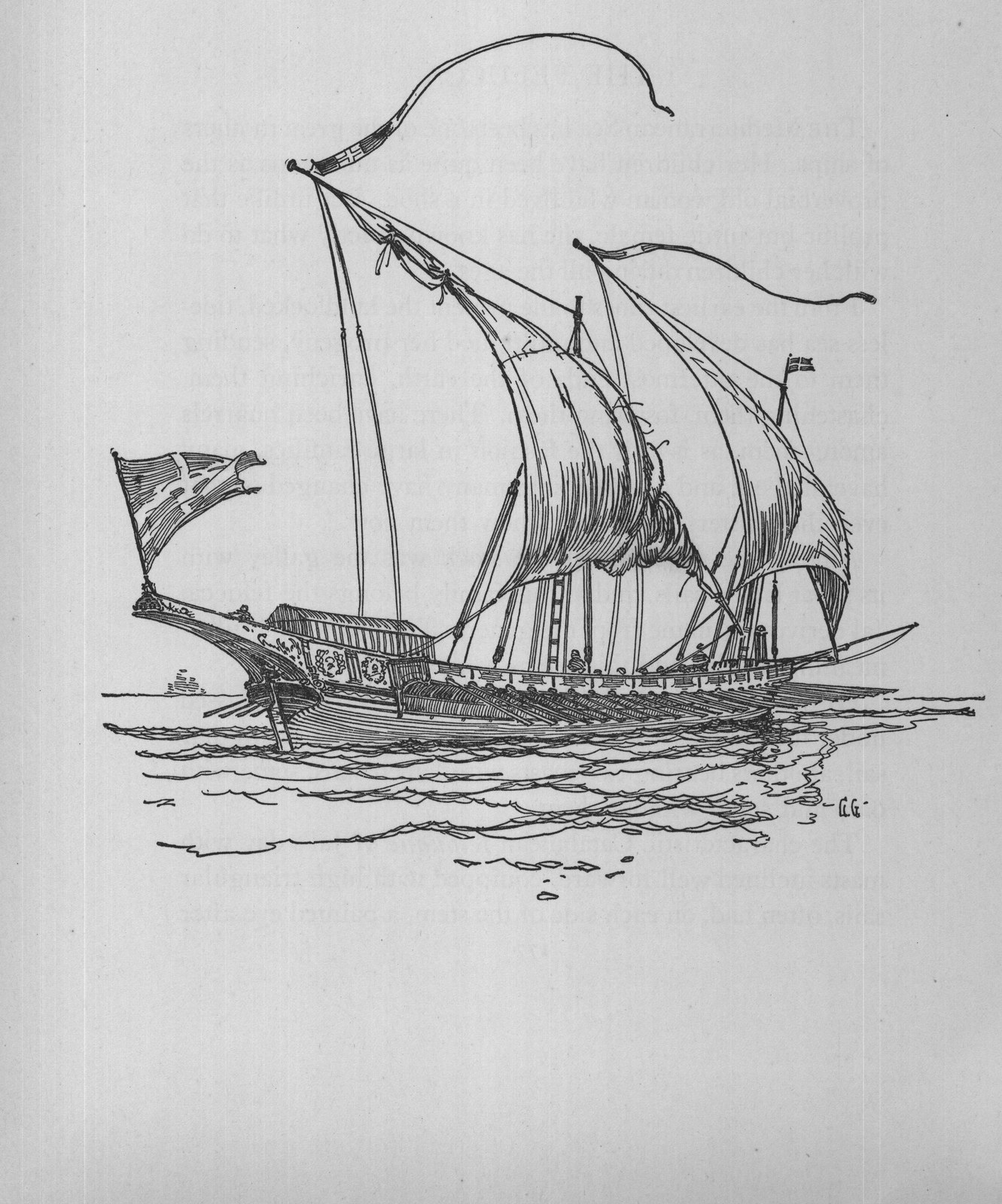
Among the strongest of the stock was the galley with its great lateen sails, and to this family belongs the felucca. Jal derives the name from the generic Turkish word "fulk," meaning a ship, and this seems a likely source. Of the vessel itself, many have been the varieties classed under the name, sometimes with one mast and a triangular sail, at others bearing two masts with lateen sails, some with oars and some without them. The characteristic Catalanean felouque of Jal's day with masts inclined well forward, equipped with high triangular sails, often had, on each side of the stem, a painted eye after the style of those which ornamented the prows of the ancient Egyptian and Greek ships. The lateen sail with its high pointing whippy yard is much better suited to the lighter and dryer winds of the south than to the heavier airs of the northern seas. At the slightest increase of velocity the yard bends, spilling the wind, to resume its lofty position when the gust passes, and ready again to catch the faintest zephyr. It is a poetic word, felucca, and worthy to have been celebrated in verses such as were written by the immortal bard of progress, Byron. With its sails set upon opposite sides when running free before the wind, like hare's ears, as the French say, it lends its unfailing picturesqueness to every glimpse of the sea, a snowy spot upon the aquamarine waters, recalling to such of us as are willing to listen the many romances of the Mediterranean, the cradle of our western civilization.