Home › The Bugalet
The Bugalet
Another small square-rigged craft formerly in use along the coasts of Brittany was the bugalet. The name was known in the 17th Century. The rig formerly consisted of two masts, the after one much larger than the other, bearing a large square sail surmounted by a topsail. The foremast, much smaller than the other, also carried a square sail much smaller in area than the after lower sail. There was no topsail on this mast. The boat was also equipped with a bowsprit set with one or two jibs.
In later times its rig was much similar to the English brigs. The date of its appearance seems to be unknown, as well as the derivation of the name. In the manuscript archives giving the "Condition of the French Marine" for the year 1690 and included among the "Bastiments Interiompus," i.e., those not included in the regular classification of vessels, two bugalets, or models devaisseau, are reported as being at Brest. Why they should have been referred to as models of ships of the line, as the word vaisseau was then commonly employed, is difficult to understand because this small boat has little in common with the capital ship of the period.
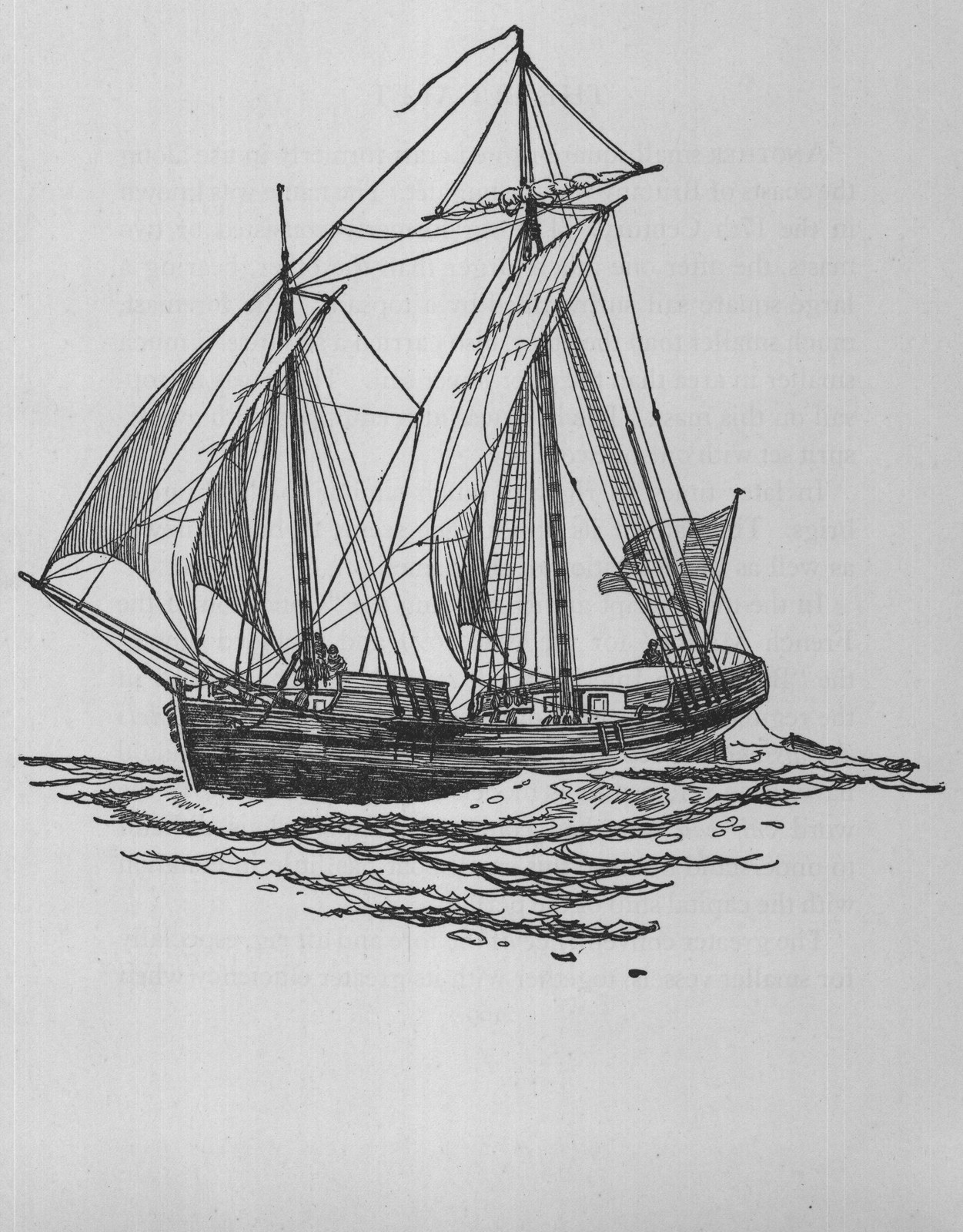
The greater convenience of the fore and aft rig, especially for smaller vessels, together with its greater efficiency when sailing close to the wind, probably accounts for the disappearance of many of the smaller square-rigged craft.
The profession of the sailor is one of the most conservative in the world, particularly among such an immobile race as the Bretons, and it would not be safe to assert that some examples of the bugalet do not still exist along the Brittany littoral. No record, however, of even a recent use of the word has rewarded the researches of the author.