Home › The Barquentine
The Barquentine
THE Dutch name for a vessel with a square-rigged foremast, with a mainmast devoid of square-rig features and carrying a fore and aft main sail, was a "barkentyne." Such a vessel might possibly now be called a brigantine, although the description given above is perhaps too vague to indicate clearly the exact form of the rig of such a vessel.
The barquentine of to-day is a vessel of three or more masts having a three-piece or ship's foremast (that is, one with a lower mast joined at the topmast with a "top" or platform, the topgallant mast being joined to the topmast with crosstrees), and with two or more fore-and-aft rigged masts following this form of foremast. A trysail is often employed upon the foremast, in which case a main-staysail would necessarily be omitted. Just how and when this rig made its appearance has not yet been fully determined. It does not seem to have been in general use as early as the latter part of the 18th Century. Falconer (1771) does not mention it, nor Steele nor Baugean. Cooke's "Sixty-five Plates of Shipping" (1829) does not give a representation. The barquentine to-day is probably to be found in greater numbers on the Pacific Ocean than elsewhere. The weather and wind conditions there seem to be particularly favourable to its survival. It is largely employed in the sugar trade between the western coast of the northern continent and the Hawaiian Islands. With long stretches of steady breezes and fair weather, the advantages of the schooner for close-hauled reaches are apparent, while with quartering gales the square-rigged foremast is a decided help.
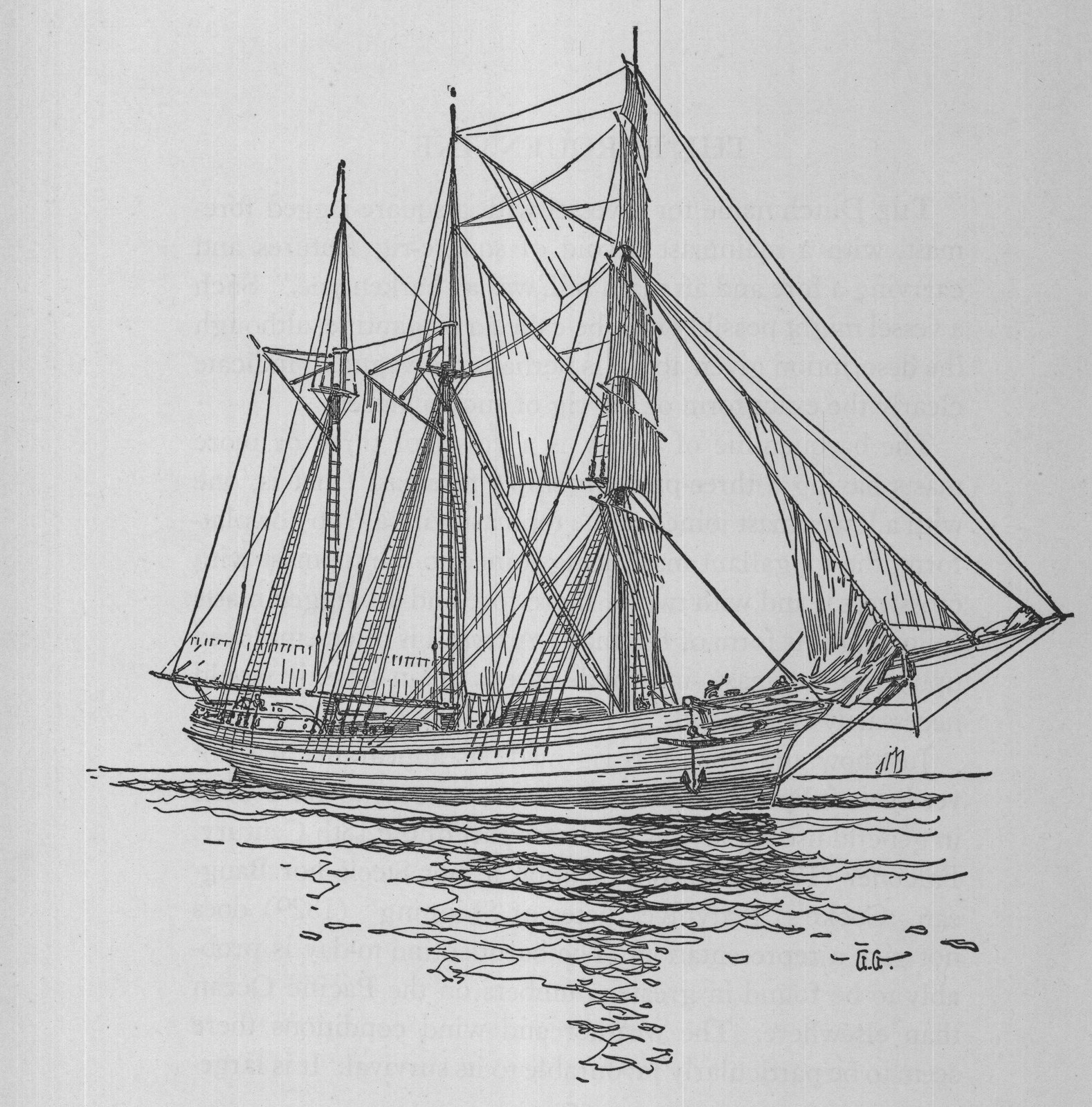
There are many variations of rig intermediate between the brig and the schooner, and between the ship, the bark, and the barquentine. For instance, a brig might be found with a fore and aft sail on the foremast this sail would be called a "benjamine." A schooner might be found to carry no fore and aft foresail and to have square sails on the foremast and a main-staysail. She would, nevertheless, be still a schooner provided the foremast was joined to the topmast by a crosstree or spreader.
These verbal distinctions may seem rather obscure to the landlubbers, but what is the use of profession if it hasn't cryptic terminology?