Home › The Monuments of Rameses The › The Monuments of Rameses The: Egyptian
The Monuments of Rameses The: Egyptian
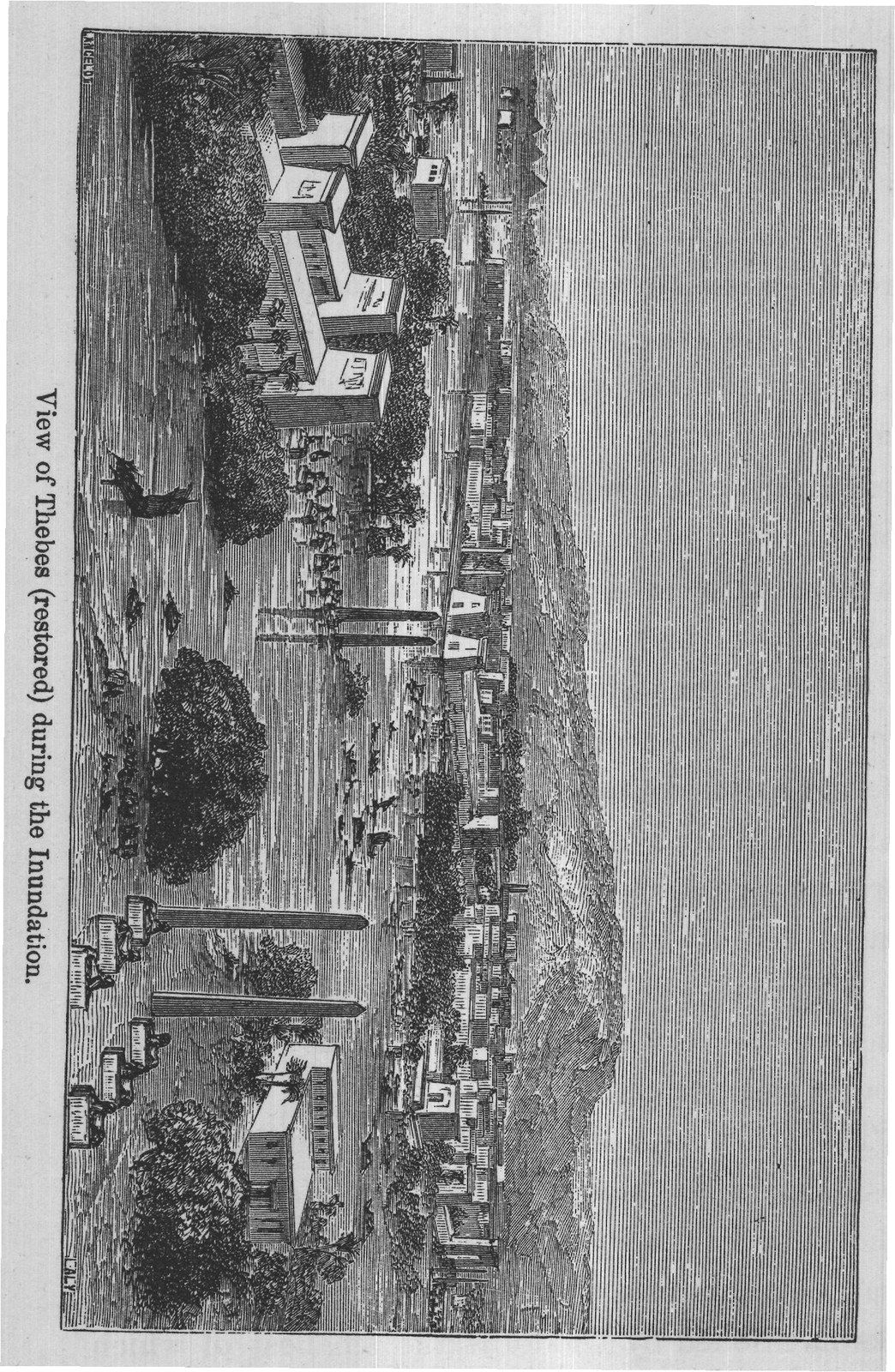
Four enormous massive groups, standing with broad spaces between them, sentinelled upon this field of ruins and holding, as though in a fasces, all these rudimentary or ornamental types of Egyptian architecture, seem to have been, at different epochs, the centres of the antique metropolis. According to the names of the wretched modern hamlets which seek shelter in their shadow, Gournah and Medinet Abou are the towns to the west of the river, going from the north, and Karnak and Luxor are those to the eastward. The first of these groups contains the commemorative monuments erected to Rameses I. by Seti and to the latter by his glorious son; the second, which exhibits traces that go back to Thothmes III., was rebuilt on a gigantic plan by Rameses-Hickpun (haq-an) and was the residence of the Pharaohs of the twentieth dynasty. The principal edifices of Luxor founded by Horus (Horemheb) were finished by Mei-Amoun to whom, for instance, are due the two grand pylons that look out upon the Nile, as also the two obelisks mentioned by Diodorus, the smallest of which LANCELOT AA etrartimel View of Thebes (restored) during the Inundation. now adorns the principal open square in Paris. In fine, the structures of Karnak, which contained among them the first temple of the Egyptian Empire, the revered sanctuary of Ammon-Ra, date from the time of the kings who expelled the Hycsos. They have retained the stamp of their most renowned successors, and, above all, the majestic mark of Seti and of Mei-Amoun.
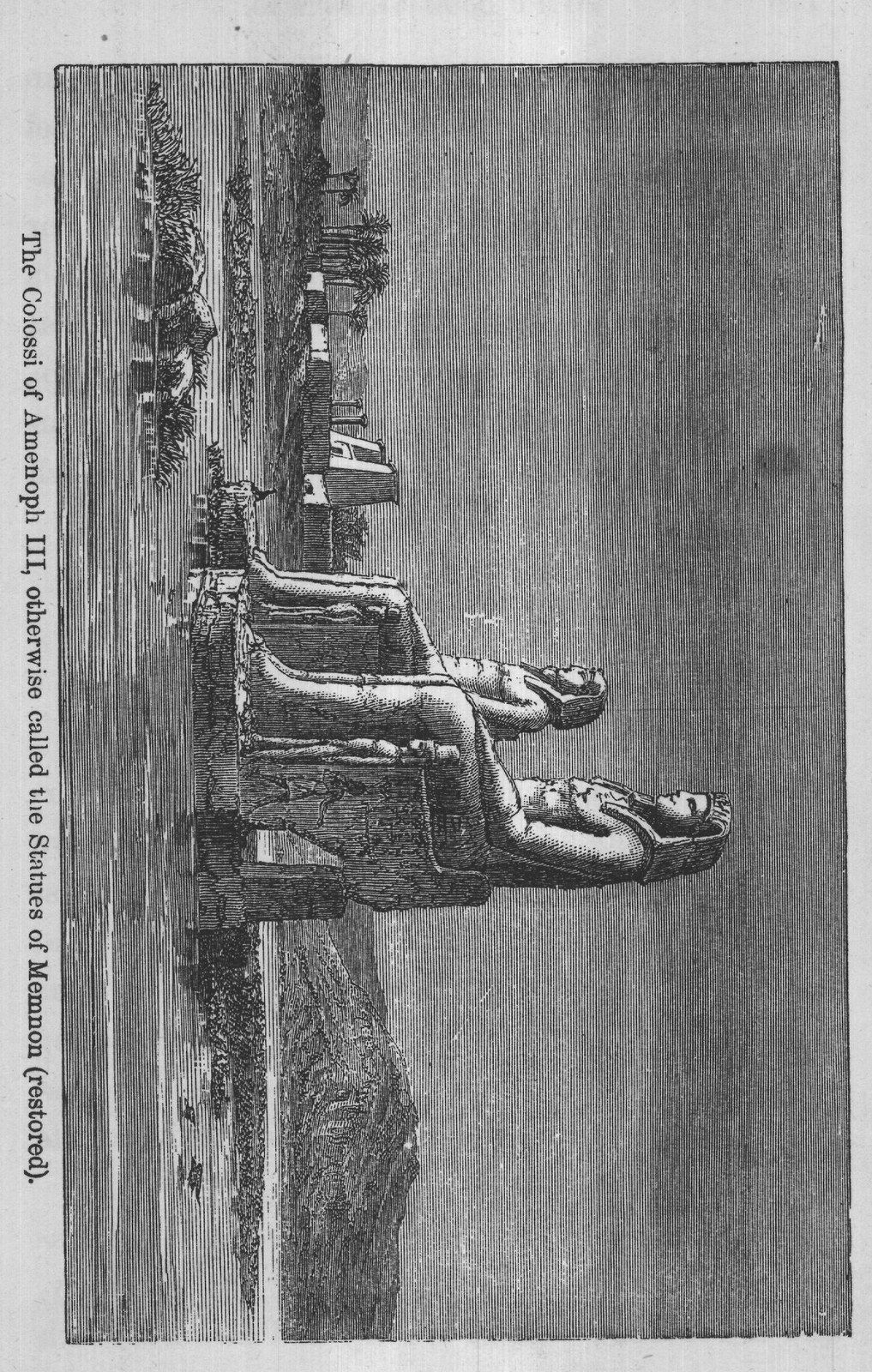
To these general elements of the plan of Thebes must be added the indescribable levellings of nameless temples and palaces; the canals filled up; the granite quays undermined by the Nile, or crumbling into the sand, and the three avenues of sphinxes terminating in the pylons of Karnak, and one of which is no less than half a league in length. Then, if the reader will picture to himself the soil of a long series of artificial terraces between Gournah and Medinet-Abou, -between the river and the mountain, which, in our days, are flooded by each overflow, where thousands of broken shafts of colonnades, splinters of capitals and fragments of monoliths, and, finally, the two colossi once so celebrated under the name of Memnon, mark the site of the temple palace of Amenoph III., and of that Rameseum which seems to have been the favorite abode of Mei-Amoun. If, moreover, on the western side, one adds to this sad picture, as a framework worthy of it, the precipitous walls of the Libyan chain, pierced like the sides of an immense vessel with galleries on galleries where sleep the generations who succeeded each other in No-Ammon for two thousand years, one will, even then, have but a very imperfect idea of the mighty remains of that city, as they are seen from the top of the slop where the sight of them drew long continued plaudits of surprise and admiration from the French Army of the East.
VI. "THEBES," says one who was present in that array, in the monumental folio in which they have recorded their impressions, "Thebes, the foremost city of the world in the time of Homer, is still, at the present day, the most surprising. One feels as though he were in a dream while contemplating the immensity of its ruins, the vastness and majesty of its edifices, and the numberless remains of its ancient magnificence."* In order to move, to this degree, men whom unparalleled struggles, the loved study of antiquity, and the recent conquest of Italy had saturated with * Rosière's Description of Egypt. - Ancient Thebes.
The Colossi of Amenoph III, otherwise called the Statues of Memnon (restored). the perception of the grand and beautiful, what must not Thebes have been when life animated that vast body and harmonized all its parts in one imposing whole?
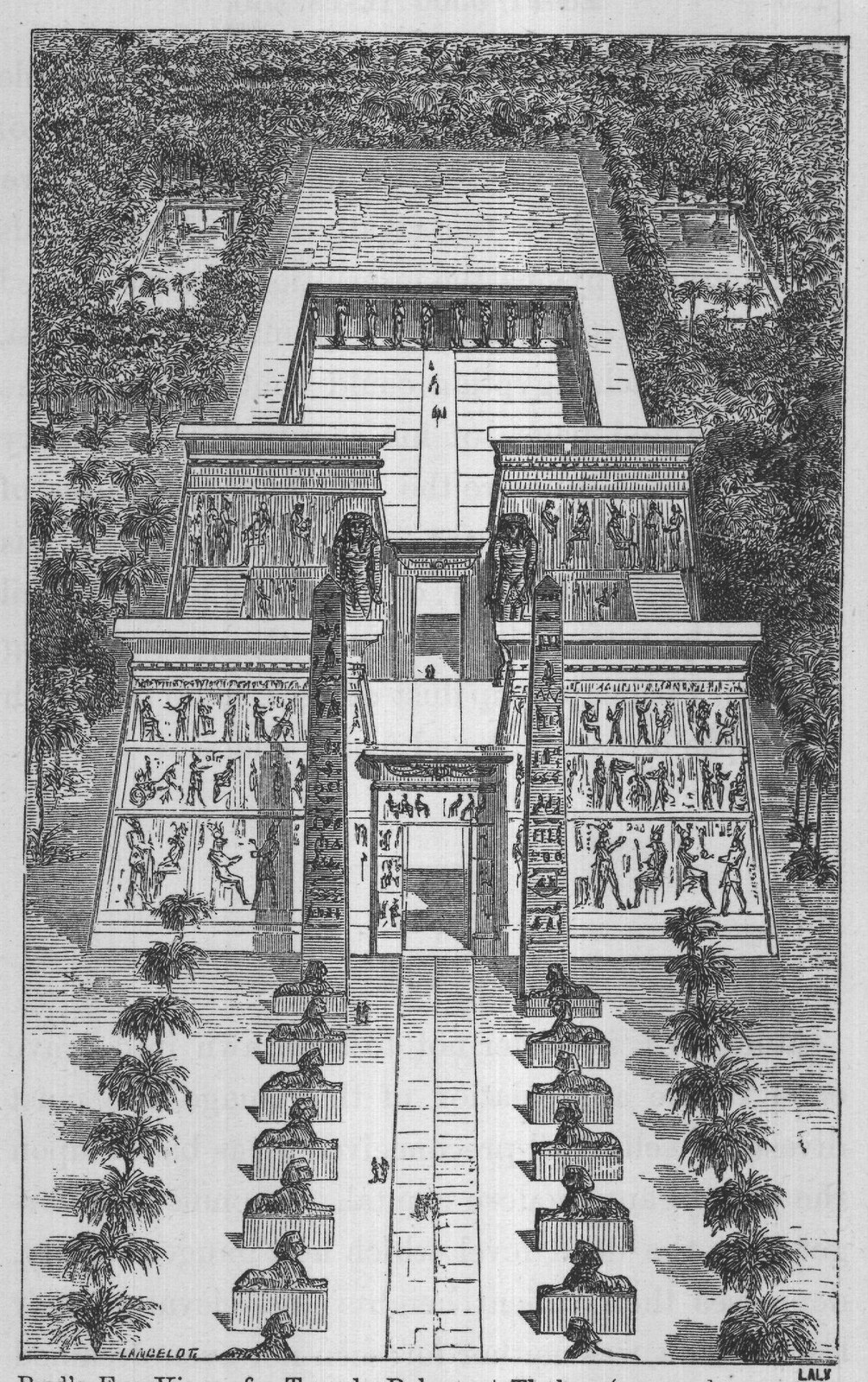
What must not Thebes have been at the period when, sharing in the plenitude of glory and power attained by its chiefs, this city beheld triumphant predatory expeditions and caravans of traders streaming in from all points of the horizon, and pouring the wealth of nations into her lap? in the time when the black native of eastern Soudan and the representative of the vanquished hordes of western Asia; the Hymiarite come from the land of incense and the tattooed Pelasgian from the borders of the Hellespont; the opulent merchant of the Phoenician coasts; the pearl-fisher of the Erythrean seas; the Rotenu son of Asshur with the long trailing robe, and the humble Ben-Eber of the plains of Goshen, met annually at the foot of Mei-Amoun's throne to lay the tribute of their clans and country there? What must not Thebes have been when her temple-palaces, built and embellished by twelve generations of kings, rivalled each other in splendor and display; had for enclosures fresh thickets of palms and mimosas; bedecked themselves with parterres skilfully designed, and mirrored in the blue waters of spacious basins of marble or porphyry, the pure and severely simple lines of their architecture; when, amid floods of light under the rays of an unrivalled sun, there sparkled to the gaze the vividly colored bas-reliefs of the granite pylons, the inscriptions on rose-tinted obelisks, the giant heads of sphinxes and colossi, and when each Egyptian could contemplate in the one the grand pages of his country's past history and in the other revere the well known features of his ancestors and of the gods and heroes of his race? No voice, to-day, could tell it all, no pencil accurately retrace it, and even thought, plunging through the heaped-up dust of ages, could but catch a glimpse of its vague and feeble image.
VII.
MOREOVER, in order not to be drawn into grave error in the appreciation of that image, one must divest himself of all preconceived ideas based upon the plan of any modern capital. We must not forget that the dead level which now gauges society, depresses their salient heights and elevates their lower strata, was neither foreseen nor even dreamed ef in the days of Thehan grandeur; and that from LANCELOT LALY Bird's Eye View of a Temple-Palace at Thebes (restored according to the monuments). this absolute ignorance of the virtual conditions of a future far beyond the ken of that period, arose the very sanction of the social inequalities which existed with that of all the forms with which the sombre logic of the human mind invested them in the material as well as in the moral order.
The dwellings of men were, then, subjected to the same law that proclaimed the monarch son of the gods, and made the priesthood their inspired interpreters. Around consecrated edifices built of imperishable materials, cemented with the blood and sweat of whole generations of slaves, were grouped, in accordance with this law and at intervals of greater or less space marked out by cultivated fields, the luxurious yet neither very grand nor very lasting structures of the principal functionaries of the empire, -the brick-built workshops and stores of the merchant, -the cabin of the fellah made of clay and reeds, and the mud hovel where the sable captive-sometimes the copper-colored or white one, as well, crouching on the dungheaps of the animals entrusted to his care, dressed the bleeding cuts which the stick of his master had inflicted upon his naked body, and then sought in sleep a vision of his native land and his weeping family.
Naga and Meroe, Babylon and Nineveh, the primitive cities in the basin of the Oxus, the Indus and the Ganges; at a later period, the cities of the Etruscans, in the West; much later still, those which the Toltecs and Aymaras built upon the table-lands of the Andes, and the emigrants from India in the forests of Hindostan; all the metropolitan marks, in fine, which men erected during their passage from the second to the third social epoch, were constructed upon this principle.
VIII.