Home › Other Decorations, Taken from Living Objects › Other Decorations, Taken from Living Objects
Other Decorations, Taken from Living Objects
We have now finished the list of honorable ordinaries and subordinaries, but besides these decorations of the shield there is a vast variety of charges, to supply which, heaven and earth, sky and sea, have been heavily taxed.
Lions, eagles, wyverns, fishes, crescents, suns, roses, lilies, spurs, sleeves, I doubt if even the wisest of heralds could enumerate all. About some a veil of romance clings so persistently that even the most prosaic of modern pursuivants cannot, with all his efforts, brush the glamour quite away. About others the history of their varied use gives a peculiar charm to their study. The lion is one of these historical relics, and such a tremendous beast has he grown to be that in England alone his roar can be heard from the Isle of Wight to the rocky reefs of the Hebrides.
In the twelfth century he was indeed the King of Beasts in Heraldry, for it is a fact that at that time no other animal appeared upon a British shield. He ramped alone, and, with but one exception, was always represented in this singular attitude, which, to the heraldic mind, for some hidden, unnatural, unbeastly reason, is considered the most majestic.
On this account, the three lions of England were frequently styled leopards, and as such Napoleon always scoffingly alluded to them. The leopard, being anciently considered as a cross between the wolf and the panther, did not rank as a kingly beast. But England has compelled a recognition of its noble animals, the first representation of which is said to have shaken its mane on the victorious banners of William the Conqueror.
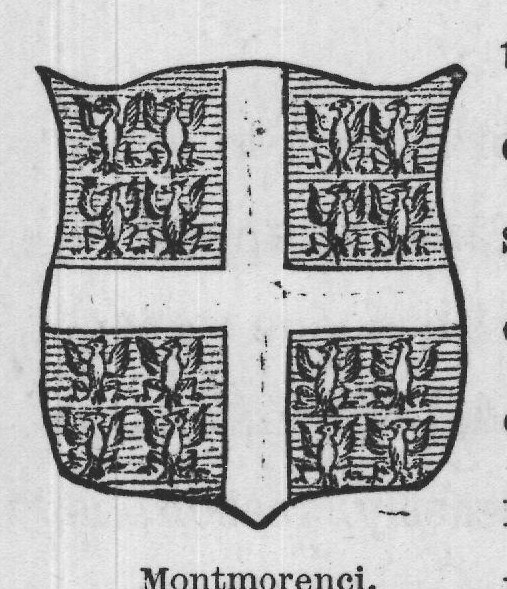
The lion is now depicted and described in several attitudes. The English prefer him "gardant," or with the face turned full towards the spectator, while the French display him in profile. But represented in any attitude approved by the herald's taste, the lion of Barnum's Big Show is hard to be recognized. It is said that some country herald painter, chancing to be in London one day, was shown the lions in the Tower. "What," said the honest man, "tell me that's a lion! Why, I've painted lions passant, and lions rampant, and all sorts of lions, these five and twenty years, and for sure I ought to know what a lion's like better than all that!" Mingling with the uproar made by this noble beast, we can hear the screech of the King of Birds. He has alighted upon various shields - for instance, upon this one of the haughty French family of Lorraine, where he styles himself an "alerion"; and again upon that of the lords of Montmorenci. One of the early ancestors of this house was so gallant and successful in war that in one battle alone he deprived King Otho II. of two of his imperial ensigns. To keep this fresh in the memory of family and country, he placed four eagles upon his escutcheon. Another of this warlike house, Montmorenci. meeting in bloody combat King Otho IV., tore from his enemy's grasp no less than twelve more well prized banners. This was at the battle of Bouvines; and, while the blood spurted from countless wounds received, he dropped his trophies at the feet of his sovereign. Philip Augustus immediately dipped his fingers in the flowing blood of his gallant follower, and, making a cross upon his shield, exclaimed, "Oh, valiant man, I will that henceforth you bear upon your shield, instead of a cross argent, as heretofore, a red cross, and that, with your four alerions, you quarter twelve more, in honor of your wonderful exploits to-day."
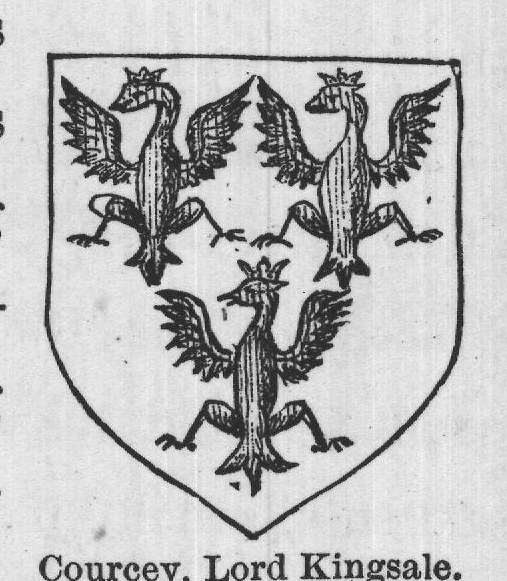
The double-headed eagles of Russia and Germany, though supposed to be the result of halving two coats-of-arms and then conjoin ing the odd halves, are also said to suggest that the sway of these sovereigns is limitless.