Home › Classes of Arms. - Orders of Knighthood › Classes of Arms. - Orders of Knighthood: Knights
Classes of Arms. - Orders of Knighthood: Knights
The various orders of knighthood, such as that of the Garter, with which we are all so familiar, belong to the Arms of Office. The legend of the origin of the famous Order of the Garter, from which the name of the King-at-Arms of England is taken, is too well known to be repeated here, but it serves to call our attention to the other renowned Orders of Knights which heraldry introduced into existence during the Middle Ages. All knights did not belong to them, and differed from them in their title, being styled Knights Bachelors, whilst Garter, King-at-Arms. those elected to the various Orders were supposed to be wedded to them. If so, heraldic Mormonism has become extremely popular in England, as elsewhere in Europe - the Duke of Wellington, alone, being entitled to wear the badges of no less than eleven of these illustrious fraternities! Some of these orders in the earlier times were religious as well as military, and some purely military, while all had specific objects in view when created. The defence of the Holy Sepulchre, and objects allied to that, gave birth to many, such as the Knights Hospitallers and the Knights Templars, and that called the Teutonic Order of Knights. The conferring of admissions into these various orders is one of the methods by which sovereigns reward their most worthy subjects. The Spanish Orders of Calatrava, Alcantara, St. Jago, and other European orders, too, sprang up at about the same time, such as the Golden Fleece (or Toison D'Or), The Star, St. Michael, Porcupine, Swan, St. Esprit; and a legion of brothers and sisters whose names it would be as much a weariness to the flesh for you to read as for me to write. But the tales of the origin of some of the most noted among them might interest you.
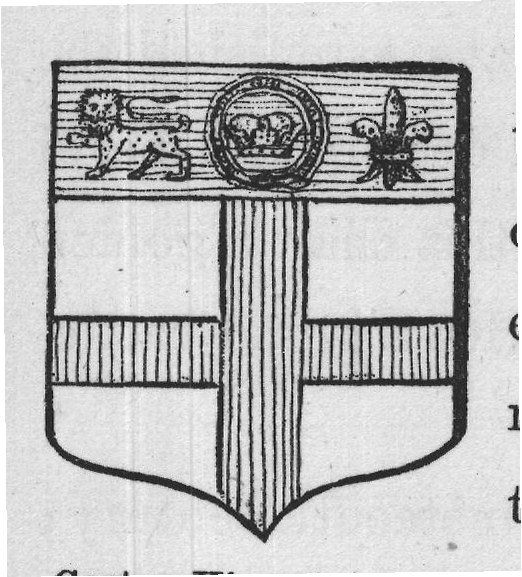
The Order of St. Jago owes its origin, the old Spanish chroniclers declare, to what was certainly a most kind and friendly act on the part of the good St. James. The Spaniards were engaged in a desperate fight with the Moors, and the Infidels were proving themselves far too fierce and numerous for the Spaniards to maintain their ground. Each brave Spaniard was beginning to think that it would be better to show a clean pair of heels to their furious foe than attempt to face them with their shield and spear, when the sympathizing saint, clad in his pilgrim garb, appeared before them, mounted on a snow-white charger and carrying a cross in his hand. The apparition was seen by all, and each panic-stricken soldier found his courage returning, and under this supernatural leadership pressed on to perfect victory. This order admitted but thirteen knights to its membership, but it became the most powerful of all military orders in Spain, and acquired vast estates.. It is even said that they could, when occasion demanded, bring one thousand followers into the field. Their influence waxed very great, and even in certain matters connected with the Spanish monarchs themselves they could interfere. To such intervention Spain is indebted for the glorious reign of Ferdinand and Isabella. Some dispute about the royal succession had arisen, and the Order of St. Jago upheld the rightful claimant to the throne most manfully, so that it was enabled to place the crown on Isabella's head. Their feast is held on All Saints' Day, while that of the English Order of the Garter takes place on April 24th, the day set apart for St. George. The Order of the Golden Fleece (Toison D'Or) is composed of but twenty-four knights, and was created by Philip Le Bon of Burgundy. Their crimson velvet mantles, lined with white, are embroidered alternately with steels and flint stones, and around the neck of the collar is a series of very perfectly wrought flint stones and steels, "Flames and Fleeces." The flint stones bore a motto, "Ante ferit quam micat" (It strikes before it shines). This representation of the Flint and Steel "Philip the Good" put into the collar of the Golden Fleece in 1429, as indicating the advanced state of civilization at that time. The order stands high in the esteem of European knights, and in olden times it is said that the knights belonging to it yielded precedence only to the king. It is now held second only to the English Order of the Garter. Some ancient writer says that Philip intended, in giving the name of the Golden Fleece to this order, to inspire all brave men with the courage of Gideon, whose courage was fortified by the miraculous appearance of the dampened fleece, and enabled to conquer a vast host of the Midianites. And second to induce his loyal and affectionate subjects to guard their flocks with great care, as in their wool was the source of their greatest wealth. The chief of this order is now the King of Spain.
Another French order was that of The Star, and the ceremony of installation was upon the Feast of the Epiphany. Its name alludes either to the Star of the Magi, or to the Blessed Virgin, who in many hymns and prayers is called "Star of the Sea" "Ave, Maris Stella." - The Order of St. Michael was founded by Charles VII., in honor of the Archangel, who appeared on the Bridge of Orléans and foretold the destruction of the English. Every knight was compelled to wear the collar of his order during times of peace, or pay a penalty for not so doing.
In England there are several noble orders in existence: the Order of the Garter - that of the Bath, which is older than that of the Garter - the Order of the Thistle - that of the Star of England, and others. When the Order of the Knights of the Garter was first instituted by Edward III., the Queen and the wives of the knights were allowed to share in the glories of the fraternity, and were called "Dames de la Fraternité de St. George"; and wore their robes and hoods ornamented with the Garter. This fashion disappeared, and though the courtly Charles the First tried to revive it, he was unable to do so. The number of the knights, exclusive of the Sovereign, was fixed as twenty-six, but various alterations have been made, by which foreign sovereigns can be added to the list; and the noble Duke of Abercorn, who has so recently died, was chief of the delegation selected to present the gift of membership in the noble order, some years ago, to Humbert, King of Italy. As so few ceremonies now take place that breathe of the old spirit of heraldry, it is rather pleasant to recall the little pageant. The Duke of Abercorn, then Garter King-at-Arms, accompanied by several of the heralds, was appointed to perform the ceremony. Upon reaching Italy they were admitted into the presence of the King, and the duke gave to him the courteous message with which the Queen of England had intrusted him. He then presented his Letter of Credence and the book in which, should Italy's sovereign choose to read them, he would find all the Blue Laws of the Ancient Order of the Garter. Then, while he fastened the knightly ornaments upon the king, some very ceremonious and high-sounding "admonitions" were read by others of the Commission, and it is hoped that King Humbert felt that proper sense of gratitude which any foreign potentate ought to experience on receiving such proof of England's high esteem!
The knights hold their yearly feast at Windsor Castle; "and on the morrow of that day they were all required to attend in black gowns under their mantles, to hear mass of Requiem, which shall be solemnly sung for the souls of the fellows that are deceased, and of all other Christian people, and that all the company be there, without some of them be let reasonably, or else that he hath license of the Sovereign." The church and deanery there were, it is said, founded at the time of the institution, and also "thirteen poor aged gentlemen established, to be maintained with stipends by the name of Knights of Windsor, who had appointed to them robes of scarlet cloth, with a small escutcheon of St. George upon their shoulders, according to the manner of the Order, which were to pray for the Order."
The centre of the Star of Bath is the shield ascribed to King Arthur, viz.: three crowns proper, and his motto, "Trois en un." The order, as being the most ancient, is, perhaps, worth a little longer glance than we shall give the others. Perhaps, boys, you might like to know how a Knight of the Bath was created during the days of Henry VI. of England, so I will copy an account of it that can be found in some old manuscript, entitled, "How Knights of the Bath should be made": "The even of the day of the feast, all the squires that shall be made knights shall come altogether into the king's palace, and then the states of the king's house shall meet with them, and bring them up unto the king's presence; and then shall the king's taster go unto the kitchen for his meat, and all the squires with him that shall be made knights, and each one of them shall bear a dish, and they shall serve the king, but of the first course, and when the king is served, then shall the gentlemen ushers bring them altogether into their chamber.... And when they have dined, then shall the gentleman usher come into the said chamber and assign every squire his place for his 'bedde and for his bayne.' And when the king hath dined, then shall be sent, by the king's commandment, certain squires of his household, to await upon them that shall be made knights, and to be their servants and chamberlains. "Then shall the king's barber come and shave all the squires, and every squire shall pay for his beard-shaving twenty shillings, and every squire shall ordain for his bath twenty-four ells of linen cloth, and that shall the king's barber have for his fee. Then shall the said squires go unto their bath, and when they be in their bath, then shall the heralds of arms go unto the king, and let him have knowledge that the squires be in their bath. Then shall the king command the steward of his house, with other lords and knights, for to go unto the squires, and give them their charge as they sit in their bath. "The steward accordingly, with all the lords and knights, the king's minstrels and heralds of arms going before them, enter the chamber door, and give the knights 'their charge,' saying in this wise, 'Brother, the king, our sovereign lord, will that ye take this high and worshipful order upon you, the which I, as a knight, declare unto you certain points that longeth unto this high and worshipful order of knighthood. Ye shall love God above all things and be steadfast in the faith, and sustain the church, and ye shall be true unto your sovereign lord, and true of your word and promise: also ye shall help widows in their right, at every time they will require you, and maidens. Also ye shall sit in no place where that any judgment should be given wrongfully against anybody, to your knowledge. Also ye shall not suffer no murderers nor extortioners of the king's people within the country where ye dwell, but with your power ye shall take them, and put them in the hands of justice, that they may be punished as the king's law will.' "This charge ended, the knight who had uttered it was bidden to put his hand into the bath, and take up water, and make a cross upon the squire's left shoulder, before and behind, and kiss it, and say, 'In nomine Patris,' etc., adding, 'God send you as much worship as ever had any of your kin'; and thus must do all the lords and knights unto every squire as he sitteth in his bayne." From this kind of re-baptism some have derived dub, from the Anglo- Saxon "dyppan," to dip. Indeed, the word "dub" itself is used in the North for a pool. "Then shall they go out of their baths into their beds, and then they shall arise and make them ready in hermit's array of Colchester russet." Their beds, which were to consist of mattresses, blankets, sheets, coverlets, and coverlids of worsted, and cloths of gold upon that, and red tapites of worsted at the bed's head, hanging over the bed, became the property of a certain officer of the king's, called "the kingis chaundre." After leaving their beds, the squires were to go into the chapel, and be in
P their prayers "until in the morning unto eight of the clock; and then they shall have a mass of the Holy Ghost, and then they shall offer a taper, and a penny, sticking in the taper as nigh the light as it may be reasonably. When mass is done, then they shall go unto their chambers and change them, and the king's wayte shall have all their watching garments. Then they shall change them into another raiment. First they shall put on them doublets, with black hose, black shoes, with leather soles, a red coat of red tartaryn, and a white leather girdle about him, and the girdle may have no buckle; then he must have a white coif upon his head, and then a mantle of red tartaryn purfled about with ermine, and that must be put above him; and a white lace must be in the said mantle before at the breast, with a pair of white gloves, knit in the said lace. Then the servants and chamberlains shall take their swords, and the scabbard shall be white leather without any buckle, and a pair of gilt spurs hanging on the hilt of the said sword, and the said servants and chamberlains shall bear the said sword with the spurs before them. "Then they shall come down and take their horses, and their horses shall be arrayed in this wise; the saddle must be black, with a cross patonce hanging in the front of the horse. Then they shall alight, and come into the king's presence with their swords borne before them, and make their obeisance; then shall two knights take the spurs off the sword, and do them on their heels; then shall the king gird his sword about him; then the squire putteth both his thumbs within the lace of the mantle, and lifts up his arms above his head, and the king putteth both his hands within his arms, and takes him about the neck with both his hands and kisses him, and plucks, him by the neck, and says unto him, 'Soyez bon chevalier.' Then he kneels down, and stands by till the king hath made them all; then they shall be led into the chapel with knights." The troubadour, Arnaud de Merveil, thus states the true merits of a knight: "It is to fight well, to conduct a troop well, to do his service well, to be well armed, to ride his horse well, to present himself with a good grace at courts, and to make himself agreeable there." He adds, "Seldom are these qualities found in the same person."