Home › The Brigantine › The Brigantine
The Brigantine
IN DEALING with this subject, it is essential, as Mr. R. C. Anderson says, to define the date as well as the nationality of the vessel under consideration. Probably the name has been applied at various times to many vessels differing altogether in hull and rig.
Naval archaeologists have been long striving to trace the origin and descent of this form of rig, but every new contribution to the subject seems to complicate the matter still further. Many writers have used the word "brig" as a contraction of "brigantine."
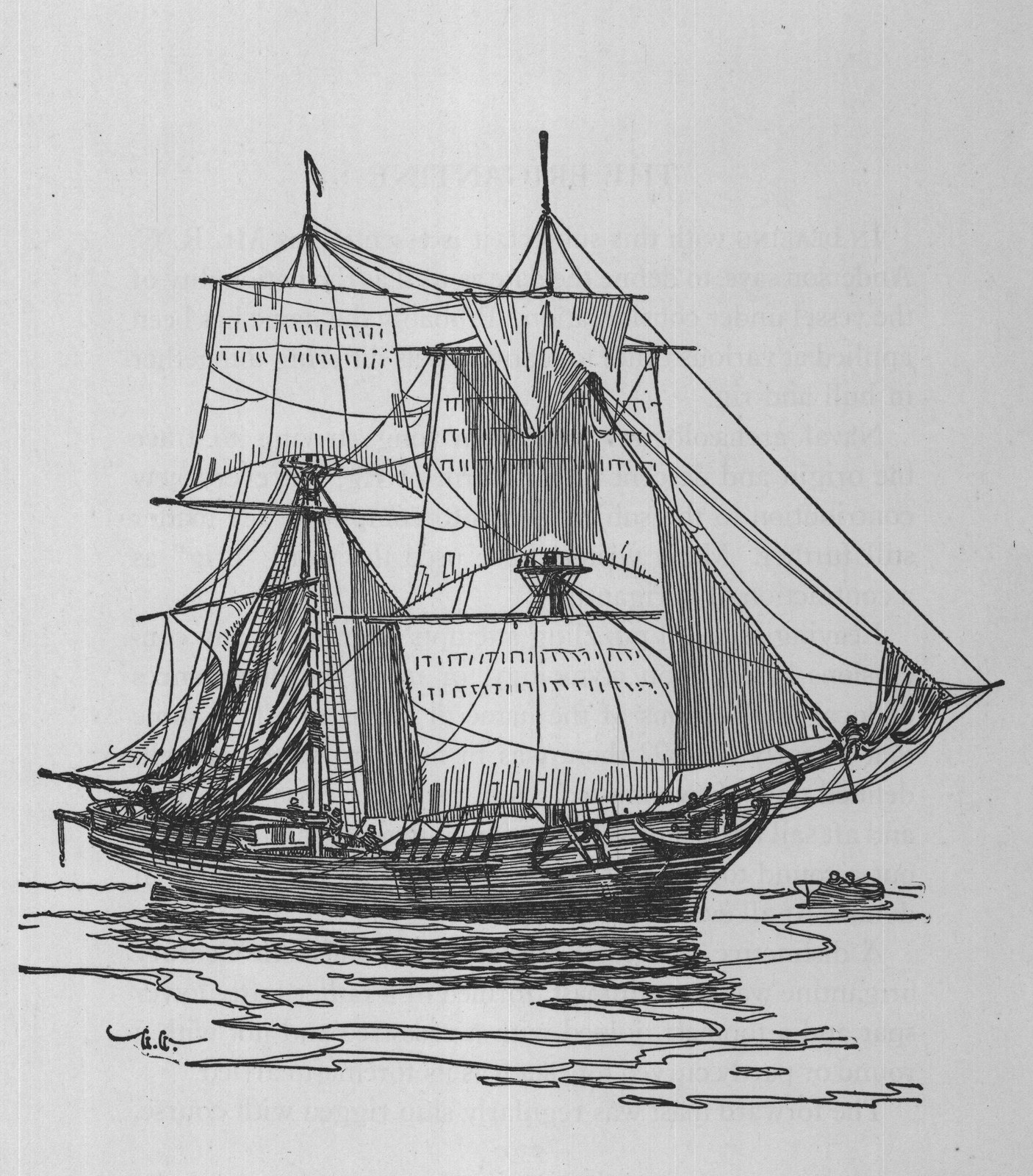
Leaving aside all puzzling attempts to arrive at any conclusions based upon etymology, or upon the divergences of local applications of the name, it seems safe to assume that as early as 1692 there was in northern waters a well-defined type of two-masted vessel probably carrying a fore and aft sail upon a buss form of mainmast, that is, one without a round top. The form of the foremast seems to be in doubt. At all events, it was square rigged. A distinctive feature of the later 17th and 18th Century brigantine was its mainmast, formed of a rather loftly lower spar and a topmast, joined with a crosstree and not with a round or partly curved top, such as its foremast carried.
The forward mast was regularly ship rigged with course, topsail, and top gallant. The brigantines of about the year 1750 usually carried at least one square sail on its main topmast. At a later period the size of the square sails upon the main topmast tended to diminish until ultimately these disappeared altogether and the gaff topsail took their place. There have been besides several variations of this rig, nominally described as schooner-brigs and brig-schooners; formerly, in England or America, they would probably have been called brigantines.
A salient feature of the early brigantine and one which no doubt gives us a clue to the reason for the application of the name to the type of vessel we have been considering, was that many of them were equipped with oars. Not being very large, they could be thus propelled in and out of harbours against head winds and also at sea when the weather was calm. The existence of several contemporary models serves to confirm this view.
The pictures labelled brigantines by Lescallier (1777) and Falconer (1815) certainly look more like brigs. Steele omits all mention of this type. We prefer to think of the brigantine as more like the vessel called a brig-schooner by Baugean in his "Collection de toutes Especes de Batiments," and believe that she is the kind of vessel described by James Fenimore Cooper and called "le Feu Follet."
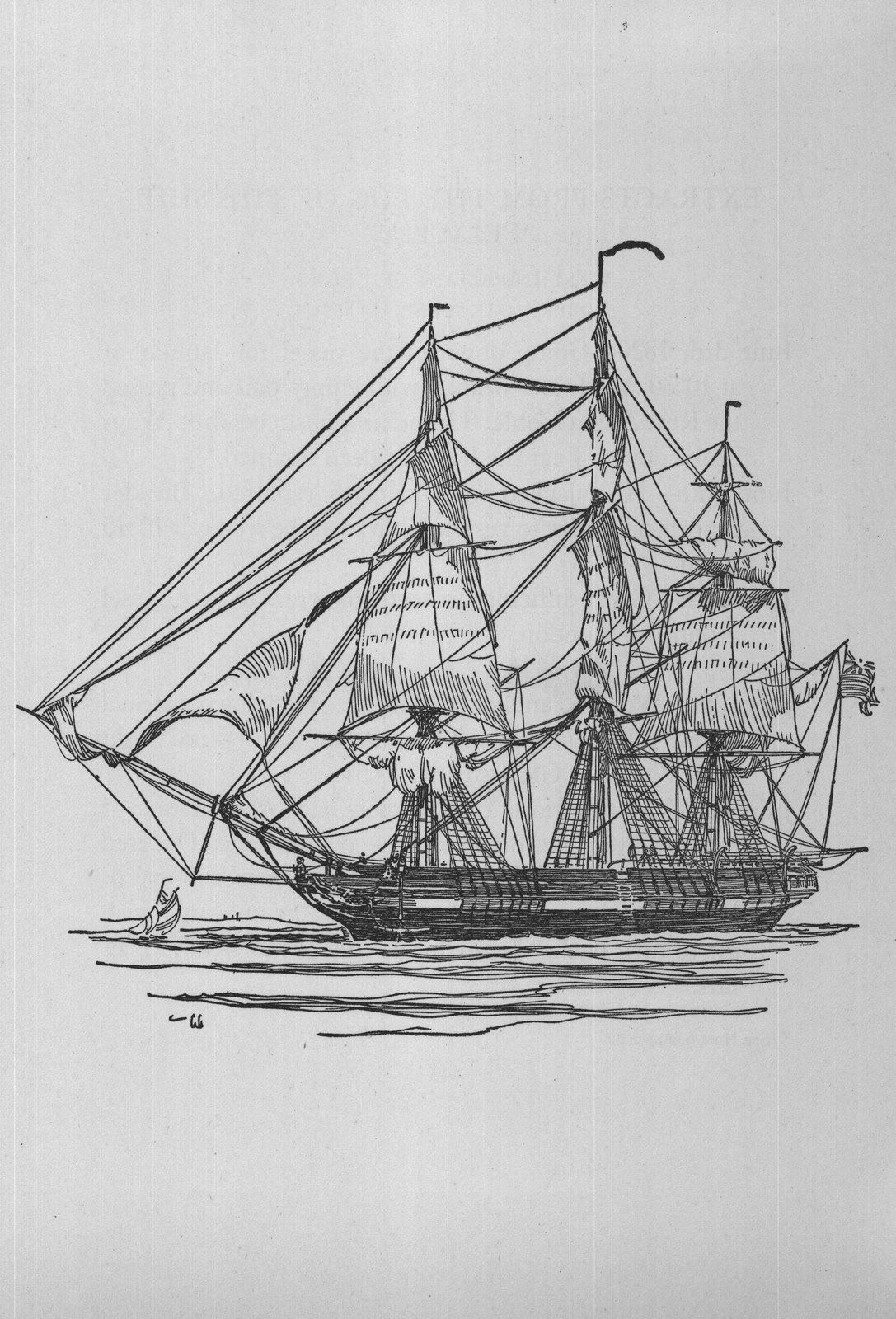
EXTRACTS FROM THE LOG OF THE SHIP "FELICITY" WEST INDIAMAN, OF TRURO, ROBERT OAKAPPLE, MASTER June 3rd, 1820-Going down to the vessel for launching at 10:30 A.M. met woman with empty pail and passed the Rev. Adam Noble. Launching unsuccessful. Ways broke down. Fear the hull has been strained.
June 16th-Hull jacked up and ways repaired. Builder reports no injury to vessel. Ship took the water at 12:15 P.M.