Home › The Peruvian Privateer › The Peruvian Privateer
The Peruvian Privateer
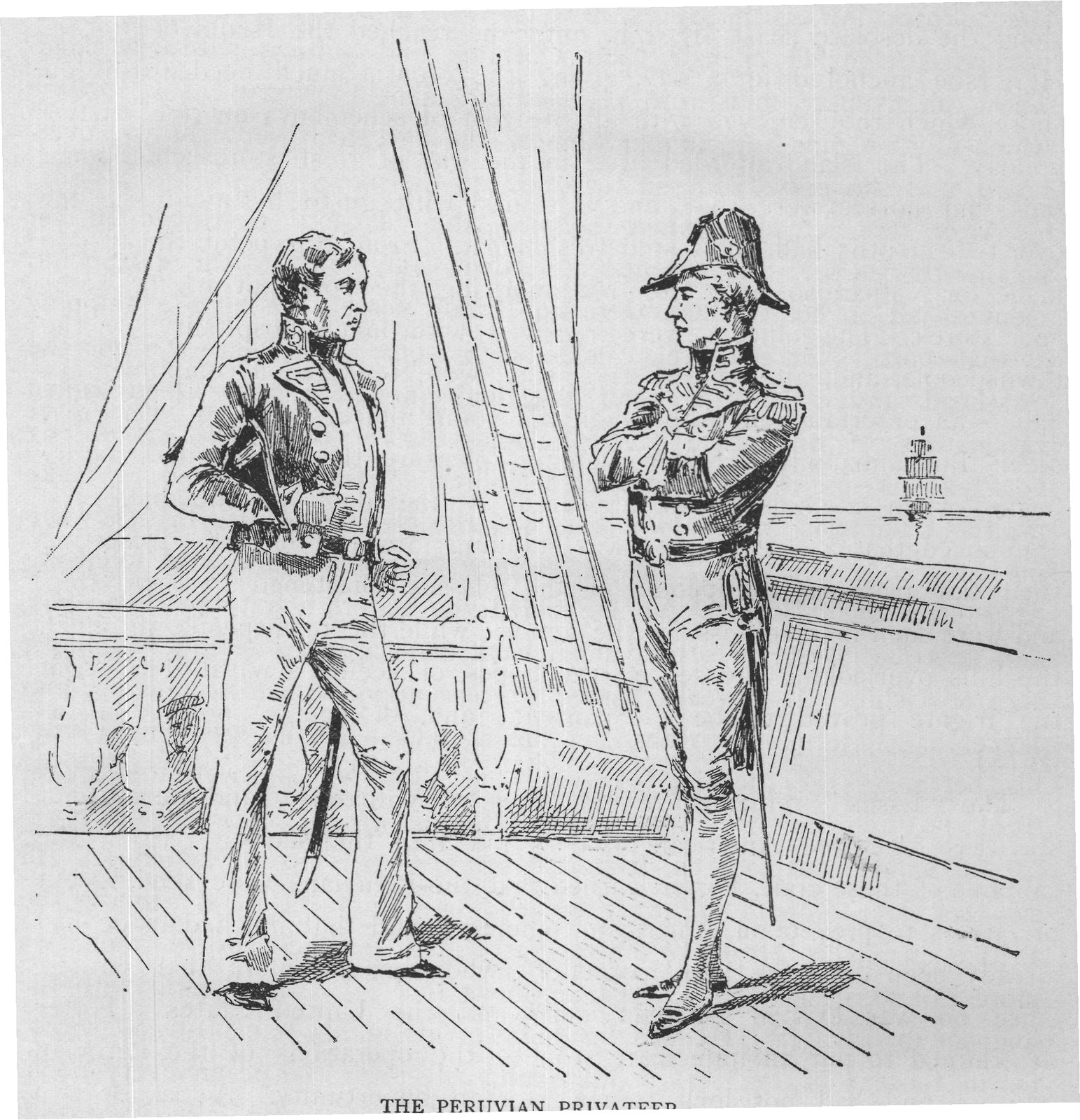
Peruvian privateer "Nereyda" of fifteen guns, and she had captured two American whalers, whose crews were even then in the hold of the privateer. He admitted that Peru had no quarrel with the United States, and no reason for preying upon her commerce. The confession, so unsuspectingly made, gave Porter ample grounds for the capture of the offending vessel. Curtly informing his astounded visitor that he was on a United States man-of-war, Porter ordered the gunners to fire two shots close to the privateer. This was done, and the Peruvian quickly hauled down his colors. The American officers, on boarding the prize, found twenty-three American sailors, who had been robbed of all that they possessed, stripped of half their clothing, and thrown into the hold These unfortunate men were released and sent to the "Essex;" after which all the guns and ammunition of the privateer were thrown overboard, and the vessel ordered to return to Callao. After this act of summary justice, the "Essex" continued in her northward course. She touched at Callao; but, much to the disappointment of all on board, there were no British vessels among the shipping at that port. Nor could the lookouts, for some days, discern from the masthead any craft other than the double-hulled rafts of logs, called catamarans, in which the natives along the Peruvian coast make long voyages. Weary of such continued ill-luck, Porter determined to make for the Galapagos Islands, where it was the custom of the British whal. ing-ships to rendezvous. But it seemed that ill-fortune was following close upon the "Essex;" for she sailed the waters about the Galapagos, and sent out boats to search small bays and lagoons, without finding a sign of a ship. Two weeks passed in this unproductive occupation, and Porter had determined to abandon the islands, when he was roused from his berth on the morning of April 29, 1813, by the welcome cry of "Sail, ho!"