Home › The Peruvian Privateer › The Peruvian Privateer: Tumbez
The Peruvian Privateer: Tumbez
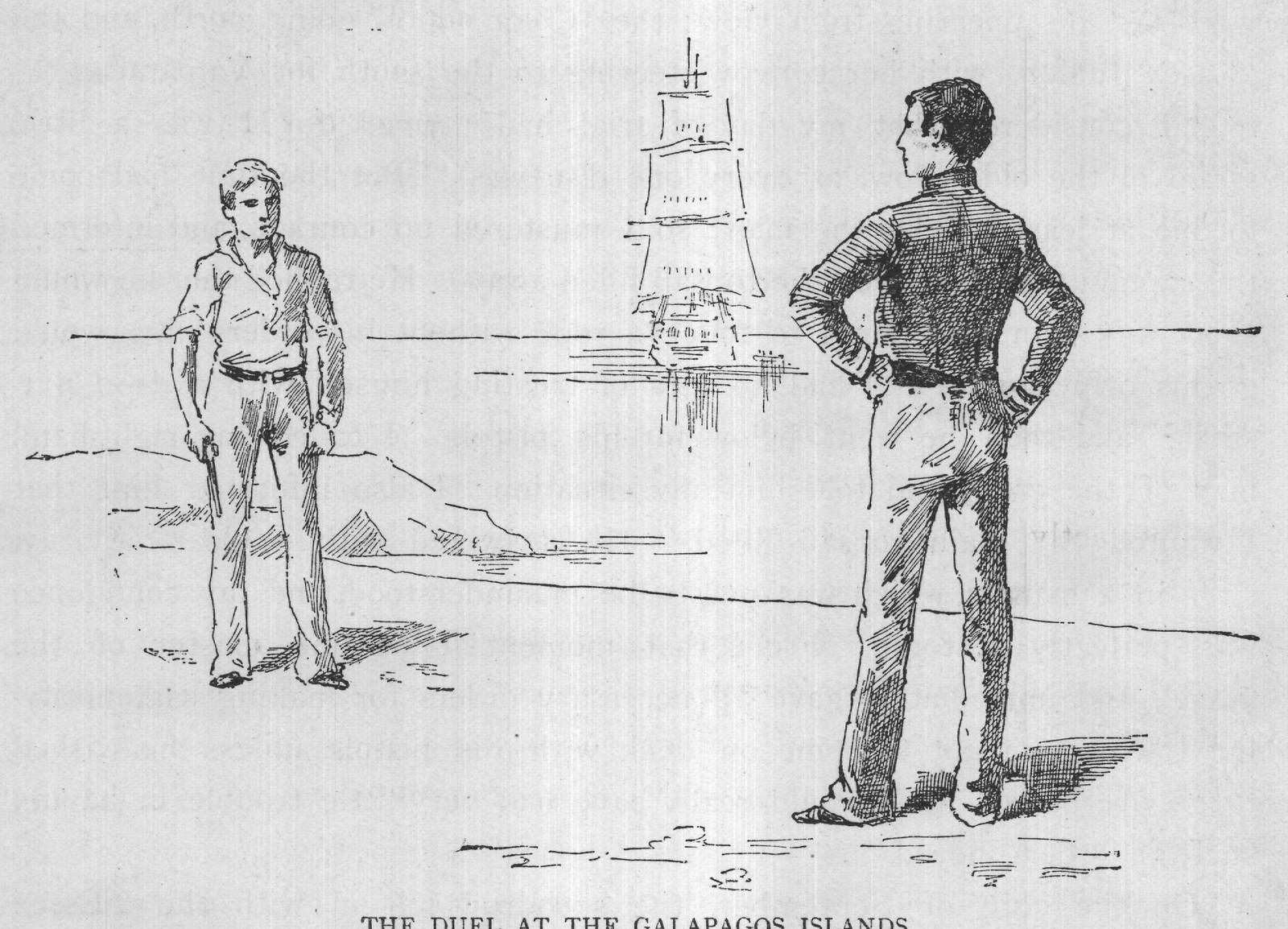
On the 19th of June, the "Essex" with her satellites cast anchor in the harbor of Tumbez. The first view of the town satisfied Porter that his hopes of selling his prizes there were without avail. A more squalid, dilapidated little seaside village, it would be hard to find. Hardly had the ships cast anchor, when the governor came off in a boat to pay a formal visit. Though clothed in rags, he had all the dignity of a Spanish hidalgo, and strutted about the quarter-deck with most laughable self-importance. Notwithstanding his high official station, this worthy permitted himself to be propitiated with a present of one hundred dollars; and he left the ship, promising all sorts of aid to the Americans. Nothing came of it all, however; and Porter failed to dispose of any of his prizes. While the "Essex" with her train of captives lay in the harbor at Tumbez, the "Georgianna" came into port, and was greeted with three cheers by the men of the frigate. Lieut. Downes reported that he had captured three British ships, carrying in all twenty-seven guns and seventy-five men. One of the prizes had been released on parole, and the other two were then with the "Georgianna." This addition to the number of vessels in the train of the "Essex" was somewhat of an annoyance to Capt. Porter, who saw clearly that so great a number of prizes would seriously interfere with his future movements against the enemy. He accordingly remained at Tumbez only long enough to convert the "Atlantic" into an armed cruiser under the name of the "Essex Junior," and then set sail, in the hopes of finding some port wherein he could sell his embarrassing prizes. His prisoners, save about seventy-five who enrolled themselves under the American flag, were paroled, and left at Tumbez; and again the little squadron put to sea. The "Essex Junior" was ordered to take the "Hector," "Catherine," "Policy," and "Montezuma" to Valparaiso, and there dispose of them, after which she was to meet the "Essex" at the Marquesas Islands. On her way to the rendezvous, the "Essex" stopped again at the Galapagos Islands, where she was lucky enough to find the British whaler "Seringapatam," known as the finest ship of the British whaling fleet. By her capture, the American whalers were rid of a dangerous enemy; for, though totally without authority from the British Crown, the captain of the "Seringapatam" had been waging a predatory warfare against such luckless Americans as fell in his path. Porter now armed this new prize with twenty-two guns, and considered her a valuable addition to his offensive force. She took the place of the "Georgianna," which vessel Porter sent back to the United States loaded with oil. Among the embarrassments which the care of so many prizes brought upon the leader of the expedition was the difficulty of finding commanding officers for all the vessels. This difficulty was enhanced while the flotilla lay off the Galapagos Islands; for two officers, falling into a dis pute, settled their quarrel, after the manner of the day, by a duel. In the contest one, a lieutenant, aged only twenty-one years, was killed, and now lies buried in the sands of the desolate and lonely island. After this occurrence, the need for commanding officers became so imperative that even the purser and chaplain of the "Essex" were pressed into the service. Midshipmen twelve or fourteen years old found themselves in