Home › Eygpt 3300 Years Ago › Eygpt 3300 Years Ago: Nubia
Eygpt 3300 Years Ago: Nubia
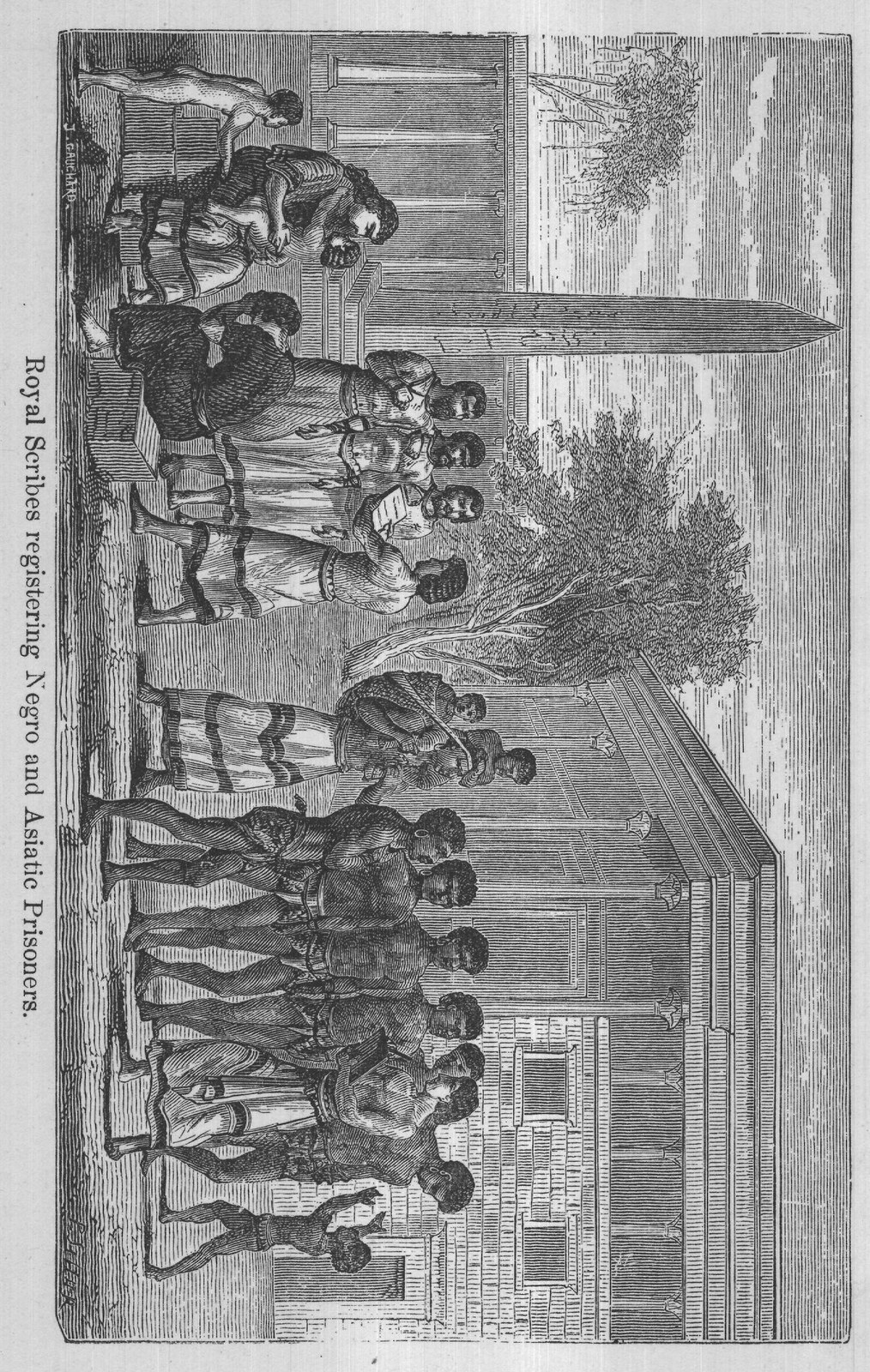
It was but one long wail of grief and despair. * Champollion's Letters written from Egypt and Nubia.- Cherubini's Nubia. Firmin Didot GAUCHARD Royal Scribes registering Negro and Asiatic Prisoners. When the army pressed forward in the direction of a thicket where the Gallas, it was supposed, had taken refuge, I withdrew, so as not to witness the slaughter of the poor creatures who, to escape the javelins hurled at them, were clambering up into the trees. There they were shot like sparrows, and thither, also, came the king, who would not have missed a humming-bird, at blank range, to bring down a miserable fugitive from the covert of the branches where he had tried to hide himself."* Between these two narratives thirty-three centuries had elapsed, sweeping away the Pharaohs and their empire, along with the nations that replaced them on the stage of the world and the gods that dethroned their gods. All the races who owned submission to Horus, the divine shepherd of men, have, turn by turn, seized and borne the sceptre of civilization and renewed the face of the Earth. The Nahazis form the sole exception.
Cast outside of the track of the great migrations; fastened to a harsh and enervating soil, under a sky of brass, they remained motionless, in their barbarism, their ignorance, and their native weakness and terror; having no other relations with the remaining members of the great family than such as the * Chas. Lefèvre's Journey to Abyssinia, vol. ii., pp. 245, 246. wild animals of their forests hold with the hunter, they have for five thousand years paid to them tribute of flesh and blood, and seen the bones of their children scattered to all the four quarters of the globe, along the roads that lead to every slave mart. Gloomy fate! unjustifiable in every age, but especially so in ours, when civilization, grown up and triumphant, no longer needs, as it did in the time of the Rameses, to secure its cradle against the assaults of barbarism, and has ceased to be, for any nation, a privileged deposit, the jealous safekeeping of which implies, as the first of social duties, hatred, war and oppression for the stranger. IV.