The King and his Ministers the Real Revolutionists: Revere and Lexington
The moon was just rising when the British troops landed on the Cambridge side of the water. Newman had hung out two lanterns, and the watching Revere, springing into a saddle on the back of a fleet horse owned by Deacon Larkin, hurried across Charlestown Neck. At the end of the isthmus he was confronted by two British soldiers, who attempted to arrest him. Turning back toward Charlestown, he soon reached the Medford road, and escaped; and at a little past midnight he rode up to Clarke's house in Lexington, which was well guarded by Sergeant Monroe and his men. He asked, in hurried words, for Mr. Hancock. "The family have just retired," said the sergeant, "and I am directed not to allow them to be disturbed by any noise." "Noise!" exclaimed Revere; " you'll have noise enough before long; the Regulars are coming out!" He was then allowed to knock at the door, when Mr. Clarke opened a window, and inquired--" Who is there?" Revere answered hurriedly," I want to see Mr. Hancock." "I do not like to admit strangers into my house so late at night," Clarke replied. Hancock, abed but not asleep, recognizing the voice of the messenger, called out: "Come in, Revere; we are not afraid of you." The story of impending peril was soon told, and the whole household were astir. Dawes, who went by Roxbury, Soon afterward arrived. After refreshing themselves, he and Revere rode swiftly toward Concord, arousing the inhabitants by the was, as the latter had done between Medford and Lexington. They were overtaken by Dr. Samuel Prescott, who had been wooing a young woman in Lexington, and he joined them in their patriotic errand, when Revere, who was riding ahead, was suddenly surrounded by some British officers, and with Dawes was made a prisoner. Prescott dashed over a stone-wall with his active horse, and escaped. He rode over to Concord, and at about two o'clock in the morning of the 19th gave the alarm. Revere and his felloprisoner were closely questioned concerning Hancock and Adams, but gave evasive answers. They were threatened with pistol-balls, when Revere told his captors that men were out arousing the country in all directions. Just then a church-bell was heard; then another, when one of the Lexington prisoners said: "The bells are ringing--the town is alarmed--you are dead men." The frightened officers left their prisoners, and fled toward Boston.
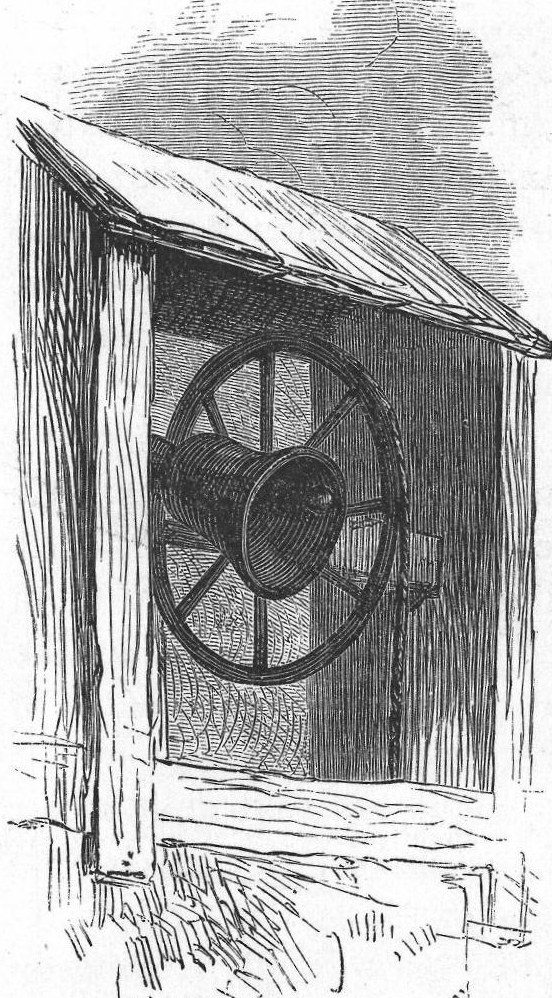
The alarm rapidly spread, and the Minute-men seized their arms. At two o'clock in the morning, Captain John Parker called the roll of his company on Lexington Green in front of the meeting-house, and ordered them to charge their guns with powder and ball. The air was chilly, and, as the invaders did not seem to be near, the men were directed to take shelter in the houses. Meanwhile the British troops were making their way in the soft light of a waning moon. Colonel Smith was convinced that their. Colonel Smith was convinced that their secret was known and there was a general uprising of the people, for church-bells were heard in various directions. He sent back to Boston for reinforcements, and ordered Major Pitcairn to push rapidly on through Lexington and seize the bridges at Concord. As the latter advanced, he secured every man seen on the way. One of these escaped, and mounting a fleet-footed horse, hurried to Lexington and gave the alarm, but not until the invaders were within less than two miles of the village green. The bells rang out an alarm. The Minute-men came; and just at the earliest dawn of day Captain Parker found himself at the head of almost seventy men. After much persuasion, and the cogent argument that their lives were of the greatest importance to the colony at that time, Hancock and Adams left Mr. Clarke's house and went, finally, to a more secure retreat. Dorothy Quincy, to whom Hancock was affianced (and whom he married in September following), was visiting the family of Mr. Clarke, and she accompanied her lover and his friend in their slow flight from immediate danger.