The King and his Ministers the Real Revolutionists: Hancock and Adams
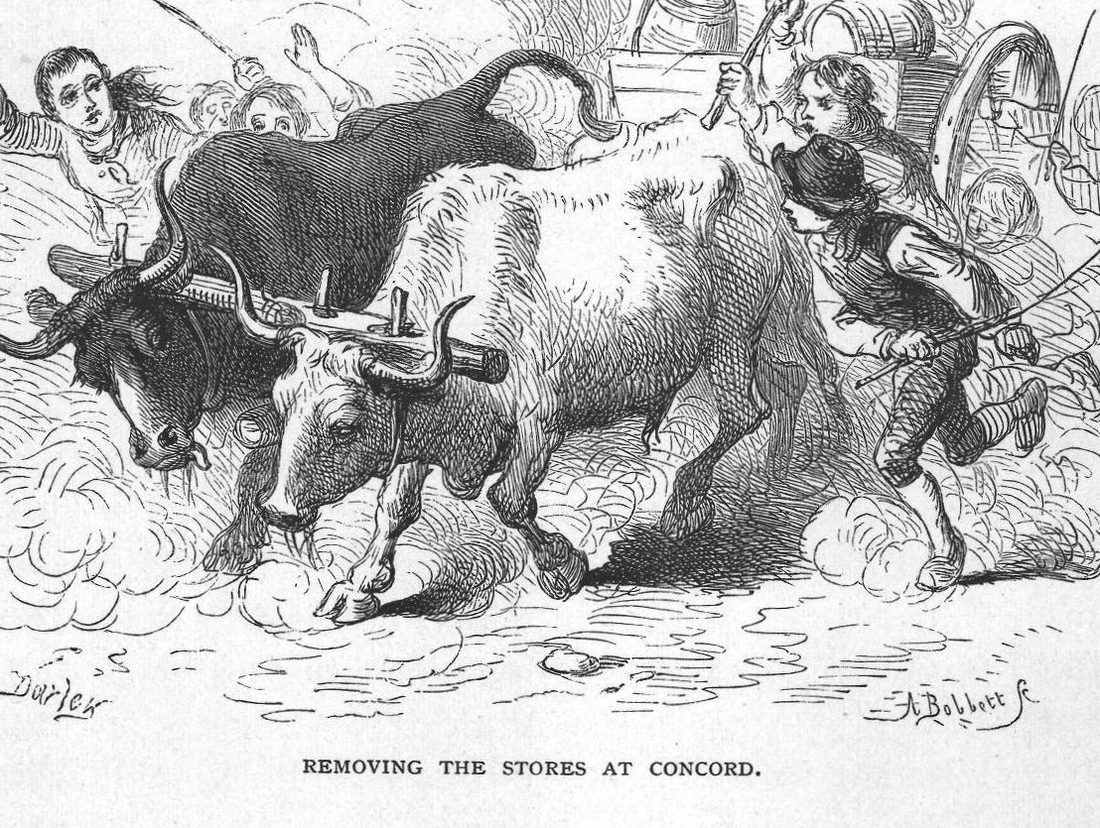
In the meantime Hancock and Adams, who were in attendance at the Provincial Congress held at Concord, had received warning of their personal danger, for an intercepted letter from London had revealed it; and when that Congress adjourned on the 15th April, they tarried at Lexington, where they lodged at the house of Rev. Jonas Clarke, yet standing. At the same time the Minute-men were on the alert everywhere, and the fifteen thousand troops which the Provincial Congress had called for were in readiness to confront the oppressors of the people. Couriers were ready to ride over the country, and arouse the inhabitants, if the British should march that way; and wagons were prepared to remove the hidden stores to places of greater safety.
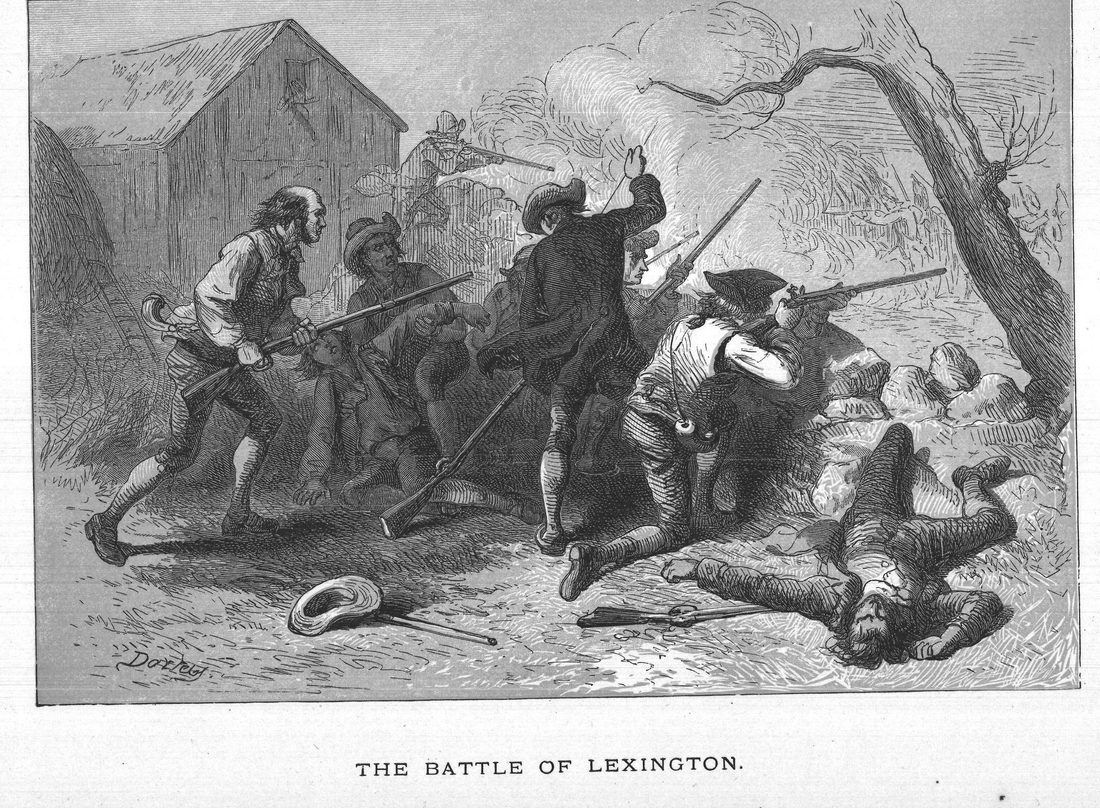
The capital part of the scheme was to arrest Hancock and Adams at Lexington, ten miles from Boston. For this purpose, the soldiers who were to do the work, were to leave Boston secretly in the evening, at an hour that would enable them to reach Lexington at past midnight, when the doomed patriots would be sleeping soundly. Their arrest accomplished, the troops were to move rapidly forward to Concord, six miles further, and seize or destroy the cannon and military stores which the patriots had gathered. Preparations for the expedition were made as early as the fifteenth. On that day about eight hundred grenadiers and infantry were detached from the main body and marched to a different part of the town, under the pretense of teaching them some new military movements. At night, boats from the transports which had been hauled up for repairs, were launched and moored under the sterns of the men-of-war. Dr. Warren, one of the most watchful of the patriots, sent notice to Hancock of these suspicious movements, and enabled the Committee of Safety, of which the latter was chairman, to cause some of the stores at Concord to be removed to places of safety, in time to save them from the invaders. To prevent a knowledge of his expedition spreading into the country, Gage sent out a number of his officers to post themselves on the several roads leading from Boston; and to prevent suspicions, they went out of the city at different times. But they were discovered, and the design suspected, by a Son of Liberty of Lexington, who informed Colonel Monroe, then sergeant of a militia company. That officer, suspecting a design to capture Hancock and Adams, collected a guard of eight well-armed men, who watched Mr. Clarke's house that night.
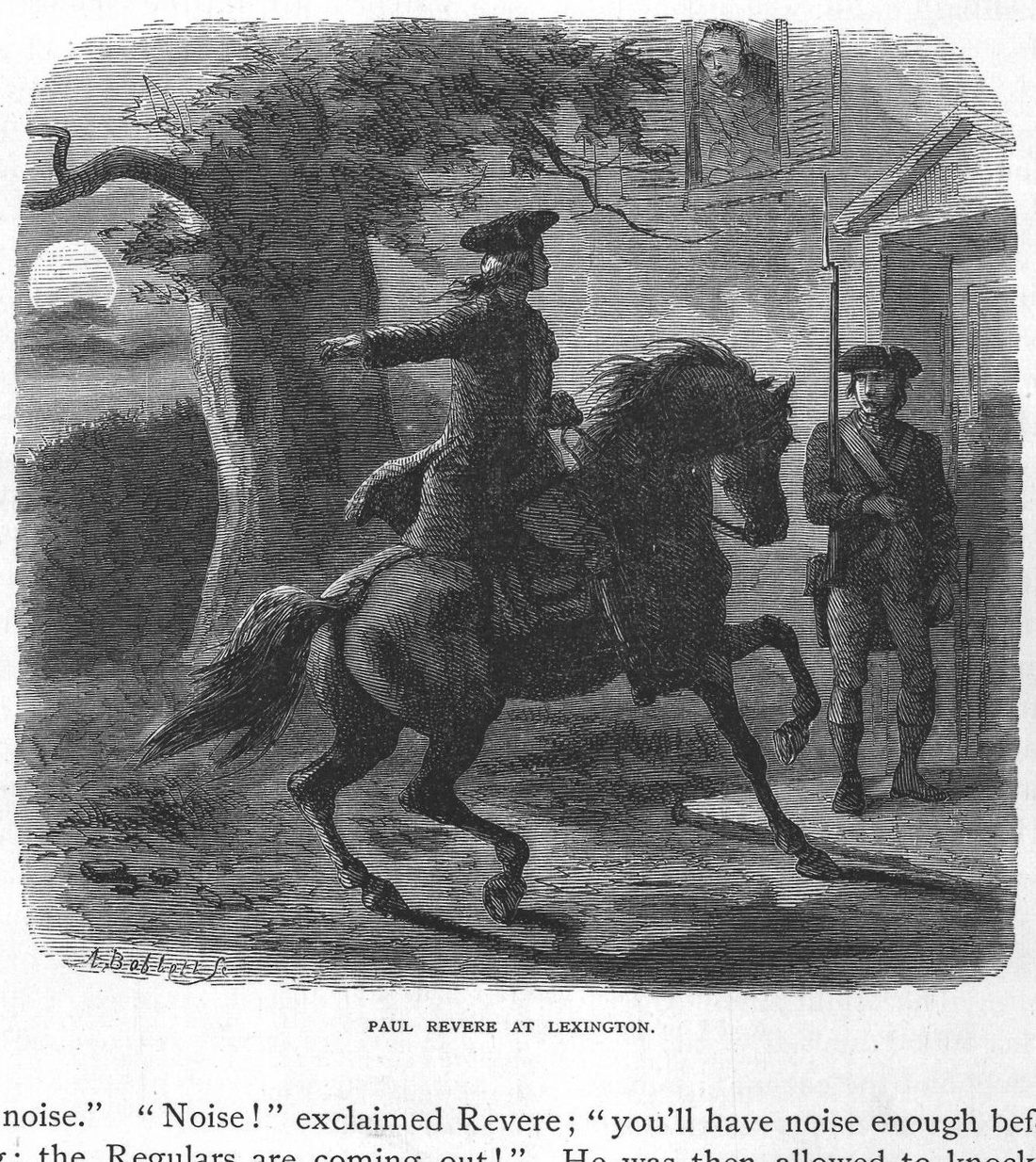
In the afternoon of the 18th (April, 1775), Gage's secret leaked out, and the patriots in Boston watched every movement of the troops with keen vision. Dr. Warren, Paul Revere and others made arrangements for a sudden emergency, to warn Hancock and Adams of danger, and to arouse the country. Their precautions were timely, for at ten o'clock that evening, eight hundred British troops marched silently to the foot of the Common, where they embarked in boats and passed over to Cambridge. They were commanded by Lieutenant-Colonel Smith, assisted by Major Pitcairn. Gage supposed his secret was inviolate, but was soon undeceived. Lord Percy, who was one of his confidants, when crossing the Common, heard one of a group of citizens says, "The British will miss their mark. "What mark?" inquired Percy. "The cannon at Concord," was the reply. Percy hastened to inform Gage, who immediately issued orders to his guards not to allow any person to leave the city that night. It was too late. William Dawes had gone over the Neck to Roxbury on horseback, with a message from Warren to Hancock and Adams, and Warren and Revere were at Charlestown awaiting the development of events. Revere had engaged his friend Newman, sexton of the North Church, to give him a timely signal.
He said to his friend: "If the British march
Hang a lantern aloft in the belfry-arch
Of the North Church tower as a signal light--
One, if by land, and two, if by sea:
And I on the opposite shore will be
Ready to ride and spread the alarm
Through every Middlesex village and farm,
For the country folk to be up and arm."