Purchase of Louisiana
Another attack was made on the 2d of September. On that night--a very dark one--the Intrepid, which had been converted into a floating mine--an immense torpedo--with one hundred barrels of gunpowder below her deck, and a large quantity of shot, shell, and irregular pieces of iron lying over them, went into the harbor under the general direction of Captain Somers, to scatter destruction among the vessels of the enemy. She was towed in by two boats, with brave crews, in which it was expected all would escape, after firing combustibles on board of her. All hearts in the American squadron followed the Intrepid as she disappeared in the gloom. Suddenly a lurid flame, like that from a volcano, shot up from the bosom of the harbor, and lighted with its horrid glare the town, castle, batteries, ships, camps, and surrounding hills. It was followed by an explosion that shook the earth and sea, and flaming masts and sails and fiery bombs rained upon the waters for a moment, when darkness more profound settled upon the scene. The safety-boats were anxiously watched for until the dawn. They never returned, and no man of that perilous expedition was heard of afterward. Their names are inscribed upon a monument erected to the memory of these brave men, and the event, that stands at the western front of the Capitol at Washington city. Hostilities on the Barbary coast now ceased for the season. Preble was relieved by Commodore Samuel Barron, and early in 1805 he returned home, and received the homage of the nation's gratitude.
While Barron's ships blockaded Tripoli, and important land movement against that province was undertaken, under the general management of William Eaton, American consul at Tunis. The reigning Bashaw of Tripoli was an usurper, who had murdered his father and taken the seat of power from his brother, Hamet Caramalli. The latter had fled to Egypt. A plan was concerted between him and General Eaton for the restoration of his rights. The latter acted under the sanction of his government. Eaton went to Egypt, and at the beginning of March he left Alexandria, accompanied by Hamet and his followers, some Egyptian soldiers, and seventy United States seamen. They made a march of a thousand miles across the borders of the Libyan desert; and at near the close of April, in conjunction with two American vessels, they captured the Tripolitan city of Derne, on the borders of the Mediterranean Sea. They had defeated the Tripolitan forces in two battles, and were about to march on the capital when news came that the American consul-general (Tobias Lear) had made a treaty of peace with the terrified Bashaw. So ended the hopes of Hamet, and also the four years' war with Tripoli. But the ruler of Tunis was yet insolent. He was speedily humbled by Commodore Rodgers, Barron's successor, and the power of the United States was respected and feared by the half-barbarians of the north of Africa. Pope Pius the Seventh declared that the Americans had done more for Christendom against the pirates than all the powers of Europe united.
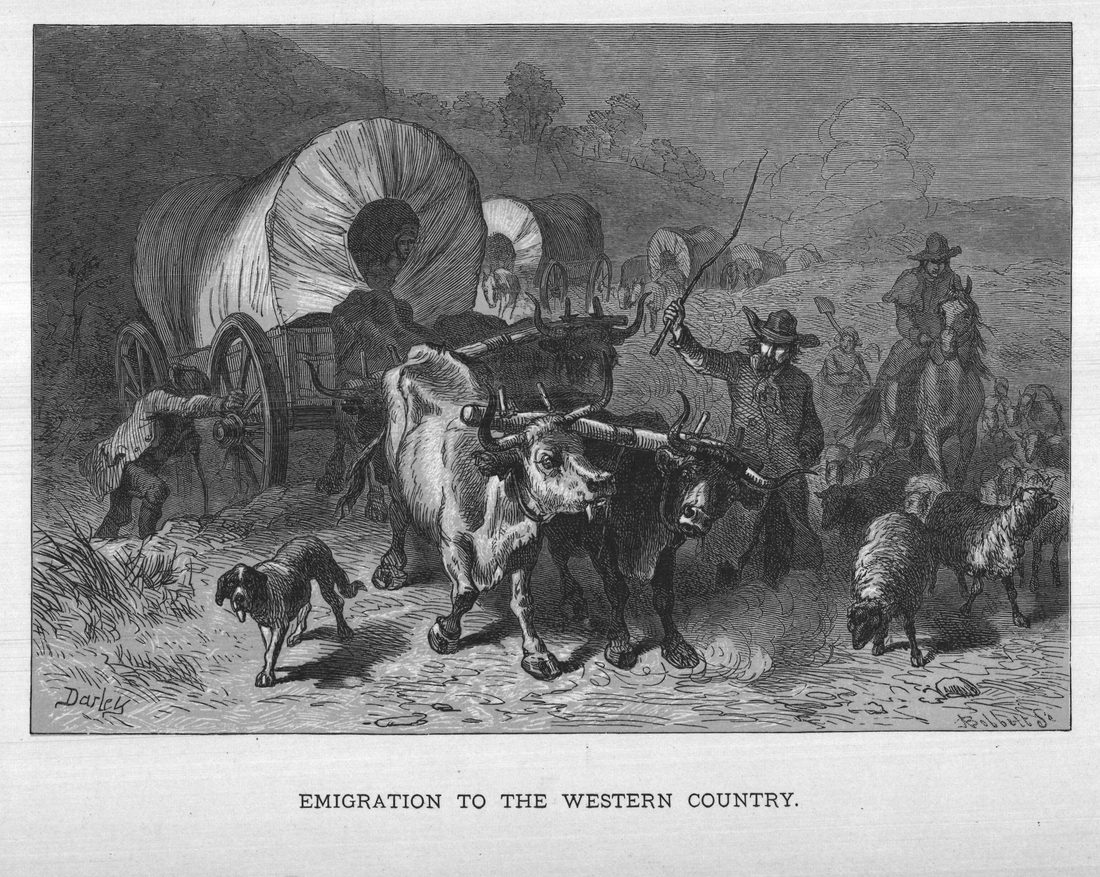
While these events were occurring on the Mediterranean and its borders, our Republic had been growing rapidly in political and moral strength, and by the expansion of its domain. During Mr. Jefferson's first term, one State (Ohio) and two Territories (Indiana and Illinois) had been formed out of the free Northwestern Territory. Ohio was organized as an independent territory in the year 1800, and in the fall of 1802, it was admitted into the Union as a State. At that time there was great excitement in the country west of the Alleghany Mountains, in consequence of a violation of the treaty made with Spain in 1795, by the governor of Louisiana, in closing the port of New Orleans against the commerce of our Republic. There was a proposition before Congress for taking forcible possession of that region, when it was ascertained that by a secret treaty Spain had retroceded Louisiana to France. Negotiations were immediately begun for the purchase of that domain from France, by the United States. Robert R. Livingston, the American minister at the court of the First Consul, found very little difficulty in making a bargain with Bonaparte, for the latter wanted money and desired to injure England by strengthening her rivals. He sold that magnificent domain, stretching from the Gulf of Mexico northward to the present State of Minnesota, and from the Mississippi westward toward the Pacific Ocean, for the sum of fifteen million dollars. The bargain was made in the spring of 1803, and in the fall the country, which added nine hundred thousand square miles to our territory, was taken possession of by the United States. When the bargain was closed, Bonaparte said, prophetically: "This accession of territory strengthens forever the power of the United States; and I have just given to England a maritime rival that will sooner or later humble her pride." Out of that domain have been carved some of our most opulent States and Territories.