Expedition to the Pacific Ocean Across the Continent
The same year when Louisiana was bought, President Jefferson, by a confidential message to Congress, proposed the first of those peaceable conquests which have opened, and are still opening, to civilization and human industry, the vast inland regions of our continent, then unknown. He recommended an appropriation to defray the expenses of an exploring expedition across the continent from the Mississippi to the Pacific Ocean. The appropriation was made, and an expedition was afterward organized under the control of Captains Lewis and Clarke, consisting of a little less than thirty persons. They left the western shore of the Mississippi on the 14th of May, 1804, traversed the continent between the great river and the "South Sea" of the earlier explorers, and in the course of twenty-seven months, completed their labors, by which the first reliable information was obtained respecting the vast country which they had penetrated and passed through.
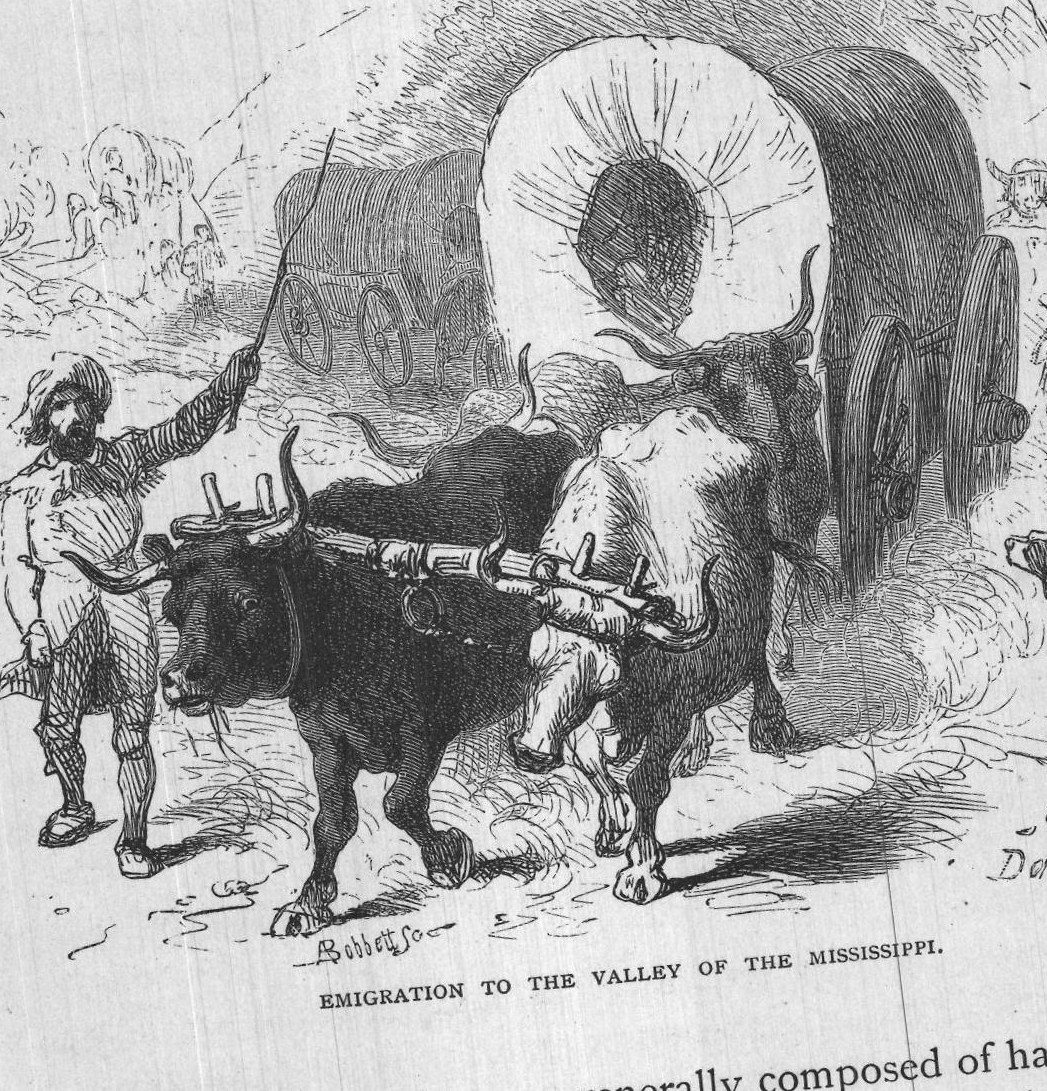
The country was agitated by stirring events in the region beyond the Alleghanies in 1805, and for a year or two afterward. The fertile valleys of the Ohio and Mississippi were rapidly filling with adventurers and settlers, and materials for new States, sufficient to make an empire, were rapidly gathering. The stream of navigation was flowing full from the east, down the western slopes of the great hills. Michigan was erected into a Territory that year (1805); and all along the Mississippi, settlements were taking deep root and flourishing. These were generally composed of hardy and venture-some men and women ready for any honorable enterprise that promised gain.
At that time there was a prevailing opinion in our country that the Spanish inhabitants in Louisiana would not quietly submit to the rule of our government. Taking advantage of this belief, and the restless spirits of the inhabitants who were forming States in the Great Valley, Aaron Burr, an ardent politician and expert and unscrupulous intriguer, who had been Vice-President of the United States during Jefferson's first term, thought he saw an opportunity to make circumstances subservient to his own ambitious views. In the summer of 1804, he had murdered General Hamilton in a duel, and became an outcast from society. He was tolerated only by his political party, and was not renominated with Mr. Jefferson. Smarting under the stings of neglect and the "good man's contumely," he was ready to attempt the execution of any scheme that promised a retrieval of his fame and fortune. He seems to have contemplated one in which the fortunes of the inhabitants west of the mountains were involved, but what it was exactly will never be made known, for the chief actors are dead and have "left no sign." It was thought that he intended to dissever the Union and set up an independent republic in the West with himself at the head. Others have believed that his scheme was to organize a strong military force in the West, and with it to invade Mexico, wrest that country from Spain, and set up an independent government there with himself at the head, either as president or monarch. It is certain that General Wilkinson, who was in command of United States troops in the West at that time, was associated with Burr for awhile in his schemes, whatever they may have been.
In the spring of 1805, Burr departed for the West, giving deceptive reasons for his journey. He went down the Ohio River in an open boat, and on a pleasant morning in May he appeared at the charming island-home of Herman Blennerhassett, an Irish gentleman possessed of a fine education, scientific tastes, an ample fortune, and a beautiful and accomplished wife. He was seated upon an island in the Ohio River, near the mouth of the Muskingum River, not far from Marietta, where he had a beautiful and happy home, enriched with books, adorned with pictures, enlivened with music from the lips and by the skillful fingers of Mrs. Blennerhassett as she touched the harp and guitar and sang sweet airs, and made attractive to the man of science and taste by conservatories of rare plants and fine pleasure-gounds. It was the resort of persons of the best minds beyond the mountains.
Into that paradise the wily serpent crept, and repeated the story of the fall. Mrs. Blennerhassett, an ambitious woman with an enthusiastic nature was tempted by the apple of Burr's seductive promises of wealth, power, and immortal honors, and she persuaded her husband to eat of the fruit. He placed his fortune and reputation at the disposal of that heartless demagogue, and lost both. He was driven by necessity from his lost paradise, and died in comparative poverty.