Guerrillas
During the summer and autumn of 1862, there were some stirring events in Missouri and Arkansas. After the battle at Pea Ridge, Curtis marched eastward, with his army, to assist in military operations on the borders of the Mississippi River; but he remained some time at Helena, menacing Little Rock and smiting guerrilla bands that roamed that State. Missouri was equally infested equally infested with guerrillas; and in June (1862) that Commonwealth was erected into a separate military district, with General J.M. Schofield at its head. He was vigilant and active; and with a force thirty thousand strong, scattered over the State in six divisions, he soon subdued, in a great degree, the numerous roaming bands that overran it. From April until September, about one hundred battles and skirmishes were fought in that State. Schodfield drove out troops that came over the southern border to help the Missourians in arms, and these fugitives formed the nucleus of a force, about forty thousand strong, which gathered in Arkansas under General T.C. Hindman, formerly a member of Congress.
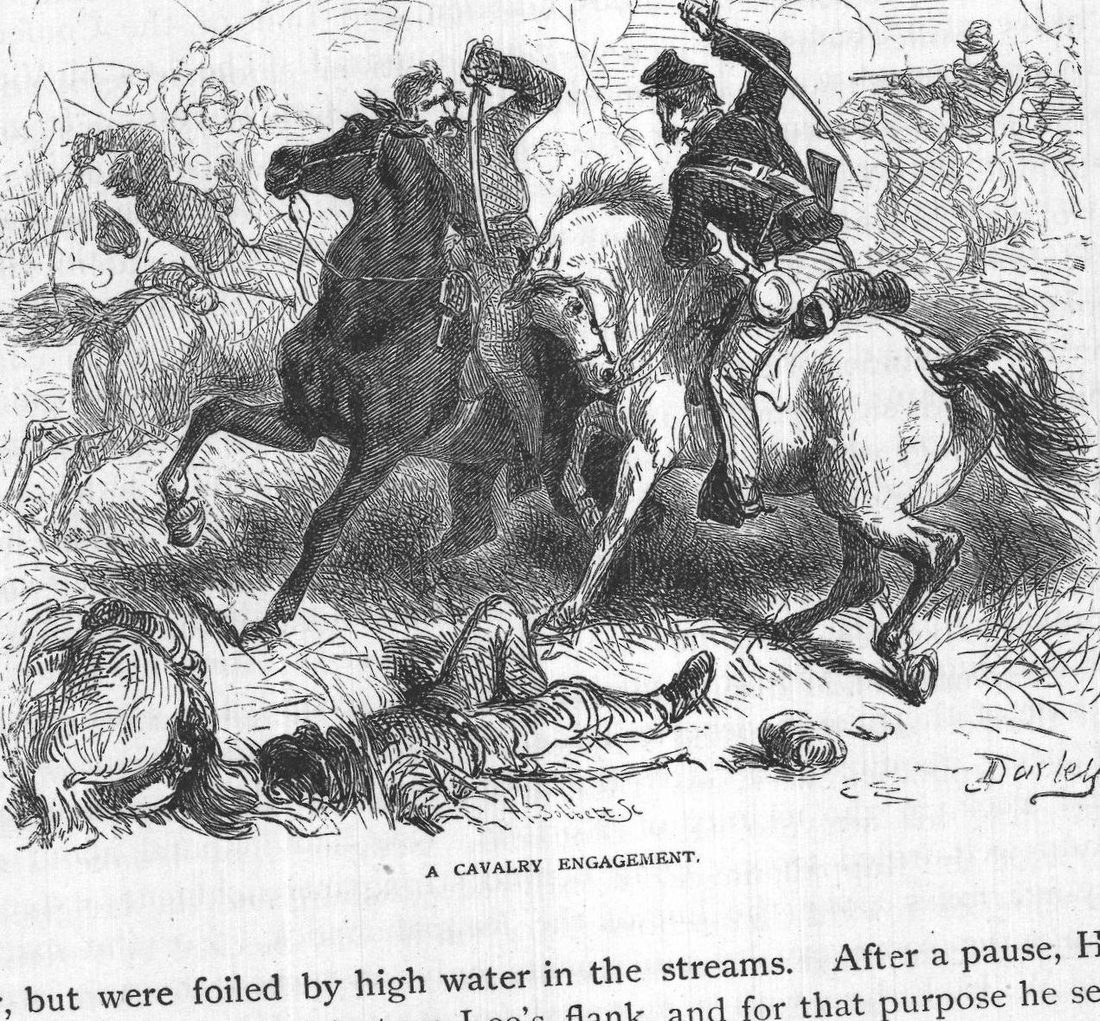
Leaving Curtis in command of the Missouri district, Schofield marched against Hindman, with eight thousand troops under General J.G. Blunt, in southern Missouri. With these he sought the shy Confederates in the vicinity of the Ozark Mountains. Blunt attacked a portion of them at Fort Wayne, near Maysville, on the 22d of October, and drove them into the Indian country. A week later a cavalry force, under General F.T. Herron, struck another portion on the White River, eight miles from Fayetteville, and drove them into the mountains. Soon after this, ill health compelled Schofield to leave the field, when the command devolved upon General Blunt.
Hindman now determined to strike a decisive blow for the recovery of his State from National control. Late in November he had gathered about twenty thousand men on the western borders of Arkansas. He moved against Blunt, and on the 28th his advance, composed of Marmaduke's cavalry, was attacked and defeated by Blunt, on Boston Mountains. The latter then took position at Cane Hill, when Hindman, with eleven thousand men, prepared to crush him. Blunt sent for General Herron, then just over the border, in Missouri, to come and help him. Herron soon promptly complied, and the combined forces fought and defeated Hindman at a little settlement called Prairie Grove. The Confederates were driven in confusion over the mountains.
Meanwhile there had been stirring events nearer the Gulf of Mexico, west of the Mississippi. Texas was then under Confederate rule. So early as May, 1862, Commander Eagle, with a small squadron of National vessels, appeared before Galveston, and demanded its surrender. There was a prompt refusal to comply; and so the matter remained until October following, when the civil authorities of that city surrendered it to Commodore Renshaw of the National navy. At the same time General Butler sent aggressive expeditions into the interior of Louisiana. The most important of them was led by General Godfrey Weitzel, who went with a strong force to "repossess" the rich La Fourche parish. This was accomplished, after a severe engagement at Labadieville, on the 27th of October. Very soon afterward the eastern portions of Louisiana, along the borders of the Mississippi, were brought under National control. On the 10th of December following, General Butler was succeeded in the command of the Department of the Gulf by General N.P. Banks.
The year 1862 was now drawing to a close. General Grant had concentrated the bulk of his army at Holly Springs, in Mississippi, where he was confronted by Van Dorn; at about the same time, General Rosecrans, with a greater part of the Army of the Cumberland, was moving southward to attack Bragg at Murfreesboro', below Nashville. Rosecrans was assisted by Generals Thomas, McCook, Crittenden, Rousseau, Palmer, Sheridan, J.C. Davis, Wood, Van Cleve, Hazen, Negley, Mathews and others; and Bragg had, as his lieutenants, Generals Polk, Breckenridge, Hardee, Kirby Smith, Cheatham, Withers, Cleburne, and Wharton.
On the 30th of December, the two armies lay within cannon-shot of each other on opposite sides of Stone River, near Murfreesboro'. On the following morning a sanguinary battle was begun, and continued until evening, with varied success and fearful losses. Rosecrans had gallantly conducted the fight in person, and he and Bragg prepared to renew the contest on the following morning, the first of January, 1863. That day was spent in heavy skirmishing; but on the morning of the 2d a terrific struggle was begun. The batteries on both sides were massed, and they were worked with destructive energy. The dead and wounded strewed the ground over scores of acres, for the carnage was dreadful; and, at one time, it seemed as if the total destruction of both armies would be the result. At length seven National regiments made a simultaneous charge, by which the Confederate line was broken into fragments and scattered in confusion. These regiments were the Nineteenth Illinois; Eighteenth, Twenty-first, and Seventy-fourth Ohio; Seventy-eight Pennsylvania; Eleventh Michigan, and Thirty-seventh Indiana. Victory remained with Rosecrans, and Bragg retreated southward to Tullahoma, while his antagonist occupied the battle-field and Murfreesboro'. The National loss in the battle of Stone River was twelve thousand men, and that of the Confederates ten thousand. The relative position of the two armies immediately after the battle, remained so for several months afterward.