Formation of Political Parties: Mediterranean Sea and Dey
As soon as one excitement was allayed in our country, another appeared; and during the whole of Washington's administration of eight years, when the foreign and domestic policy of our government was fashioned and its machinery put in operation, the greatest wisdom, circumspection and conservative action, on the part of government officers, was continually demanded. Difficulties were constantly appearing on the horizon, sometimes like mere specks of clouds in the far distance, and at others near and in alarming shapes. These were chiefly in relation to trade, especially in foreign lands. American commerce had begun to rapidly expand, and had found its way through the open gate at the Pillars of Hercules, into the Mediterranean Sea. There it was met by Moslem corsairs of the Barbary Powers on the northern coast of Africa, who had long and successfully depredated upon commerce in those waters. They seized our merchandise and held our seamen in captivity in order to obtain ransom-money for them. President Washington had called the attention of Congress to these piracies as early as 1790, and at the same time Secretary Jefferson submitted an able report on the subject, in which he gave many interesting details touching the position of American commerce in the Mediterranean Sea. Little, however, could then be done for the protection of our commerce there, for the Americans were without a navy; and for that protection we were dependent, for some time, on the fleets of Portugal, with which nation Algiers, the chief piratical power, was at war. Even this barrier was broken in 1793, secretly, by the British, for the avowed purpose of damaging France. The agent of that government at Algiers concluded a treaty with the Dey, or ruler, in which was a stipulation that the Portuguese government should not for one year afford protection to the commerce of any nation against Algerine cruisers. So these North African pirates were immediately released from all restraint, and roamed the Mediterranean Sea without interruption. The Americans were indignant, but could do nothing. They had already been compelled to endure insults, without the power of resenting them. When Colonel David Humphreys, who was sent by the United States as a commissioner to the Dey of Algiers, that haughty ruler, seated on a divan covered with rich cushions, and his turbaned officers of state standing near, said: "If I were to make peace with everybody, what should I do with my corsairs? what should I do with my soldiers? They would take off my head for the want of other prizes, not being able to live on their miserable allowance." This argument was unanswerable, and Humphreys wrote to his government: "If we mean to have a commerce, we must have a navy to defend it."
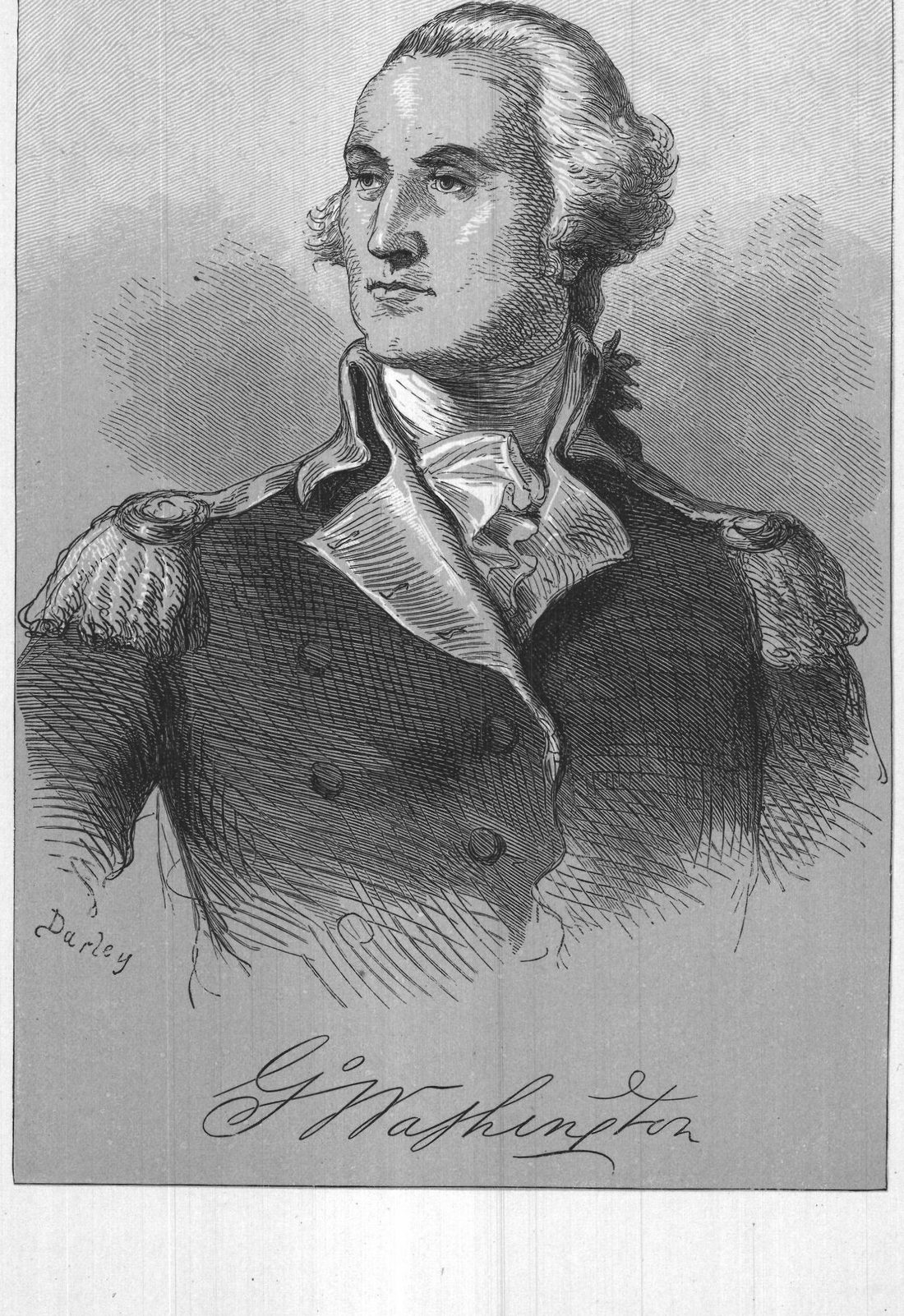
These depredations of the pirates and the delicate relations of our rising republic to the monarchies of the Old World caused Washington, in his annual message to Congress in December, 1793, to say: "If we desire to avoid insult, we must be able to repel it; if we desire to secure peace, one of the most powerful instruments of our prosperity, it must be known that we are at all times ready for war." Acting upon this hint Congress passed an act in the spring of 1794, authorizing the creation of a small navy, and appropriating about $700,000. There was strong and determined opposition to the measure, and delay was the consequence. Meanwhile the Algerine pirate fleet, released by the British treaty withdrawing Portuguese protection, had left the bounds of the Mediterranean and were out upon the Atlantic. Within a month after that treaty was made, ten American merchant vessels and over a hundred seamen were captured by the Algerine corsairs. Humphreys tried to make terms with the Dey, but the elated ruler refused to listen. The United States paid about a million dollars as a ransom for American captives, and in the autumn of 1795, our government was compelled to agree, by treaty, to pay an annual tribute to the Dey for the relief of captured seamen, according to long usage among European nations. This was humiliating, but nothing better could then be done. Humanity demanded it. Between the years 1785 and 1793, the Algerine pirates captured fifteen American vessels and made one hundred and eighty officers and seamen slaves of the most revolting kind. To redeem the survivors of these captives and others taken more recently, the United States paid the large sum just mentioned.
Congress, by the act of 1794, had authorized the President to cause the construction of six frigates; but it was provided that work on them should cease, in the event of peace with Algiers being secured. They also provided for the erection of harbor fortifications and the purchase of cannon and artillery munitions for them. Provision was also made for the establishment of arsenals and armories. Very small sums were appropriated for these purposes. These were the first beginnings of our army, navy, and system of fortifications. Washington immediately ordered the keels of he six frigates to be laid at as many ports, namely: Portsmouth, N. H., Boston, New York, Philadelphia, Baltimore, and Norfolk. The work was going on vigorously, when the treaty with the Dey of Algiers put a stop to it, and the mercantile marine of the United States lost all hope of protection in the event of a war with any foreign government.