Events on the St. Lawrence and Niagara Frontiers
The land forces on the St. Lawrence frontier were not idle. Captain Benjamin Forsyth was there with a company of regular riflemen, and after performing some exploits in the vicinity of the Thousand Islands, he took post at Ogdensburg. General Brown arrived there on the 1st of October (1812), and on the same day a large flotilla of British bateaux, escorted by a gun-boat, appeared at Prescott, on the opposite side of the river. This flotilla conveyed armed men, who, on the 4th of October, attempted to cross the river and attack Ogdensburg. They were repulsed by the Americans, who, with the regulars and militia, were about fifteen hundred strong. Eighteen days afterwards, Major G. D. Young, in command of a detachment of militia (chiefly from Troy, New York, about two hundred in number and stationed at French Mills,) captured the larger portion of a British detachment at St. Regis, an Indian village, lying on the boundary line between the United States and the British dominion. The late William L. Marcy, governor of the State of New York, then a lieutenant, captured the British flag with his own hand--the first trophy of that kind taken on land in the war.
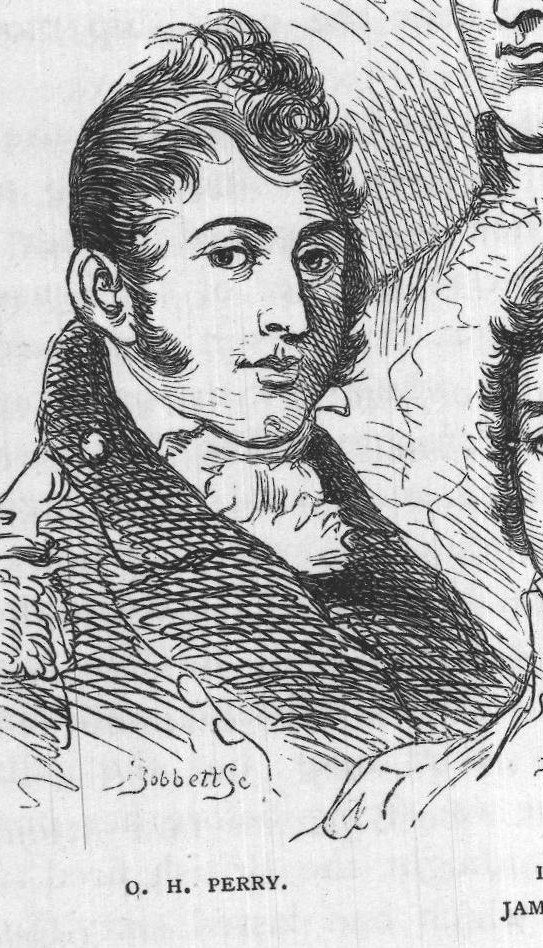
Meanwhile some stirring events had occurred on the Niagara frontier. Commodore Chauncey had sent Lieutenant Jesse D. Elliott to superintend the construction of vessels on Lake Erie. Black Rock, near Buffalo, was chosen as the place for a navy-yard. A few days before the affair at Queens-town, two British vessels anchored under shelter of the guns of Fort Erie, opposite. Elliott determined to attempt their seizure, and at midnight on the 8th of October, he crossed the river in boats with one hundred and twenty-four armed men--landsmen and seamen--and surprised and captured them both, with all their people. The expedition was now at Buffalo and Black Rock; and when the first pistol was fired, lanterns and torches sent gleams of light across the waters from the American shore, and shouts from scores of people rang out on the night air. These noises aroused every British soldier on the Canada shore, and heavy guns were brought to bear upon the assailants. There was a fierce struggle for the possession of the two captured vessels. The Caledonia was secured by the Americans, and afterward did good service in Perry's fleet on Lake Erie. Her consort the Detroit was burned.
More than a month later, British cannon were opened from five detached batteries on the Canada shore upon Fort Niagara at the mouth of the Niagara River. From dawn until the early twilight on the 21st of November, the cannonade and bombardment were kept up, and two thousand red-hot balls, with a tempest of bombshells, were hurled upon the American works. These missiles were answered in kind. The village of Newark was set on fire several times, and the garrison at Fort George were greatly disquieted. Night ended the artillery duel. This attack aroused the pompous General Smythe, at Buffalo, to action. He made ready for invading Canada from that point, and by flaming proclamations he so advertised his intentions, that the enemy were fully prepared to meet him when he was ready to cross the river. An abortive attempt was made before daylight on the 21st of November, and another attempt was ordered to take place two days afterward. Smythe, in an order issued the day before, said: "Neither rain, snow nor frost will prevent the embarkation. Yankee Doodle will be the signal to get under way. The landing will be effected in despite of cannon. Hearts of War! to-morrow will be memorable in the annals of the United States!" To-morrow came, but it was memorable there only by the failure of the cowardly commander to carry out his orders. He was evidently afraid of Lieutenant-Colonel Bisshopp, who commanded a small force on the other side of the river, and the campaign ended without anything being done in the way of invasion. Smythe was dismissed from the army. In a petition to Congress to reinstate him, he asked to be permitted to "die for his country." This phrase excited much ridicule. At a public celebration of Washington's birthday at Georgetown, D. C., the following sentiment was proposed: "General Smythe's petition to Congress to 'die for his country': May it be ordered that the prayer of said petition be granted." A wag wrote on a panel of one of the doors of the House of Representatives:
A Bisshopp, on Niagara's shore;
But looks on Death with dauntless eye,
And begs for leave to bleed and die.
Oh my!"