Conduct of the British Government and Press
The act of Captain Wilkes was applauded by all loyal men. It was in exact accordance with the British interpretation of the law of nations, as exhibited theoretically and practically by that government, yet it made a great ado about the "outrage." By most of the writers on international law in the United States, instructed by the doctrines and practices of Great Britain, the essays of British publicists, the decisions of British courts, and by the law as laid down by the Queen's recent proclamation, the act of Captain Wilkes was decided to be abundantly justified; yet, with the same "unseemly haste" that characterized the issuing of the royal proclamation on the 13th of the previous May, the British government prepared for war. It did not wait for a communication on the subject to be received from the United States, but made extensive provisions for hostilities preparatory to sending a peremptory demand for the release of the prisoners; and the Tory press of Great Britain, conducted in the interest of the government, abused the Americans without stint. A single specimen from the columns of the London Times will suffice. Speaking of the courteous and accomplished gentleman, Captain Wilkes, the London Times said: "He is, unfortunately, but too faithful a type of a people in whose foul mission he is engaged. He is an ideal Yankee. Swagger and ferocity, built upon a foundation of vulgarity and cowardice-these are his characteristics, and these are the most prominent marks by which his countrymen, generally speaking, are known all over the world. To bully the weak, to triumph over the helpless, to trample on every law of country and custom, wilfully to violate the most sacred interests of human nature, to defy as long as danger does not appear, and, as soon as real peril shows itself, to sneak aside and run away-these are the virtues of the race which presumes to announce itself as the leader of civilization and the prophet of human progress in these latter days. By Captain Wilkes, let the Yankee breed be judged."
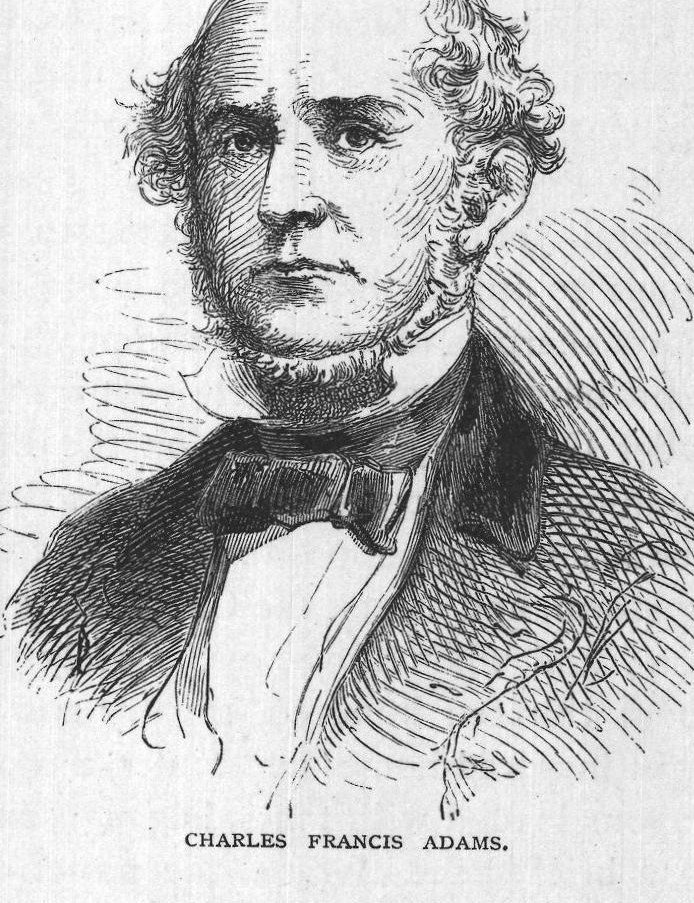
While the British government was preparing for war, and our Congress was officially thanking Captain Wilkes for his conduct, and other public bodies were bestowing honors upon him, our Government, acting upon the wise counsel of President Lincoln, and true to its long-cherished principles, proceeded to disavow the act of Wilkes and to release the prisoners. That act was in violation of a principle for the maintenance of which, as we have seen, the United States went to war with Great Britain-the principle that the flag of a neutral vessel is a protection to all beneath it. A few hours after the news of the capture reached Washington, the calm and thoughtful President said to the writer: "I fear the traitors will prove to be white elephants. We must stick to American principles concerning the rights of neutrals. We fought Great Britain for insisting, by theory and practice, on the right to do precisely what Captain Wilkes has done. If Great Britain shall now protest against the act, and demand their release, we must give them up, apologize for the act as a violation of our doctrine, and thus forever bind her to keep the peace in relation to neutrals, and so acknowledge she has been wrong for at least sixty years." Under the instructions of the President, the Secretary of State (Mr. Seward) acted in accordance with these utterances. The prisoners were released, and the British people blushed for shame because of the impotent bluster of their government, when the fact was promulgated by the American minister, Mr. Adams. Then the London Times, which had called most vehemently for war on "the insolent Republic," in speaking of the demand of the British government for the release of the embassadors, superciliously declared that they were "worthless booty;" and added, "England would have done as much for two negroes." The embassadors were treated, in England, with a coolness that amounted to contempt, and they soon passed into obscurity.
The British government acted not only unwisely but dishonorably in the matter. Lord John Russell, the Foreign Secretary, wrote to Lord Lyons, the British minister at Washington, to demand from our Government the liberation of the captives and "a suitable apology for the aggressions which had been committed;" and if the demand should not be speedily complied with, to leave Washington, with all the members of the legation. On the day of the date of Earl Russell's despatch, Mr. Seward wrote a confidential note to Mr. Adams, calling attention to the fact that Captain Wilkes did not act under orders from his Government, and expressed a hope that the British government would consider the subject in a friendly manner. He gave Mr. Adams permission to read his note to Lord Russell and the Prime Minister. Mr. Adams did so; and yet the British government, with this voluntary assurance that a satisfactory arrangement of the difficulties might be made, continued its preparations for war with vigor, to the alarm and distress of the people. The fact that such assurance had reached the government was not only suppressed, but, when rumors of it were whispered, it was semi-officially denied. And when the fact could no longer be concealed, it was, by the same authority, affirmed, without a shadow of justice, that Mr. Adams had suppressed it, at the same time suggesting, as a reason, that the American minister might profit by the purchase of American stocks at panic prices!