Action of Committee on Foreign Relations
The State legislatures generally spoke in favor of war; but the timid President, influenced by his own convictions and the opinions of his cabinet, still hesitated. Finally a committee of Democratic members waited on Mr. Madison and told him plainly, in substance, that the supporters of his administration had determined upon a war with Great Britain; that the people were impatient of delay; and that unless a declaration of war should soon be made, his renomination and re-election to the Presidency would probably not be accomplished. The President consented to yield his own convictions to the will of his political friends. Accordingly, on the first of April, 1812, he sent a confidential message to Congress, proposing as a measure preliminary to a declaration of war, the passage of a law laying an embargo upon all commerce with the United States for the space of sixty days. This was done on the 4th of April. Four days afterward, Louisiana was admitted into the Union as a State.
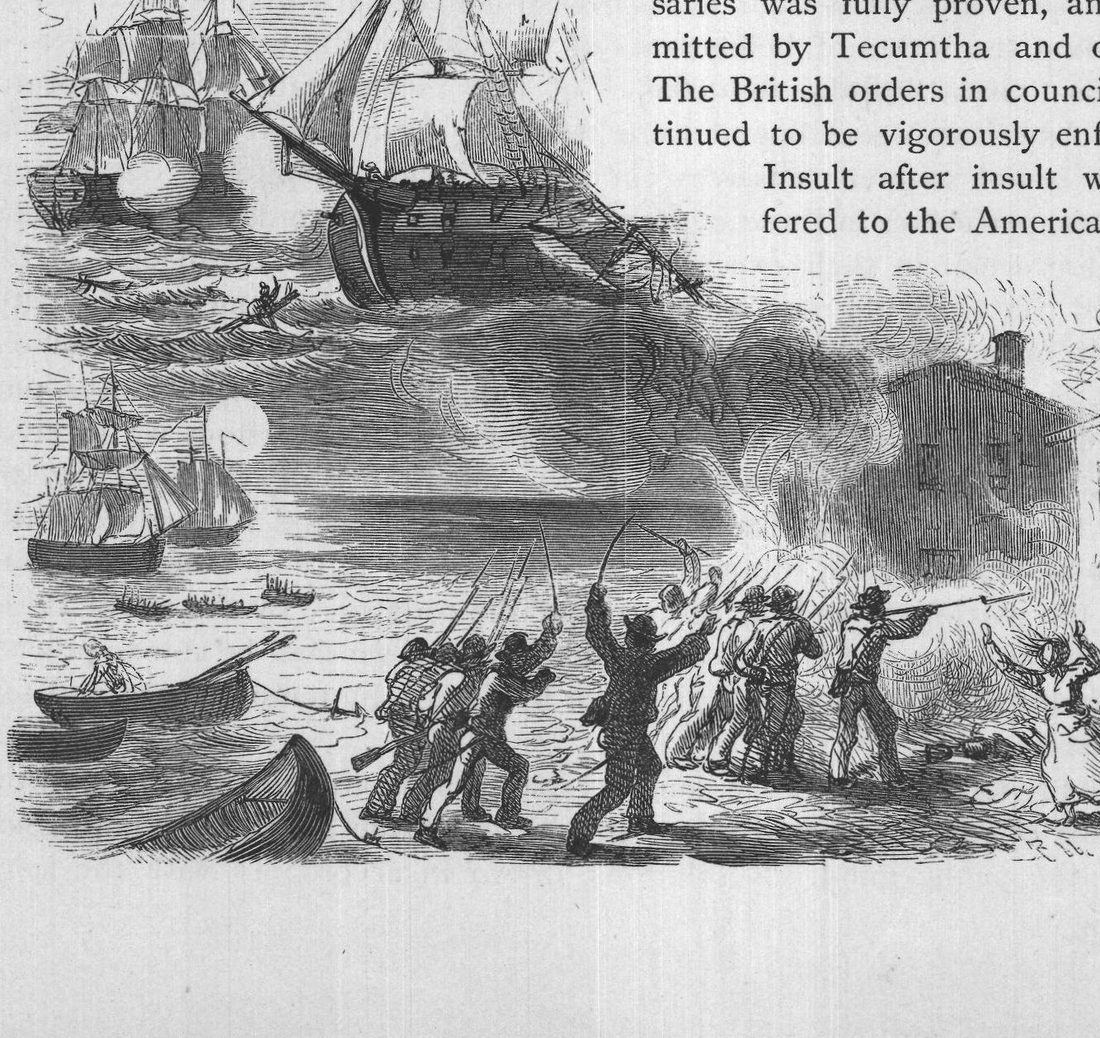
At the end of sixty days the President sent a message to Congress in which he reviewed the difficulties with Great Britain, portrayed the aggressions of that power, and intimated the necessity of war for the maintenance of the honor and dignity of the republic. It was referred to the Committee on Foreign Relations, when a majority of them--John C. Calhoun of South Carolina, Felix Grundy of Tennessee, John Smillie of Pennsylvania, John A. Harper of New Hampshire, Joseph Desha of Kentucky, and Ebenezer Seaver of Massachusetts--reported (June 3) a manifesto as the basis of a declaration of war. On the next day, a bill to that effect, drawn by Attorney-General Pinckney, in the following form, was adopted and presented by Mr. Calhoun: "That war be, and the same is hereby, declared to exist between the United Kingdom of Great Britain and Ireland and the dependencies thereof, and the United States of America and their Territories; and that the President of the United States is hereby authorized to use the whole land and naval force of the United States to carry the same into effect, and to issue to private armed vessels of the United States, commissions or letters of marque and general reprisal, in such form as he shall think proper, and under the seal of the United States, against the vessels, goods, and effects of the government of the said United Kingdom of Great Britain and Ireland, and the subjects thereof."
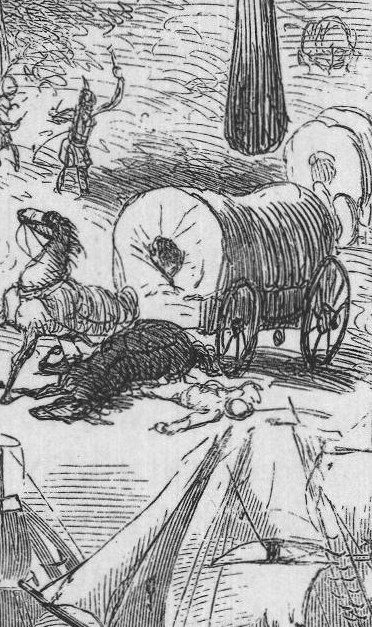
During these proceedings Congress sat with closed doors. The bill passed the House of Representatives by a vote of 79 to 49, and the Senate by 19 to 13. It immediately became a law by receiving the signature of the President. Two days afterward--the 19th of June, 1812--Mr. Madison issued a proclamation in which he formally declared war against the offending government and people. The conflict that ensued is known in history as the War of 1812, and may properly be regarded as our Second War for Independence, for until the end of that contest the United States were only nominally free. The people, blessed with prosperity and happy in the pursuit of the arts of peace, dreaded war, and submitted to many acts of oppression and insult from Great Britain and France, rather than appeal to the arbitrament of the sword. Commercially, and in a great degree socially, the people of the United States were dependent upon Europe, and especially upon England; and the latter was, at that time, rapidly acquiring a dangerous political interest here. The war began in 1775, was really only the first great step toward independence; the war begun in 1812, first thoroughly accomplished it. The chief causes for declaring war were the impressment of American seamen by the British; the blockade of French ports without adequate force to sustain the act; the orders in councils, and the incitement of the savages to hostilities.
Congress took measures immediately to sustain the declaration of war. They authorized the President to enlist 25,000 men for the regular army; accept 50,000 volunteers, and call out 100,000 militia for the defence of the sea-coasts. They also appropriated about $3,000,000 for the navy. But at the very outset the government encountered open and secret, manly and cowardly, opposition. The Federalists in Congress, who had opposed the war-scheme of the administration from the beginning, published an address to their constituents in which they set forth the state of the country at that time, the course of the administration and its supporters in Congress, and the reasons of the minority for opposing the war. This was fair and honorable. But outside of Congress there was a party of politicians, composed of Federalists and disaffected Democrats, organized under the name of the Peace Party, whose object was to cast obstructions in the way of the prosecution of the war, and to compel the government, by weakening its resources and embarrassing its operations, to make peace. They tried to derange the public finances, discredit the faith of the government, prevent enlistments, and in every way to cripple the administration and bring it into discredit with the people. It was an unpatriotic and mischievous faction; and the leaders of the Federalists, like Mr. Quincy and Mr. Emott, who, when the war began, lent their aid to the government in its extremity, frowned upon these real enemies of their country. But the machinations of the Peace Party continued until the close of the war, and did infinite mischief unmixed with any good.