Home › Augmentations › Augmentations: Scotland
Augmentations: Scotland
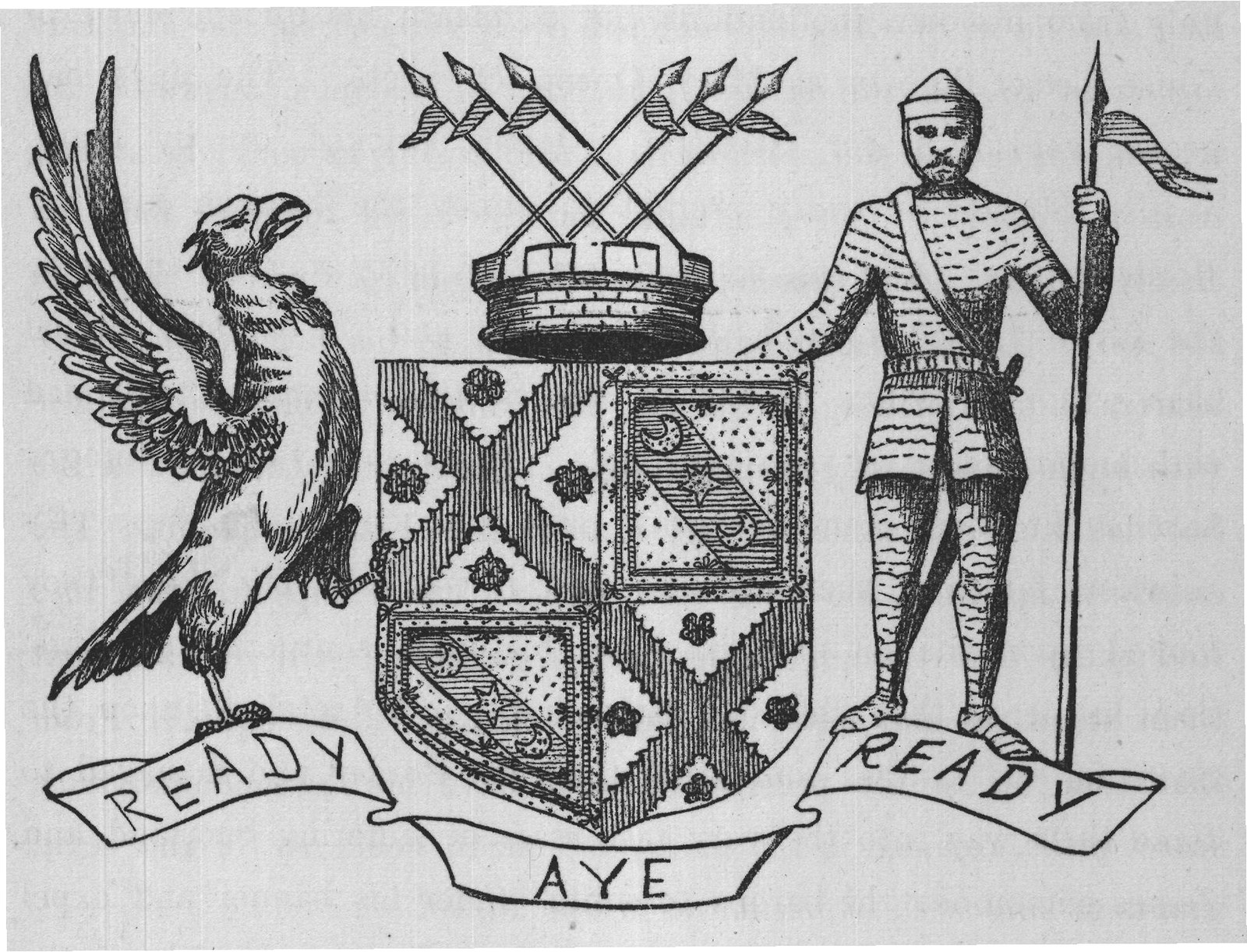
Such a mark of kingly favor as that of the wreath, or tressure, of Scotland, which, if you look on the shield of the great English admiral, Lord Napier, you cannot fail to notice, is an heirloom much valued by the family possessing it. This tressure, and the crest above it, consisting of a cluster of spears rising from a fortress, were given, not to Lord Napier himself, great as his merit AUGMENTATIONS. was, but to a stalwart ancestor of his, Scott of Thirlestane, who carried as leal and true a Scottish heart as ever beat beneath the tartan plaid. King James of Scotland, though a young man when killed, had succeeded in making himself exceedingly unpopular with the Protestant nobility of Scotland, on account of the favors that, with lavish hand, he poured upon the Romish clergy. This he did, not only from his own inclinations, but to please his queen, Marie of Guise better known as Mary Queen of Scots. The days had grown very dark for Scotland. James, pricked on by Mary, availed himself of every pretext to annoy the English king by Border forays. And this constant state of petty warfare, added to the favor showed towards the Catholics, and the poverty withal that was everywhere visible in the Scottish kingdom, inflamed the chieftains against their sovereign. The majority of the hungry barons felt their animosity grow daily, as they saw the priestly courtiers fatten at their expense, and it was with envy that they looked upon the lot of their more fortunate southern neighbors. So it happened that when the English began to retaliate upon the Scots for the ravages committed upon the Border, and managed to force their way into the very fastnesses of suffering Scotland, and James summoned the barons to unite under his banner and expel the enemy from their land, they agreed to do so, and, with all the valor born of mountain life, were able to drive the English back. But at this moment, when the king, flushed with victory, was burning with desire to follow up his advantage by an overwhelming attack upon the English in their own country, the sullen nobles declared that all their pledges had been fulfilled, and they should return to their own castles. In vain did the king implore them to follow him, promising a glorious victory: their hearts were already more than half given to the Protestant English king, and they withdrew coldly, all save one, loyal Scott of Thirlestane. He alone felt his heart glow with fervor for king and country, and, with true courage, boldly swore, upon his honor as a knight and faithful subject, to follow the fortunes of his king wheresoever they might READY AYE READY lead him, and, with his retinue of vassals, placed himself beside his humiliated master. For this he was rewarded by having the Scottish Tressure placed upon his shield, and with it received the crest of spears and the motto, "Ready, aye, ready." This coat-ofarms finally became the shield of Lord Napier, and in his name we find an added legendary interest. So exceedingly legendary is its character, however, that it is only in the darkest, deepest, least AUGMENTATIONS. explorable corner of the Napier heart that we find hidden the conviction that they are descended from the ancient Thanes or Stewards of Lennox, and that the reason why the name of Napier was substituted for that of Steward was a most honorable one. They whisper to one another that when King David II. of Scotland was engaged in the seemingly never-ending Border warfare with England, he at one time summoned every subject capable of bearing arms to his standard. The Earl of Lennox answered by sending his second son, with as large a following as could be spared from the castle. The chieftains thus gathered together met the enemy, but for some reason their ranks began to weaken. Donald, the son of Lennox, seeing this, dashed up to his father's standardbearer, and, wrenching the colors from his grasp, charged the foe with such impetuosity that the tide of battle was turned, and the Scottish king was able to feel that Scotland still was his. The enemy vanquished, the king then gathered the troops together and told them that though all had done gallantly, still one amongst them stood pre-eminent, one who had "na pier," no equali From that time up to the present moment have his descendants, with secret pride, rejoiced in the name, and made good use of the royal grants of land with which it was accompanied.