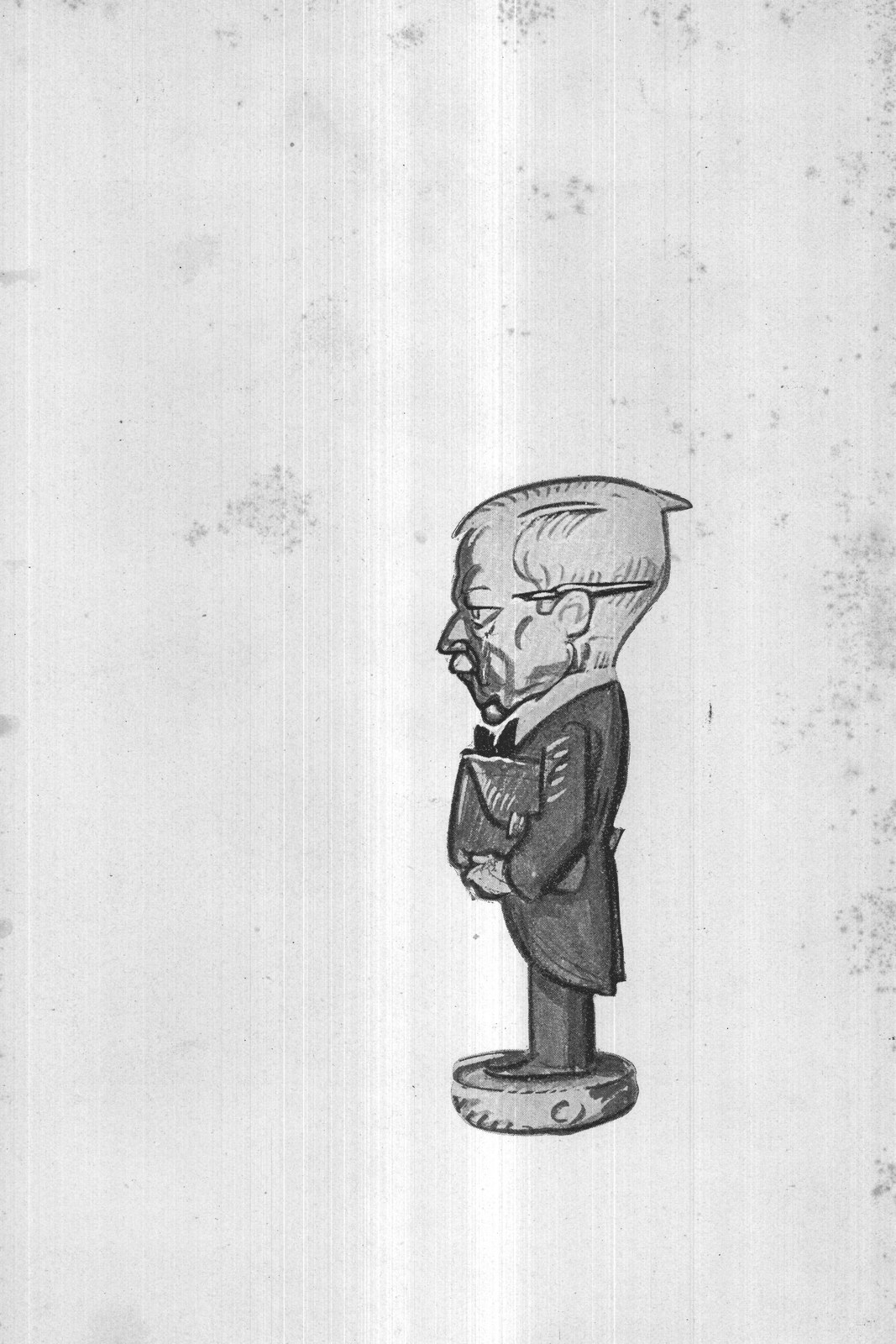
Home › Robert Lansing › Robert Lansing: Bryanism
Robert Lansing: Bryanism
When Woodrow Wilson was elected President for the first time he appointed Mr. Bryan Secretary of State. The opinion Mr. Wilson entertained of Mr. Bryan we all know. Mr. Wilson was not given to letting his thoughts run wild, but on one occasion, with pen in hand, he permitted himself the luxury of saying what he thought and expressed the pious hope that somebody would knock the distinguished Nebraskan into a cocked hat and thus dispose of the perpetual candidate who was the Old Man of the Sea to the Democratic Party. Circumstances alter cases; Mr. Wilson as a private citizen could say and think what he pleased; as President he was compelled to make Mr. Bryan Secretary of State. As Mr. Bryan knew nothing of history and less of European politics and had a superb disdain of diplomacy--diplomacy according to the tenets of Bryanism being an unholy and immoral game in which the foreign players were always trying to outmaneuver the virtuous and innocent American--he was provided with a political nurse, mentor, and guardian in the person of John Bassett Moore, who had a long and brilliant career as an international lawyer and diplomatist. Mr. Bryan busied himself with finding soft jobs for deserving Democrats, preaching and inculcating the virtues of grape juice to the diplomatic corps, and concocting plans whereby the sword was to be beaten into a typewriter and war become a lost art. Meanwhile Mr. Moore was doing the serious work of the Department.
No two men were more unlike than Mr. Bryan and Mr. Moore; Mr. Bryan a bundle of loosely tied emotions to whom a catchy phrase or an unsound theory is more precious than a natural law or the wisdom of the philosopher; Mr. Moore an intellect who has subordinated his emotions, and to whom facts are as important as mathematics to an engineer. It was an incompatible union; it could not last. Mr. Moore became impatient of his chief's vagaries and, about a year later, returned to the dignified quiet of Columbia University. This was early in 1914. Now for the random way in which chance weaves her skein. Mr. Moore went out of the Department and left the office of Counselor vacant, an office, up to that time, so little known that the public, if it gave the matter any thought, believed its occupant was the legal adviser of the Department, while, as a matter of fact, he is the Under Secretary, which is now the official designation.
At this stage of his career Mr. Lansing was connected with the Department as an adviser on international affairs and had represented the United States in many international arbitrations. He was known to a small and select circle of lawyers specializing in international law, but to the public his name meant nothing. He had always been a good Democrat, although he was married to the daughter of the late John W. Foster, who wound up a long and brilliant diplomatic life as Secretary of State in President Harrison's Cabinet after Mr. Blaine's resignation.