Home › Egypt Before the Time Of › Egypt Before the Time Of: Asiatic
Egypt Before the Time Of: Asiatic
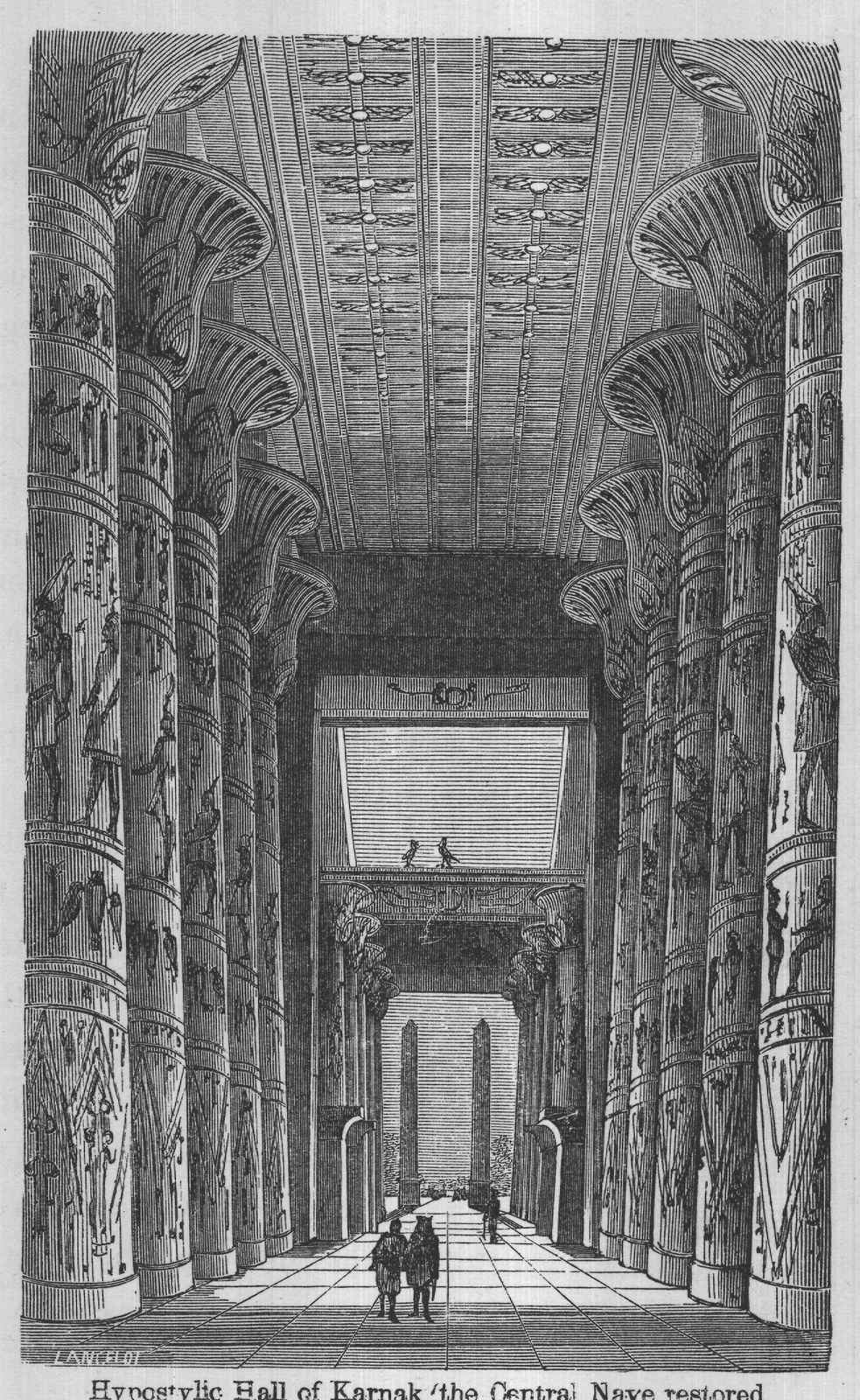
Thothmes III.," says the Vicomte de Rougé, in his Memoir on the Campaigns of Sesostris, " at the close of fourteen expeditions directed chiefly against the Assyrians and the Phoenicians, reveal to us Nineveh and Babylon, Asshur and Shinar bringing in their tribute as vassals to Egypt. They are accompanied by other nations more powerful at that time in Asia than they, but whose names have shone less conspicuously in succeeding ages. During time of peace, the Pharaohs exercised their supremacy regularly in those countries. Leaving all authority in the hands of the national chiefs, they contented themselves with levying an annual tribute. They had, nevertheless, seized the best domains of the vanquished princes, and had appropriated the revenues either to the use of different temples, or to their personal treasury. Fortresses commanded the chief approaches to Asia; governors at the head of strong garrisons watched the conquered provinces; and when a royal reign lasted for some length of time, the king himself was seen coming to Asia, either peaceably to receive tribute, or angrily to chastise rebels by one of those terrible forays which, in the East, seem to be the very essence of war. "The concluding reigns of the eighteenth dynasty were agitated by usurpations and religious dissen- Hynostylic Hall of Karnak 'the Central Nave restored according to the Egyptian Commission). sions. Favored by these disorders, Asia shook off the yoke of the Pharaohs, and Seti I., the Sethos of historians, found the revolt pushed on as far as the gates of Lower Egypt, so that he had to begin over again the conquest of Syria. The victories that signalized the first years of his reign appear to have re-established the Egyptian supremacy over the Asiatic provinces, for some length of time.
The grand hypostylic hall of Karnak, and the magnificent tomb discovered by Belzoni, are majestic monuments, that sufficently attest the tranquillity of the country, the wealth of the monarch, and the high perfection of the arts under the reign of Sethos. But the glory of these names and of these deeds is founded, for posterity, upon the still more daz zling splendor of the second period of that grand Egyptian cycle which, until our day, was entirely comprised in the legend of Sesostris, but which is henceforth eclipsed by the reign, the name, the monuments of Rameses the Great.