War with the Seminoles
The first blow was struck in December, 1835. Osceola had agreed to send some horses and cattle to General Thompson; but at the very time he was to do so, the savage was, with a small war party, murdering the unsuspecting inhabitants on the borders of the everglades--a region mostly covered with water and grass, and affording a secure hiding-place for the Indians. At that time General Clinch was occupying Fort Drane with a small body of troops. That post was in the interior of Florida, forty miles eastward of the mouth of the Withlacoochee River, and the garrison was now exposed to much danger from the hostilities of the Indians. Major Dade, with over a hundred soldiers, was sent from Fort Brooke, at the head of Tampa Bay, to the relief of Clinch; and on the 28th of December (1835) he fell into an ambush, when himself and his followers were all massacred excepting four men, who afterward died from the effects of the encounter. That sad event occurred near Wahoo Swamp, on the upper waters of the Withlacoochee. On the same day Osceola and a small war party stole unobserved up to a store a few yards from Fort King (about sixty miles southwest of St. Augustine), where General Thompson and five of his friends were dining, and murdered them. Osceola killed and scalped General Thompson with his own hand, and so he enjoyed the revenge he had sought. Three days later, General Clinch had a sharp fight with the Seminoles on the Withlacoochee; and on the last day of February, 1836, General Gaines was assailed at the same place.
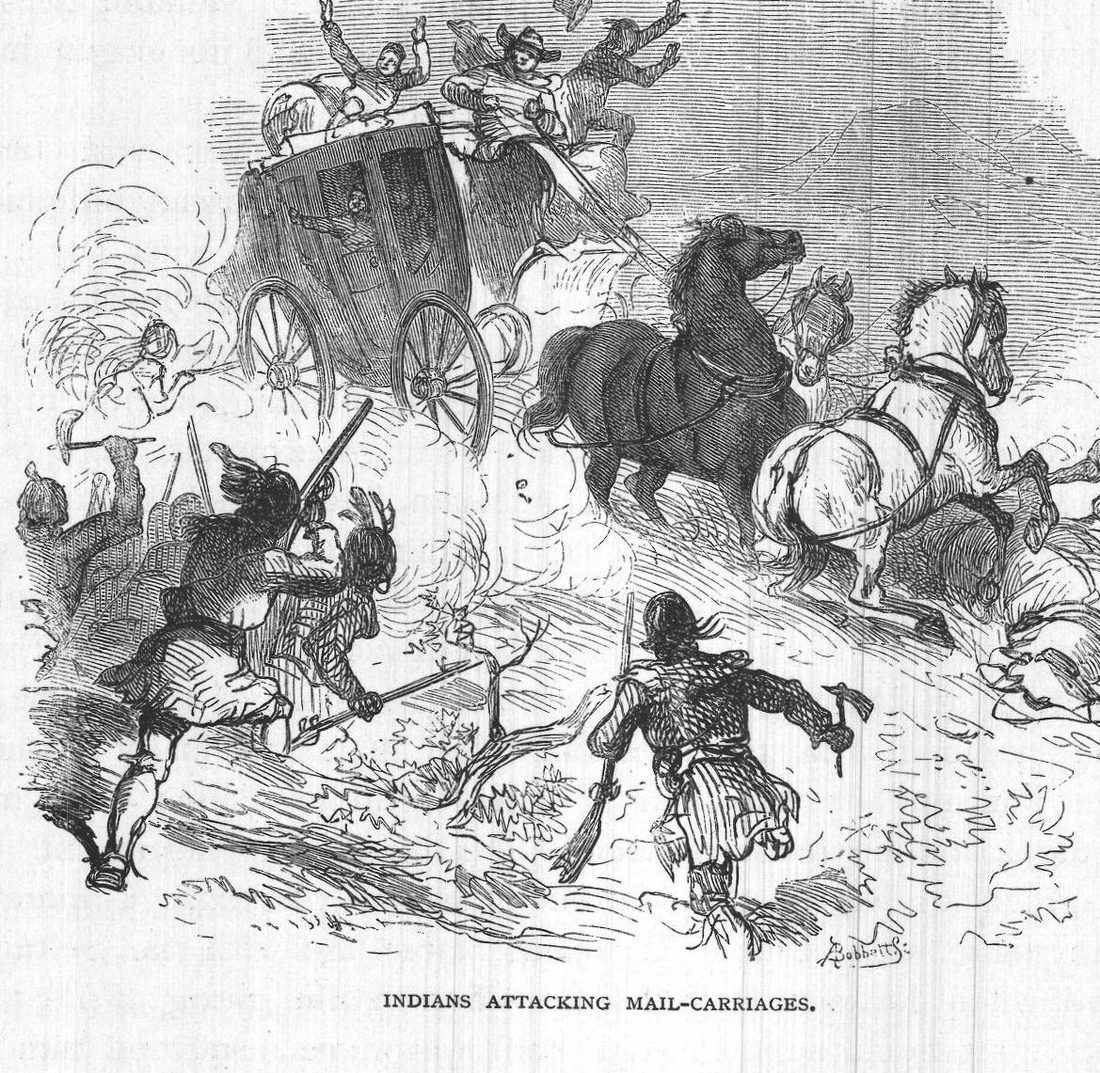
The Creeks helped their brethren in Florida by attacking white settlers within their ancient domain, in the spring of 1836. Made bold by success, they extended their depredations and murderous forays into Georgia and other parts of Alabama, attacking mail-carriers on horseback, stage-coaches on the land, and steamboats on the rivers; and finally they assailed villages, until thousands of men, women and children, were seen flying for their lives from place to place to escape the tomahawk, the bullet, and the scalping-knife. General Winfield Scott was now in chief command in the South, and he prosecuted the war with so much vigor that the Creeks were speedily subdued; and during the summer of 1836, thousands of them were removed to the wilderness west of the Mississippi. At mid-autumn, General Call of Georgia led about two thousand militia and volunteers from that State against the Seminoles. Near the place of the massacre of Dade's command, a detachment of them, about five hundred in number, had a severe battle with the savages on the 25th of November; but like all other encounters with these Indians in their swampy fastnesses, it was not decisive. In that region the United States troops suffered dreadfully from miasmatic fevers, the bites of venomous serpents, and the stings of insects; and the year 1836 closed with no prospect of peace. Indeed the war continued all the winter; but finally, in March, 1837, several chiefs appeared before General Jesup, then in chief command there, at his quarters at Fort Dade, and signed a treaty, which was intended to secure an immediate peace and the instant departure of the Seminoles to the new home prepared for them. The wily Osceola caused this treaty to be violated. The war was renewed; and during the summer of 1837, many more troops perished in the swamps while pursuing the savages. At length the treacherous chief became a prisoner in the hands of General Jesup. That officer received Osceola and other chiefs, with a train of seventy warriors, under a flag of truce, in a grove of magnolias in the dark swamp. As the chief arose to speak, Jesup gave a signal, when two or three of his soldiers rushed forward and seized and bound Osceola with strong cords. He made no resistance; but several of his excited followers drew their gleaming hatchets from their belts. The muskets and bayonets of Jesup's troops restrained them, and they were dismissed without their leader, who was sent to Charleston and confined in Fort Moultrie. There he died of a fever, and a small monument was erected over his grave near the main entrance to the fort. Jesup was severely censured for this violation of the sanctity of a flag; his plea in his justification was that it was the only way to stop the distressing war, for Osceola could not be held by the most solemn obligations of a treaty. Osceola's captivity was a severe blow to the Seminoles; but under other leaders they continued to resist, notwithstanding almost nine thousand United States troops were in their territory at the close of 1837. Their fastnesses in the everglades could not be penetrated by the troops and they defied them, even after they received a severe chastisement from six hundred national soldiers under Colonel Zachary Taylor (afterward President of the United States), who had succeeded General Jesup. This chastisement was given them in a battle fought on Christmas day, on the northern border of Macaco Lake. For more than two years afterward Taylor and his men endured great hardships in trying to bring the war to a close. A treaty for that purpose was made in May, 1839, but so lightly did its obligations bind the Indians that they continued their depredations. It was not until 1842 that a permanent peace was secured, when scores of valuable lives and millions of treasures had been wasted in a war that had its origin in the injustice of the white man toward his dusky neighbor.