Troops in Boston
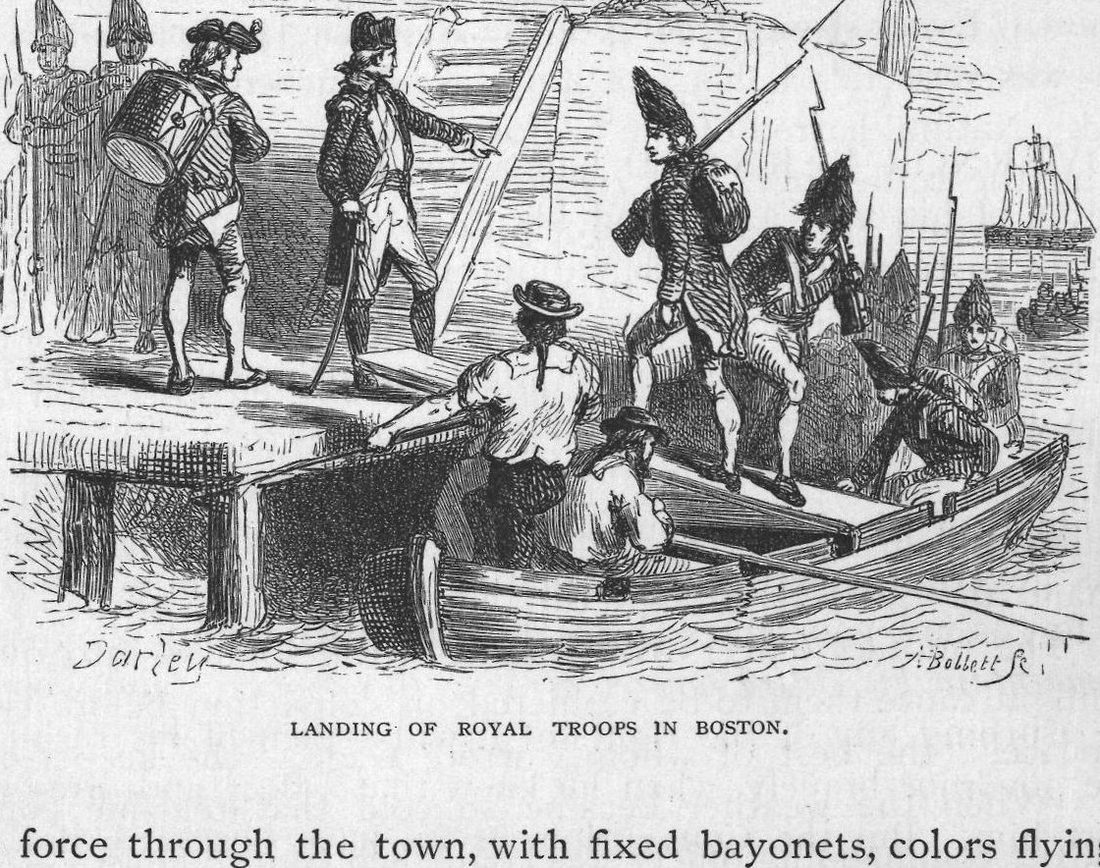
The troops in Boston were a source of constant irritation. "They must be removed to the Castle," said the good citizens. "They shall remain," said the crown-officers; and Hutchinson, in obedience to an order from Hillsborough, prorogued the Massachusetts Assembly till the middle of March, while some of them were on their way from a distance to hold a session in Boston. This arbitrary act inflamed the indignation of the people, and stirred the ire of all the colonies. It was immediately followed by violations of the non-importation agreement by a few covetous Boston merchants, who coalesced with the crown-officers. Among them were Hutchinson's sons, who were his agents. They secretly sold tea. A meeting of patriotic merchants was held, and in a body they went to the lieutenant-governor's house to treat with his sons, who had violated the agreement. He treated them as incipient insurgents, and would not allow them to enter. He sent the sheriff into an adjourned meeting of merchants to order them to disperse. The troops were furnished with ball-car-tridges, and Colonel Dalrymple was ready to shed blood in defence of the royal prerogative. The meeting sent a respectful letter to the governor, written by John Hancock, telling him plainly that their assemblage was lawful, and they should not disperse. Hutchinson, made wiser by past experience with an exasperated people, submitted to circumstances, and was quiet.
Meanwhile the insolence and aggressive acts of the soldiery in New York had aroused the people there to resistance. Although it was winter, the Sons of Liberty frequently gathered around the Liberty-Pole, which had stood defiantly since it was iron-bound in 1767. At midnight in January (1770), some armed men went stealthily from the barracks with chisels and axes, cut down the pole, sawed it in pieces, and piled the fragments in front of Montague's, the rendezvous of the Sons of Liberty. The perpetrators of the act were discovered at dawn. The bell of St. George's Chapel, in Beekman street, was rung as if there were a great conflagration, and at an early hour on the 17th of January, full three thousand people stood around the stump of the consecrated pole. By resolutions they declared their rights, and contempt of the soldiers as enemies to the Constitution. The soldiers posted an insulting placard about the town. For about three days the most intense excitement prevailed. In affrays with the citizens, the soldiers were generally defeated, and on one occasion several of them were disarmed. Quiet was restored at length. The people erected another Liberty-Pole upon private ground purchased for the purpose upon Broadway, near the present Warren street; and not long afterward the soldiers departed for Boston, where bloodshed had occurred.
In spite of the threatening attitude of the citizens, four or five Boston merchants continued to import and sell tea, the specially proscribed article. The women of Boston protested against this violation of a sacred pledge. The mistresses of three hundred families subscribed their names to a league, binding themselves not to drink any tea until the revenue act was repealed. Three days afterward the maidens of Boston were gathered in convention in the home of an opulent merchant, and there signed their names to the following pledge: "We, the daughters of those patriots who have and do now appear for the public interest, and in that principally regard their posterity--as such, do with pleasure engage with them in denying ourselves the drinking of foreign tea, in hopes to frustrate a plan which tends to deprive a whole community of all that is valuable in life."
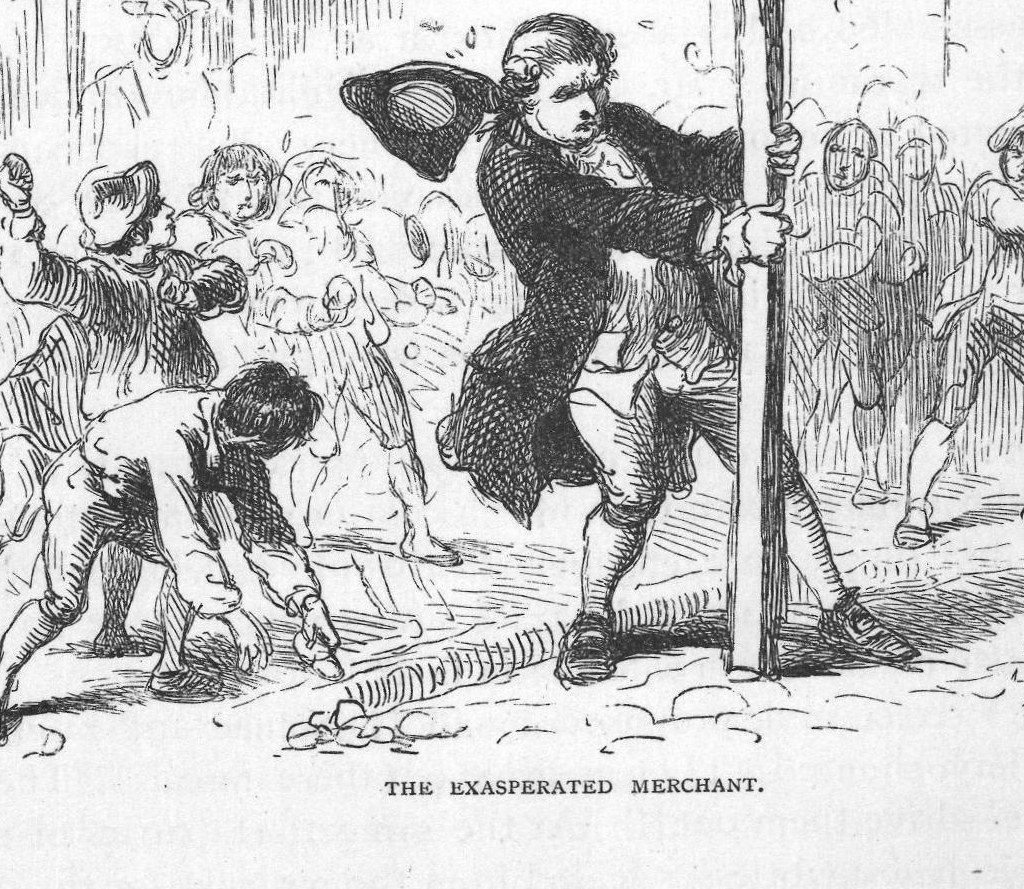
The recusant merchants were unmoved, and Theophilus Lillie announced his intention to import and sell tea in spite of public opinion. That opinion soon appeared embodied in a little mob, composed chiefly of half-grown boys, who set up a wooden post in front of Lillie's store, with a rudely carved head upon it, and a hand pointing to the merchant's door as a place to be avoided. Lillie was exasperated, but dared not interfere. A neighboring merchant of his stripe, named Richardson, a rough, stout man, having more courage, tried to get a farmer, who was passing in his cart, to knock down the post with his hub. The man was a patriot and refused, when Richardson rushed out and attempted to pull it down with his own hands. He was pelted with dirt and stones. In violent anger, he came out of Lillie's house, into which he had been driven by the mob, with a shot-gun, and discharged its contents, without aim, into the little mob. A lad named Samuel Gore was slightly wounded, and another, named Christopher Snyder, was killed. He was the son of a poor German widow. The mob seized Richardson and an associate and hurried them to Faneuil Hall, where the citizens speedily assembled to the number of two or three hundred. Richardson was tried and found guilty of murder, but Lieutenant-Governor Hutchinson refused to sign the death-warrant. After he had lain in prison two years, the king pardoned the offender.