The New England Coasts Blockaded
While the events recorded in this chapter were securing the northern frontiers of the Union, and the general results were inspiriting to the Americans, there was uneasiness, confusion, and alarm along the Atlantic sea-board, in consequence of the presence of British blockading squadrons and menacing fleets. New England had experienced very little of actual war within its borders so far, yet it felt its pressure heavily in the paralysis of its peculiar industries, the continued drain upon its wealth of men and money, and the wasting excitement caused by continually impending menaces and a sense of insecurity. From the spring of 1813 to the close of the contest, British squadrons were hovering along its coasts, and, in connection with the Embargo acts, were double-barring its seaports against commerce, and threatening the destruction of its maritime cities and villages.
The year 1814 was a peculiarly trying one for New England. The blockade of New London, began in 1813, was kept up until the close of the war. In the spring of 1814, Commodore Lewis appeared in Long Island Sound with thirteen American gun-boats, to protect the coast trade of Connecticut against British privateers. He convoyed merchant-vessels safely into the Thames, and he boldly attacked the blockading squadron there. Early in June, British vessels began depredation on the coast of Massachusetts, under an order issued by Admiral Cochrane to "destroy the seaport towns and devastate the country." At Wareham, on Buzzard's Bay, they destroyed vessels and other property valued at $40,000. In the same month despoilers appeared on the coast of Maine. Fifty armed men, in five large barges, entered the Saco River and destroyed property to the amount of about $20,000. New Bedford and Fair Haven were threatened by British cruisers; and an unsuccessful attempt was made by the commanders of two blockaders there, to destroy the last-named village and seize the fort on the point, then commanded by Lieutenant Selleck Osbome, the poet. For-midable squadrons blockaded the Delaware, New York, New London, and Boston. Eastport and Castine, in Maine, were captured by the British; and Stonington, a little east of New London, became the scene of stirring events.
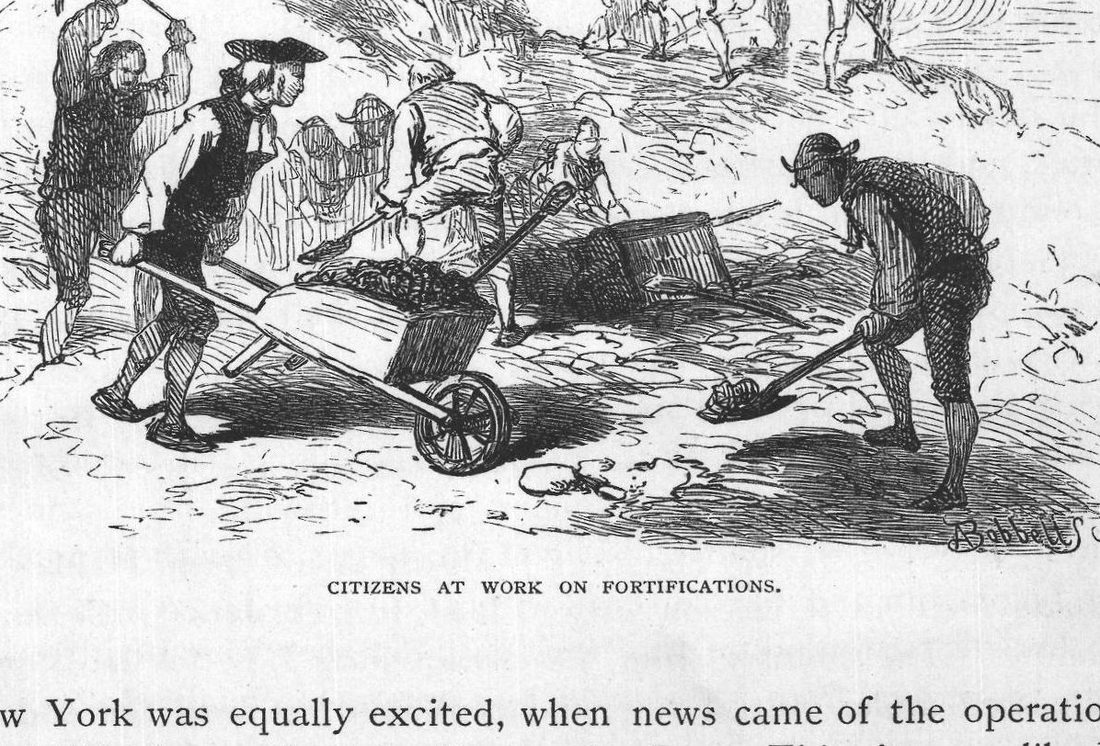
Early in July (1814) Sir Thomas M. Hardy sailed from Halifax with a considerable force for service on sea and land, in accordance with the orders of Cochrane. The country from Passamaquoddy Bay to the Penobscot speedily passed under British rule, and continued so until the end of the war. After capturing Eastport, Hardy sailed westward and threatened Portsmouth and other places, and an attack upon Boston was confidently expected. That city was almost defenceless, and would have offered a rich harvest for plunderers. It was the place where ships were built for the war; and being the capital of New England, its capture would have a moral effect much to be desired by the enemy. When real danger impended, the inhabitants were aroused to intense action, and men of all classes were seen with implements of labor working daily in the construction of a strong fort on Noddles' Island, now East Boston. "I remember," wrote one of the eye-witnesses, "the venerable Dr. Lathrop with the deacons and elders of his church, each shouldering his shovel and doing yeoman's service in digging, shoveling, and carrying sods in wheel-barrows." The fort was soon built on an elevation (on the crown of the present Webster street, near Belmont square, East Boston), and a heavy battery was planted on Dorchester Heights. Informed of these preparations and the enthusiasm of the people, the British blockading squadron did not venture to enter the harbor of Boston.
New York was equally excited, when news came of the operations of a powerful British squadron in Chesapeake Bay. This city was, like Boston, almost defenceless. De Witt Clinton, then mayor, issued a stirring appeal to the citizens, and there, too, men of every rank in society worked daily in building fortifications at Brooklyn and Harlem. Members of various churches and of social and benevolent organizations went out in groups, as such, to the patriotic task; so also did different craftsmen under their respective banners, such as were described as follows, by Samuel Woodworth: "Plumbers, founders, dyers, tinners, tanners, shavers, sweeps, clerks and criers, jewellers, engravers, clothiers, drapers, players, cartmen, hatters, tailors, gaugers, sealers, weighers, carpenters, and sailors."
The enthusiasm of the people was intense, and New York was soon well defended by fortifications and numerous militia. The citizens then felt secure, and Woodworth concluded a stirring poem with these lines addressed to the British:
Which our dads displayed and their sons inherit.
If you still advance, friendly caution slighting,
You may get, by chance, a belly-full of fighting.
Pick-axe, shovel, spade, crowbar, hoe and barrow,--
Better not invade; Yankees have the marrow."