The Mischianza: Lee and Clinton
The British army lingered in Philadelphia until the morning of the 18th of June, when, just before the dawn, they began the passage of the Delaware at Gloucester Point, and at the close of the day were encamped around Haddonfield, a few miles southeast from Camden. So secretly and adroitly had this movement been made, that Washington was not certified of the destination of the British army until they had passed the river. Suspecting, however, that Clinton would take a land-route to New York, the commander-in-chief had dispatched General Maxwell, with his brigade, to co-operate with the New Jersey militia, under General Dickenson, in retarding the march of the enemy. Clinton had crossed the Delaware with about seventeen thousand effective men.
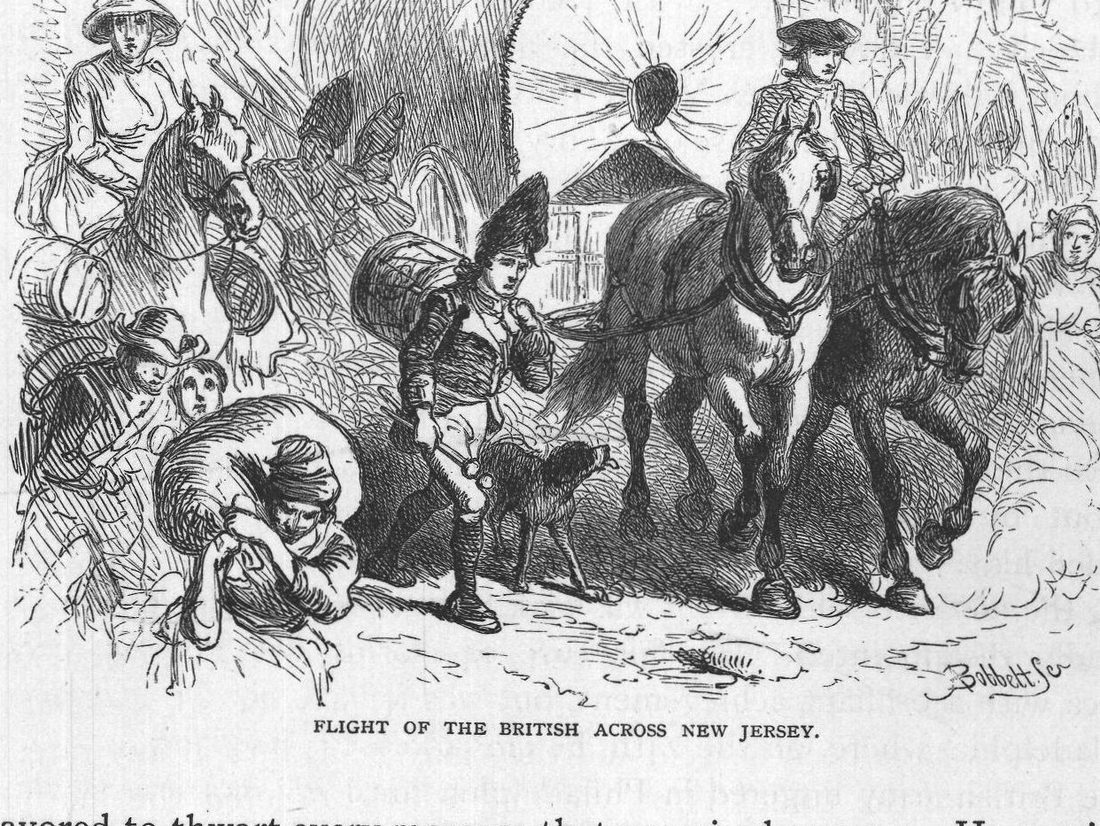
General Arnold, whose wound kept him from duty in the field, was left with a detachment to occupy Philadelphia. The remainder of the army crossed the Delaware above Trenton, and pursued. Lee had been restored to his command as the oldest major-general, and exercised a baleful influence as far as he was able. He was plotting for the ruin of that army, and endeavored to thwart every measure that promised success. He persistently opposed all interference with Clinton in his march across New Jersey, finding fault with everything, and creating much mischief. When, at length, he was requested to lead the advance in a meditated attack upon the enemy, he at first declined the honor and duty, saying the plan was defective and would surely fail.
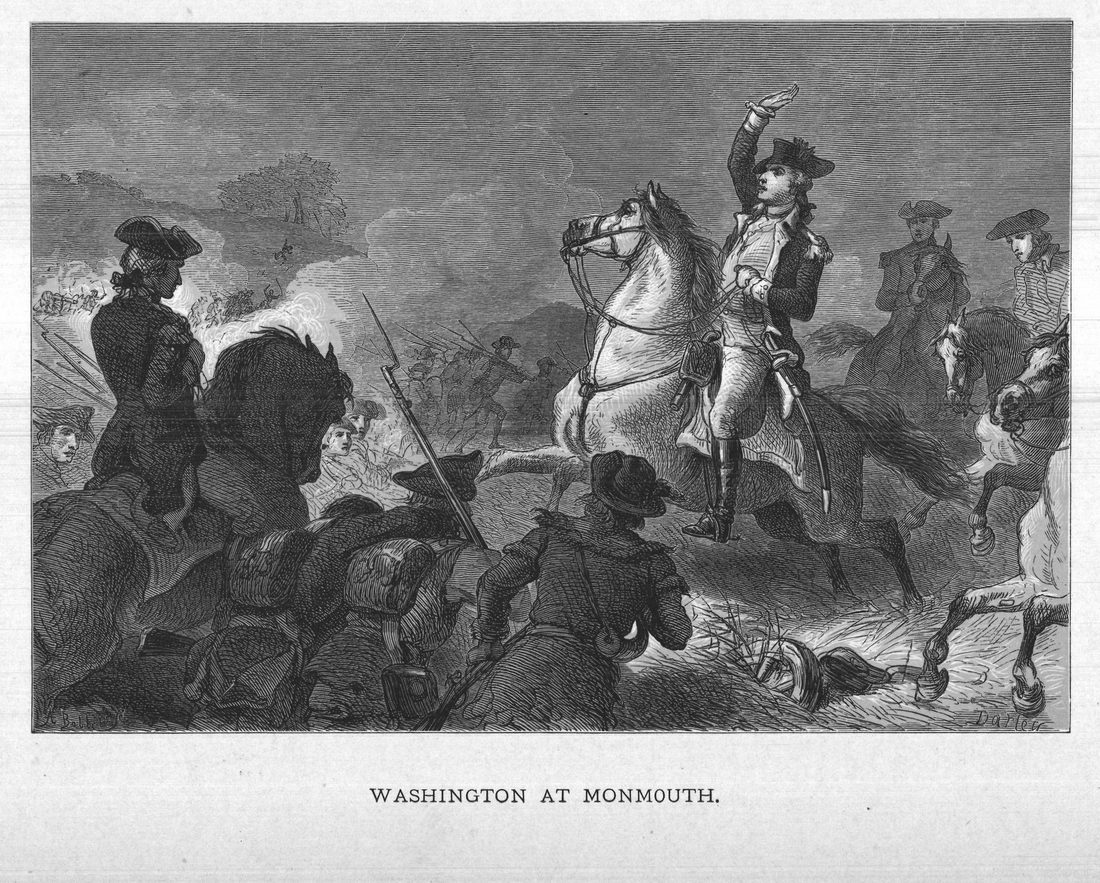
Clinton had intended to march to New Brunswick, and there embark his army on the Raritan; but finding Washington in his path, he turned, at Allentown, toward Monmouth Court-House, with a determination to make his way to Sandy Hook, and thence by water to New York. Washington followed him on a parallel line, prepared to strike him whenever a good opportunity should offer; while Clinton wished to avoid a battle, if possible, for he was heavily encumbered with baggage-wagons and a host of camp-followers, making a line twelve miles in length. He encamped near Mon-mouth Court-House on the 27th of June, where Washington resolved to strike him when he should move, the next morning, for it was important to prevent his gaining the advantageous position of Middletown Heights.
Lee was now in command of the advanced corps. Washington ordered him to consult his general officers, and form a plan of attack. When Lee met them--Lafayette, Wayne, and Maxwell--he refused to arrange a plan or give any orders; and when at dawn on the 28th--a hot and serene Sabbath morning--Washington was informed that Clinton was about to move, and ordered Lee to fall upon the enemy's rear unless there should be good reasons for his not doing so, that officer was so tardy in his obedience that he allowed the foe ample time to prepare for battle. When Lee did move, he seemed to have no plan. He gave orders and counter-orders, and so perplexed and alarmed his generals that they sent a request to Washington to appear on the field immediately. While Wayne was attacking with vigor with a prospect of victory, Lee ordered him to make only a feint. The irritated commander, like a true soldier, instantly obeyed, and lost a chance for victory and honor.
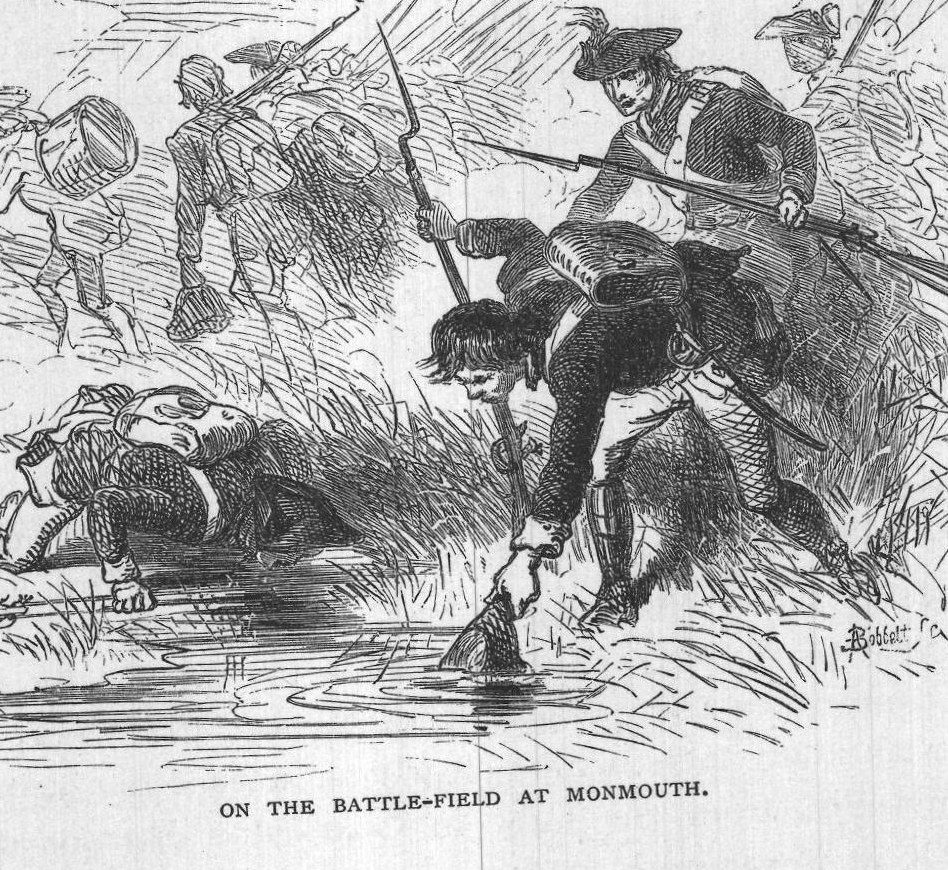
Clinton now suddenly changed front, and sent a large force, horse and foot, to attack Wayne. They approached cautiously toward Lee's right, when Lafayette, believing a good opportunity was offered to gain the rear of this division of the enemy, rode quickly up to Lee and asked permission to attempt it. "Sir," said Lee, sternly, "you do not know British soldiers; we cannot stand against them; we shall certainly be driven back at first, and we must be cautious." The marquis replied: "It may be so, general; but British soldiers have been beaten, and they may be again; at any rate, I am disposed to make the trial." Lee, yielding a little, ordered the marquis to wheel his column by the right, and gain and attack the enemy's left; at the same time he weakened Wayne's detachment, by taking from it three regiments to support the right. At that moment, discovering a movement of the British that apparently disconcerted him, he ordered his right to fall back. Generals Scott and Maxwell were then about to attack, when they, too, were ordered to fall back. Lafayette received a similar order, when a general retreat began. The British pursued, and Lee showed no disposition to check either his own troops or those of the enemy. A panic seized the former, and the orderly retreat became a disorderly flight.