The Creek Indians
JACKSON had crushed the military power of the Creek Indians in Alabama, in the spring of 1814, and in the course of the ensuing summer he wrung from them a treaty which extinguished them, politically, as a nation. A large portion of their beautiful and fertile country was added to the United States as indemnity for the expenses of the war. They agreed to allow the national government to build roads across their domain, and not to hold any communication with British or Spanish posts. It then was believed that the war in the South was ended. Suddenly the British appeared in force in the Gulf of Mexico, and were favored and sheltered by the Spanish authorities at Pensacola. Informed of this, some of the Creek chiefs indulged a hope of having their lost power restored to them, and for awhile the obligations of the treaty bore lightly upon their consciences.
By permission of the Spanish governor of Florida, the British took possession of one of the forts at Pensacola, where they fitted out an expedition for the capture of Fort Bowyer (now Fort Morgan), on the eastern shore of the entrance to Mobile Bay. The fort was commanded by Major William Lawrence with a band of one hundred and thirty resolute men. The English squadron bearing land troops appeared off Mobile Point; and on the 15th of September, after some land troops had disembarked, an attack was begun, on land and sea, simultaneously. The twenty pieces of artillery with which Fort Bowyer was armed were brought to bear upon the enemy so skillfully that the British were soon repulsed, with the loss of a ship-of-war and many men. Among the land troops were two hundred Creek warriors who had violated the treaty.
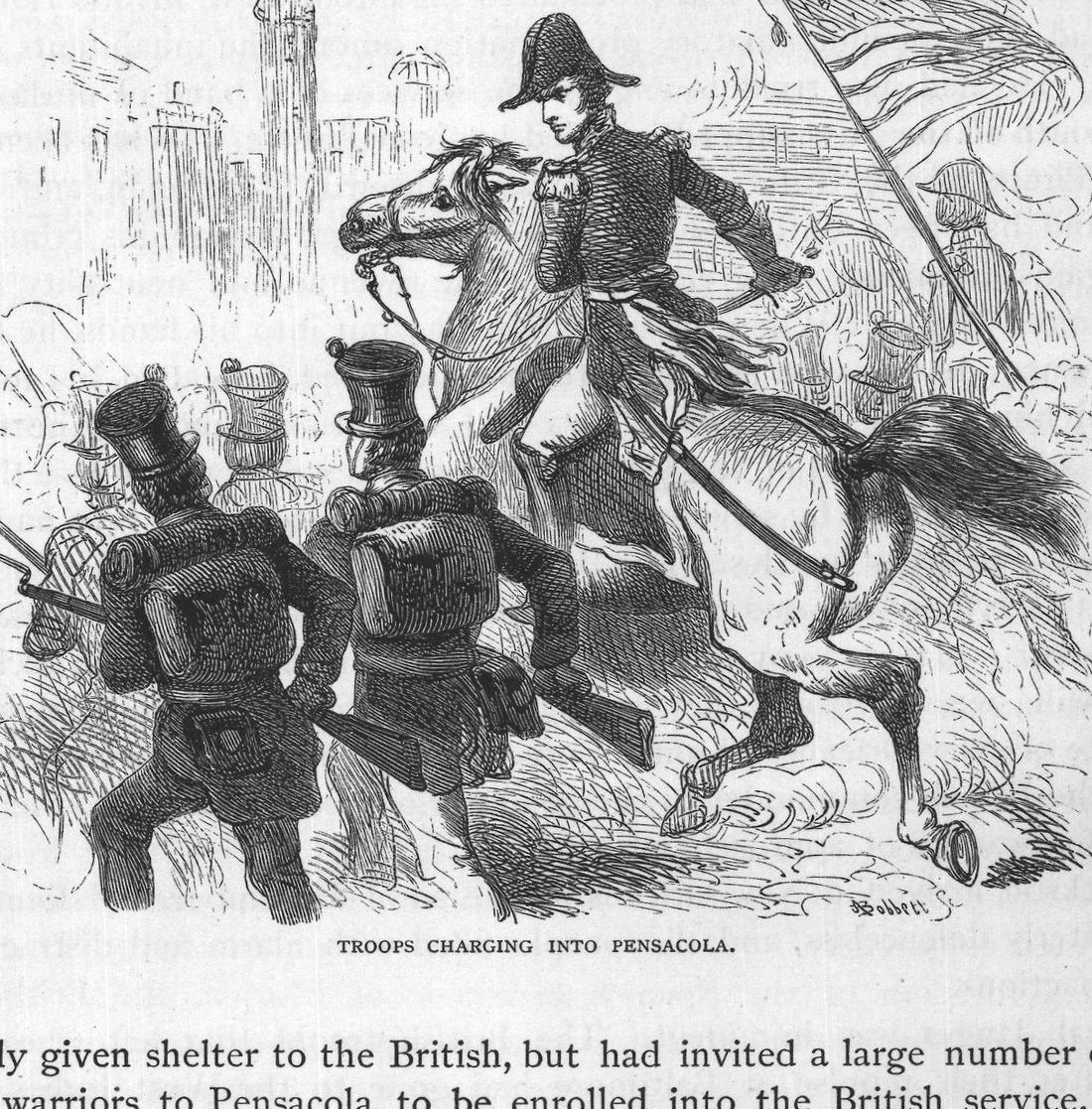
General Jackson's head-quarters were then at Mobile. He was a major-general in the regular army, and the commander of the southwestern military district, which extended from Tennessee to the Gulf of Mexico and included New Orleans. He had learned that the Spanish governor had not only given shelter to the British, but had invited a large number of the Creek warriors to Pensacola, to be enrolled into the British service. The general took the responsibility of calling that official to account for his conduct, but he could not obtain any satisfactory guaranty that the unfriendly act would not be repeated; he therefore determined to march to Pensacola and compel the British to leave that harbor. When volunteers from Tennessee had arrived early in November, he advanced with about four thousand men, and on the 6th encamped within two miles of the Florida capital. An officer was sent with a flag to demand the surrender of the forts, when the British fired upon it. The next day Jackson's troops charged into the town, when the frightened governor offered to surrender the forts. This was done; whereupon the British abandoned the forts, blew up one of them (Barrancas), and sailed away with the garrison and a considerable number of Indians. These events so impressed the Creeks with a sense of the power of Jackson and his government, that they ever afterward kept quiet.
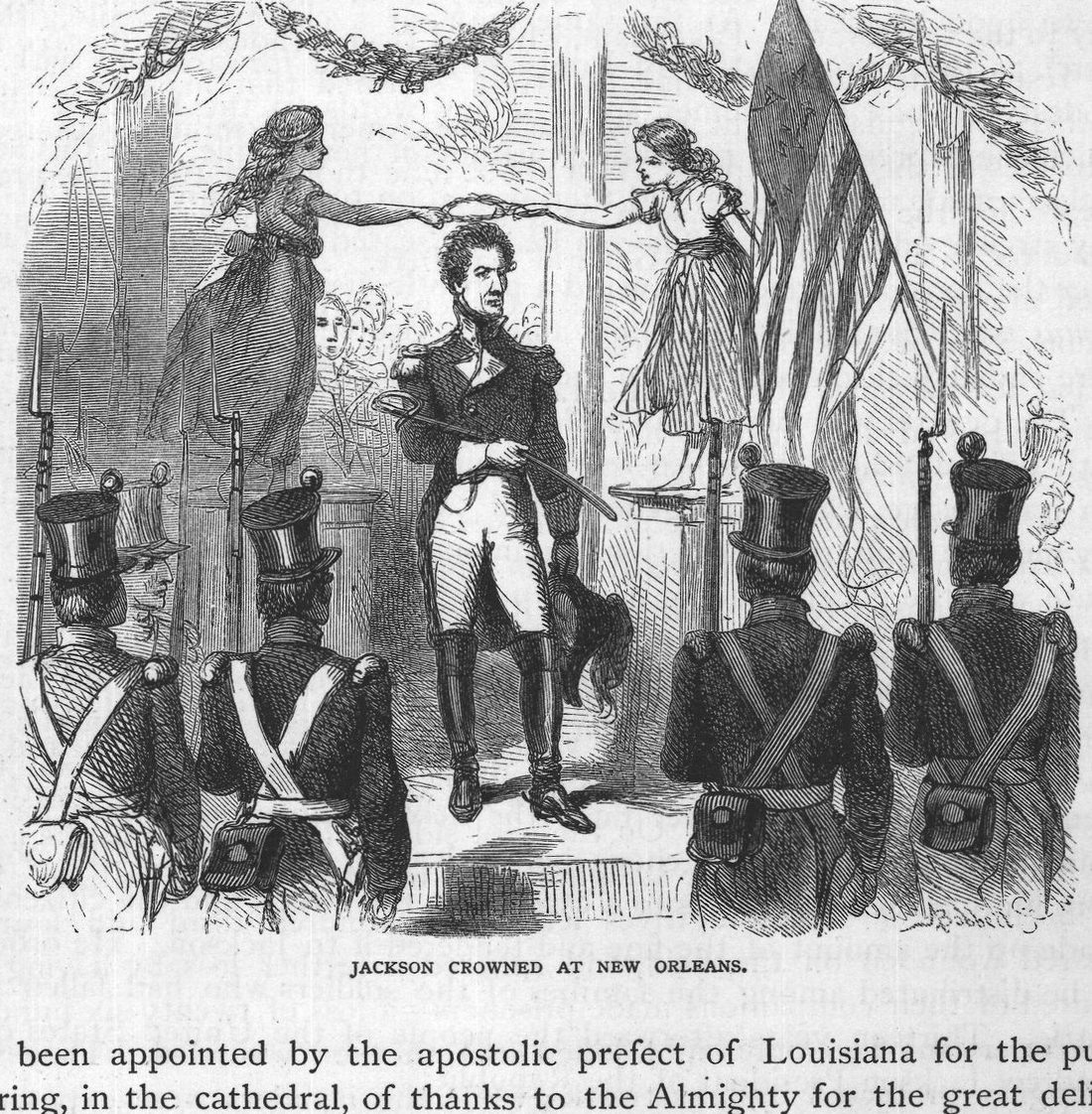
On his return to Mobile, Jackson found messages from New Orleans, urging him to hasten to the defence of that city. The unwise commander of the British in the Gulf had proclaimed his intention to invade Louisiana, and had sent an inflammatory proclamation among the inhabitants of that State. He had also tried to engage the services of a band of outlaws near the mouth of the Mississippi River, led by Jean Lafitte, who has been called the "Pirate of the Gulf." Lafitte was a shrewd Frenchman, and he and his band had been outlawed by legal proceedings, though his crimes were not against humanity, only violations of the revenue and neutrality laws of the United States. When the invitation was put into his hands, he feigned compliance; but as soon as the bearer had departed, he called his followers around him on the border of the sea and said in substance: "Comrades, I am an adopted citizen of the United States, and will never violate the confidence placed in me by serving the enemies of this country. We have been outlawed; perhaps we deserve it by our irregularities. No matter; I am ready to serve my adopted country, and ask you to join me. What say you, comrades?" His brawny followers then threw up their hats and exclaimed, "We will! we will!" and they were afterward accepted as volunteers in the defence of New Orleans. Lafitte immediately sent the despatches received from the British commander to the governor of Louisiana, and so the people were forewarned of approaching danger.
Jackson arrived at New Orleans on the 2nd of December, and found that city utterly defenceless, and the people filled with alarm and distracted by petty factions.