The Continental Navy: Jones and Richard
During the spring and summer of 1779, the American cruisers were very active. In March, the Hampden, a Massachusetts ship, had a severe fight with an English Indiaman, and was much damaged, but escaped capture. In April, Captain J. B. Hopkins, sailing on a cruise from Boston, captured several British vessels bound for Georgia with supplies for Prevost. In June, Captains Whipple and Rathburne, in command of two ships, captured several British merchant-vessels under convoy of a ship-of-the-line. In a money point of view, this was one of the most successful enterprises of the war. The estimated value of eight of the prizes taken into Boston was over a million dollars.
While these events were occurring in the western hemisphere, the French monarch and the American commissioners joined in sending Paul Jones, with five vessels, from L'Orient to the coast of Scotland, at the middle of August. His flag-ship was the Bon-Homme Richard. Just as he was about to strike some armed British vessels, in the harbor of Leith, a storm arose, which drove his squadron into the North Sea. When the tempest subsided he drew near the land, and cruising along the coast of Scotland, he captured thirteen prizes by the middle of September. Consternation prevailed along the coast, and many people buried their plate to keep the "pirate's" hands from it.
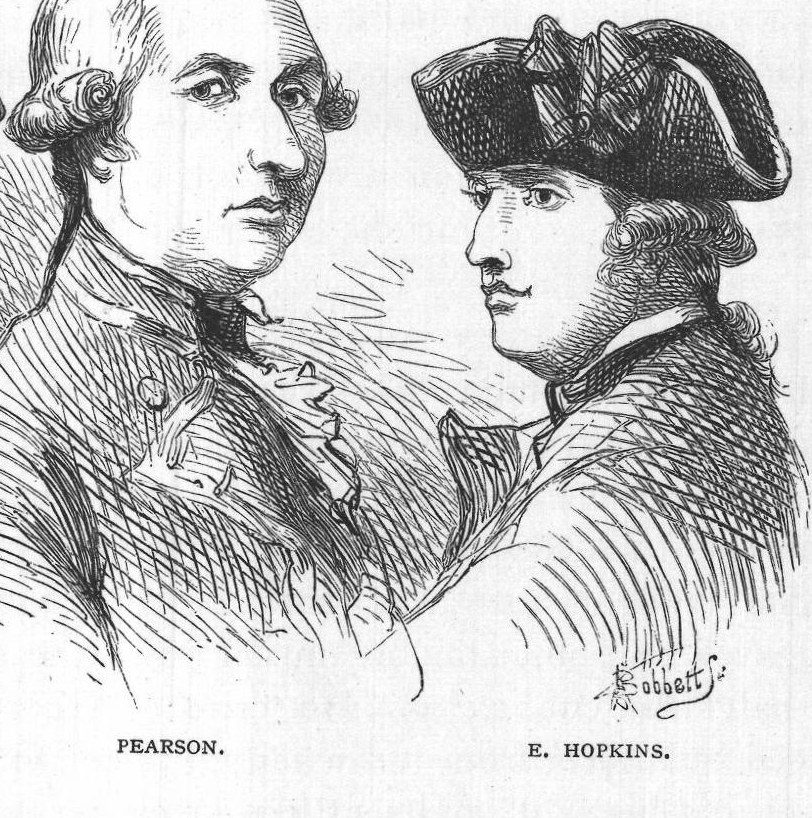
Late in September, while the squadron of Jones lay a few leagues north of the mouth of the Humber, he discovered the Baltic fleet of forty merchantmen, convoyed by the Scrapis, a 44-gun ship, and the Countess of Scarborough, of 22 guns, stretching seaward from behind Flamborough Head. Here was tempting prize for which he had sought. Jones signalled for a general chase, and all but the Alliance, Captain Landais, obeyed. The British vessels immediately prepared to defend the merchantmen; and while they, and the Richard and Pallas were manoeuvring for advantage, night fell upon the scene. The darkness did not restrain the impetuous Jones. At seven o'clock in the evening, the Richard was within musketshot distance of the Serapis, when one of the most desperate naval fights ever recorded began. The wind was slack, and as the vessels were struggling for the weather-guage, they came in contact. Their spars and rigging were entangled, when Jones, at the head of his men, attempted to board the Scrapis. After a sharp and close contest with pike, pistol and cutlass, he was repulsed, when Captain Pearson of the Scrapis, who could not see the ensign of the Richard, called out: "Has your flag been struck?" Jones shouted, "I have not begun to fight yet."
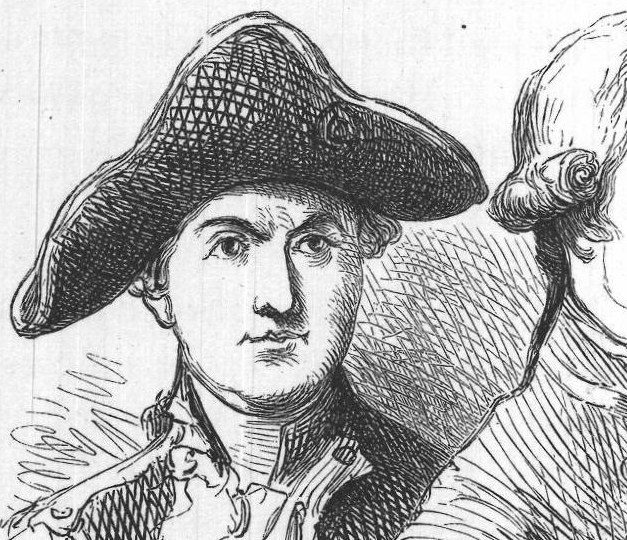
The vessels now separated, and Jones attempted to lay his ship athwart the hawser of his enemy. He failed, and the wind brought the two ships broadside to broadside, the muzzles of the guns touching each other. Jones instantly lashed the ships together, and in that close embrace they poured their terrible volleys into each other with awful effect. From deck to deck of the entangled vessels the combatants madly rushed, fighting like demons. Very soon the Richard was pierced between wind and water with several 18-pound balls, and began to fill. Her ten greater guns were silenced, and only three 9-pounders kept up the cannonade; but the marines in the round top of the Richard sent deadly volleys of bullets down upon the struggling Englishmen. Ignited combustibles were scattered over the Serapis; and at one time she was on fire in a dozen places. Some cartridges were ignited on her lower deck and blew up the whole of the officers and men that were quartered abaft the mainmast. At half-past nine, just as the moon rose in a cloudless sky, the Richard was discovered to be on fire, also, and a scene of appalling grandeur was presented. In the midst of smoke and half-smothered flame, and the incessant roar of great guns, men as furious as wounded tigers were seen struggling hand-to-hand for the mastery. At that moment a cry was raised on the Richard-"The ship is sinking!" A frightened gunner ran aft to pull down the American flag, when he found the halyards cut away. He cried, "Quarter, quarter!" until he was silenced by a blow from a discharged pistol which Jones hurled at his head. It fractured his skull, and sent him headlong down the gangway. "Did you ask for quarter?" shouted Pearson. "Never!" replied Jones. "Then I'll give you none," answered the enraged Englishman; and the desperate fight went on more fiercely than before.
The situation of Jones was becoming, every moment, more critical for his ship could not float much longer. Nothing appeared more hopeless than his prospect for victory. Yet he won it. The flames crept up the rigging of the Serapis, and by their glow and the full light of the moon, Jones saw that his double-headed shot had almost cut Pearson's mainmast in two. He hurled another shot upon it, until the tall mast reeled. Pearson saw his great peril, and striking his flag, surrendered to his really weaker foe. Enveloped in sparks and smoke, Pearson said, in a surly manner, as he hurriedly handed his sabre to Jones: "It is painful to deliver up my sword to a man who has fought with a rope around his neck." Jones courteously replied, as he returned the weapon: "Sir, you have fought like a hero, and I make no doubt you sovereign will reward you in the most ample manner." The king knighted Pearson. When Jones heard of it, he said: "Well, he deserves it; and if I fall in with him again, I'll make a lord of him."