The Barbary Powers Humbled
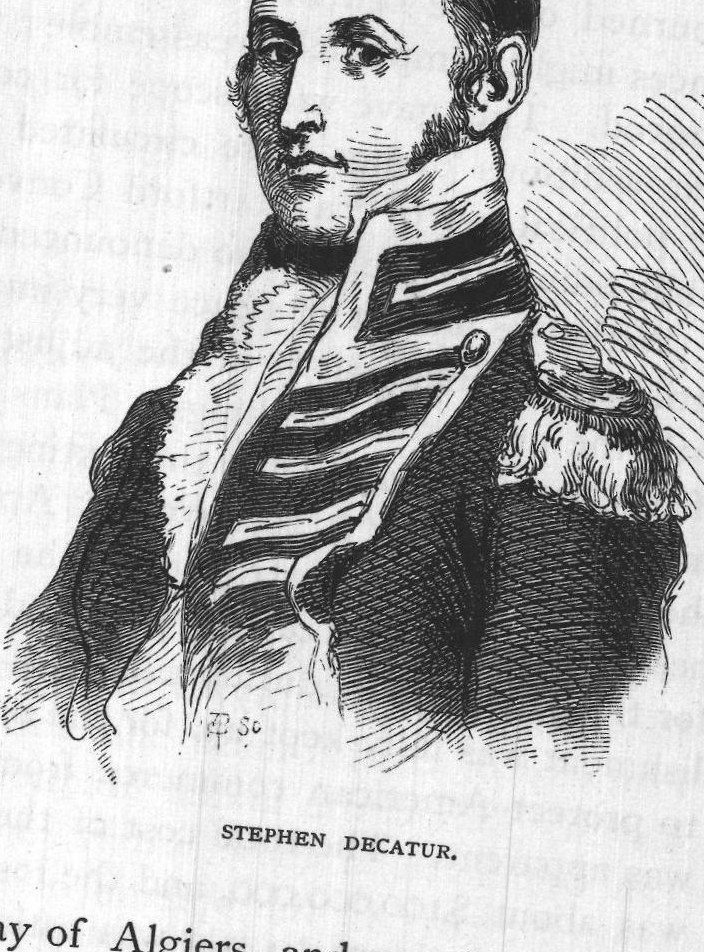
As soon as the war with Great Britain was ended, the United States felt impelled to engage in another with Algiers. Offended because he had not received from the American government, as tribute, precisely the articles which he had demanded, the semi-barbarian Dey of Algiers, in 1812, unceremoniously dismissed Mr. Lear, the American consul, and declared war; and afterward his corsairs captured an American vessel, and the crew were reduced to slavery. Mr. Lear was compelled to pay the Dey $27,000 for the safety of himself and family, and a few Americans who were there, to save them all from being made slaves. Believing that the United States navy had been almost annihilated by the British in the late contest, this North African robber renewed depredations upon American commerce in violation of treaty obligations. Determined to pay tribute no longer to this insolent ruler, the American government accepted his challenge for war, and in May, 1815, sent Commodore Decatur to the Mediterranean, with a squadron, to humble the Dey. When Decatur passed the straits of Gibraltar, he found the Algerine pirate fleet cruising in search of American vessels. On the 17th of June, Decatur met the flag-ship of the Algerine admiral (a frigate of 44 guns), and after a brief engagement captured her, also another pirate ship with almost six hundred men. With these prizes he immediately sailed for the bay of Algiers, and on the 28th of June, he demanded the instant surrender of all the American prisoners, full indemnification for all property destroyed, and absolute relinquishment of all claims to tribute from the United States thereafter.
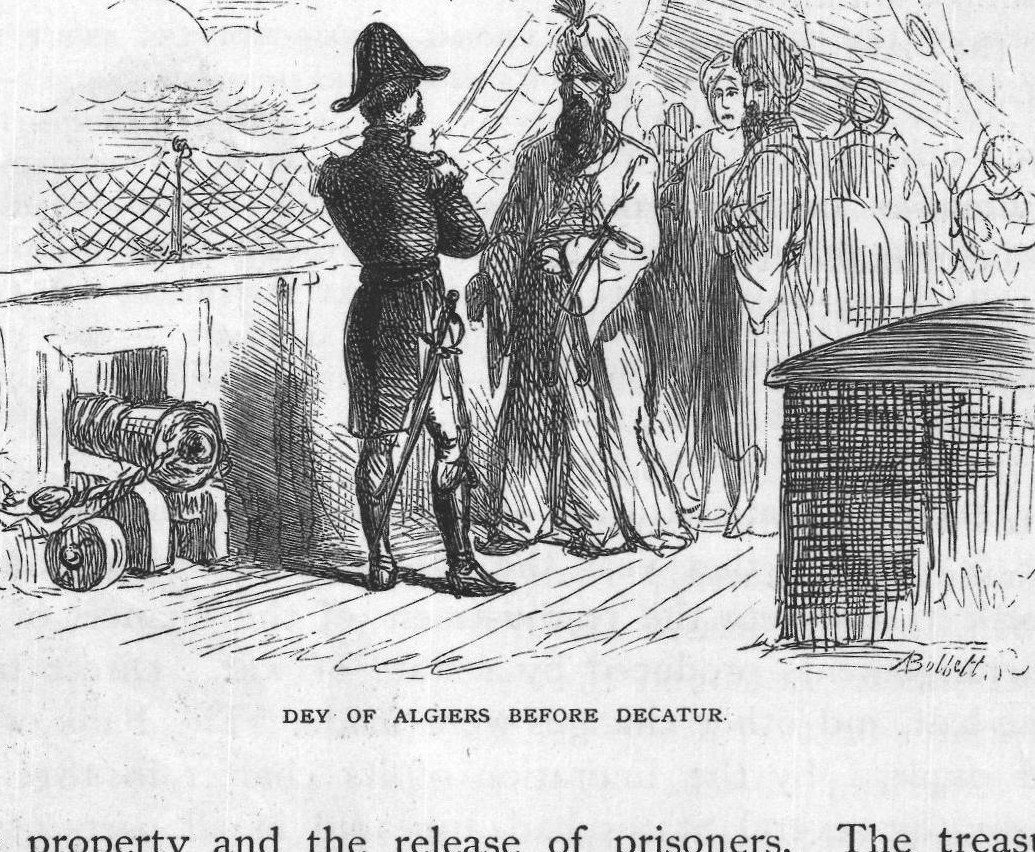
When the Dey of Algiers heard of the fate of a part of his fleet, that terrified robber hastened to comply with Decatur's demands; and in obedience to the commodore's requirements, the haughty chief appeared on the quarter-deck of the Guerriere (the flag-ship) with some of his officers of state and accompanied by the captives he was to release. There, on the 30th of June, he signed a treaty in accordance with the demands of Decatur, and departed deeply humiliated. From Algiers, after this triumph, the commodore sailed for Tunis, and demanded and received from the Bashaw or ruler of that state $46,000, in payment for American vessels which he had allowed the British to capture in his harbor. This was in July. Then Decatur proceeded to Tripoli, the capital of another of the Barbary States, and in August demanded from the Bey, its ruler, $25,000 for the same kind of injury to property and the release of prisoners. The treasury of the Bey being nearly empty, Decatur accepted, in lieu of cash, the release from captivity of eight Danish and two Neapolitan seamen, who were held as slaves. This cruise in the Mediterranean sea gave full security to American commerce in these waters, and greatly elevated the character of the United States in the opinion of Europeans. During this cruise of about two months, in the summer of 1815, the navy of the United States accomplished, in the way of humbling the North African robbers, what the combined powers of Europe dared not to attempt.