Thanksgiving Day Appointed
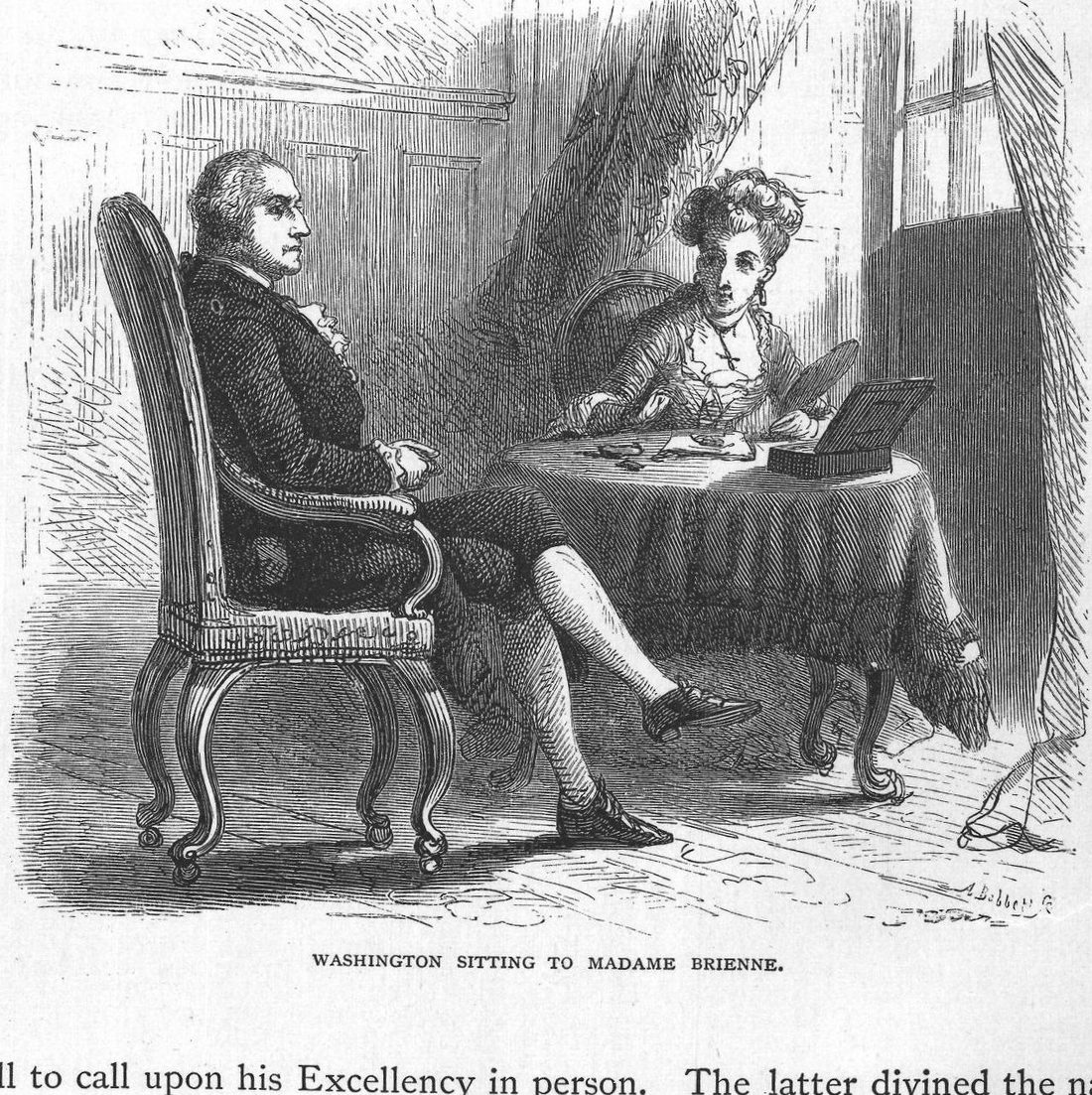
A FEW days before Congress adjourned in September, that body, by resolution, requested the President to recommend a day of public thanksgiving and prayer to be observed by the people of the whole nation, in acknowledgment of the signal favor of the Almighty in permitting them to establish in peace a free government. Washington issued a proclamation to that effect. It was the first call for a national thanksgiving since the establishment of the new government. On the same day (October 3, 1790) he wrote in his diary: "Sat for Mr. Rammage [an Irish artist] near two hours to-day, who was drawing a miniature picture of me for Mrs. Washington. Walked in the afternoon, and sat at two o'clock for Madame de Brehan [or Brienne, sister of the French minister Moustier], to complete a miniature profile of me which she had begun from memory, and which she had made exceedingly like the original."
The President appointed Thursday, the 26th of November, as the day for the national thanksgiving, and on the 15th of October, he set out on his journey to New England. Rhode Island, not having yet adopted the new Constitution, was not in the Union, and he did not tread upon its soil, but went to Boston by way of Hartford, Springfield and Worcester, arriving there on Saturday, the 24th. There he had an official tilt with John Hancock, who was then governor of Massachusetts. Hancock had invited Washington to lodge at his house in Boston. The invitation was declined. After the arrival of the President, the governor sent him an invitation to dine with him and his family, informally, that day, at the conclusion of the public reception ceremonies. It was accepted by Washington, with a full persuasion that the governor would call upon him before the dinner hour. But Hancock had conceived the proud notion that the governor of a State within his own domain was officially superior to the President of the United States when he came into it. He had laid his plans for asserting this superiority by having Washington visit him first, and to this end he had sent him the invitations to lodge and dine with him. At near the time for dinner, as Washington did not appear, Hancock evidently felt some misgivings, for he sent his secretary to the President with an excuse that he was too ill to call upon his Excellency in person. The latter divined the nature of the "indisposition," and dined at his own lodgings at "the widow Ingersolls," with a single guest. That evening the governor, feeling uneasy, sent his lieutenant and two of his council to express his regret that his illness had not allowed him to call upon the President. "I informed them explicitly," Washington wrote in his diary, "that I should not see the governor except at my lodgings." This took the conceit entirely out of Hancock, who was well enough the next day (Sunday) to call upon Washington and repeat, in person, the insufficient excuse for his own folly.
The President extended his visit eastward as far as Portsmouth, New Hampshire, where he sat to a persistent portrait painter named Gulligher, who had followed him from Boston. From that point he took a more northerly route back to Hartford, and arrived at New York on the 13th of November.
There, on the 8th of January, 1790, the second session of the first Congress was begun in the old Federal Hall. The proceedings were opened by a message or speech from Washington, which he delivered in person. At eleven o'clock that day he left his house in his coach drawn by four bay horses, preceded by Colonel Humphreys and Major Jackson in military uniform, riding two of his white horses, and followed by his private secretaries, Messrs. Lear and Nelson, in his chariot. His own coach was followed by carriages bearing Chief-Justice Jay and the Secretaries of the Treasury and War, Secretary Jefferson not having arrived at the seat of government. At the outer door of the Hall the President was met by the door-keepers of the Senate and House of Representatives, and conducted by them to the door of the Senate Chamber, from which the President was led through the assembled members of Congress, the Senate on one side and the House on the other, to the chair, where he was seated. The members all rose as the President entered, and the gentlemen who had accompanied him took their stand behind the Senators. In the course of a few minutes the President rose (and with him the members of both houses) and made his speech, after which he handed copies to the President of the Senate and the Speaker of the House of Representatives, and then retired, bowing to the members (who stood) as he passed out. In the same manner as he came, and with the same attendants, he returned to his house. "On this occasion," Washington wrote in his diary, "I was dressed in a suit of clothes made at the woolen manufactory at Hartford, as the buttons also were." At an appointed hour on the 14th the members of the houses of Congress proceeded in carriages to the mansion of the President (those of the House of Representatives with the mace, preceded by their Speaker), and there presented their respective addresses in response to his speech. These stately ceremonials at the opening of the sessions of Congress were in vogue until Jefferson took his seat as Chief Magistrate, when they were all omitted and the President sent to the assembled Congress his annual and other messages in writing, by his private secretary, as is now done.