Reception of the Declaration of Independence: Long Island and Manhattan Island
The brothers entered upon their narrow diplomatic mission immediately after the arrival of the admiral. They sought first to open communication with Washington. For this purpose they sent a note to him by a flag, in-closing a copy of a declaration of the royal clemency, and the willingness of the king to grant a free pardon to all penitents. The superscription of the letter did not bear the official title of the commander-in-chief-only "George Washington, Esq."-and he refused to receive it. Another was sent by the hand of Major Paterson, General Howe's adjutant, less marked by omissions, but it was not received. Wishing to make some arrangement about an exchange of prisoners, Washington permitted the major to visit the American camp. When the adjutant was about to depart, the latter expressed the hope that his visit would be accepted as the first advance of the commissioners toward reconciliation. He assured the general that they had large powers. "From what appears," said Washington, "they have power only to grant pardons;-having committed no fault, we need no pardon; we are only defending what we deem to be our indisputable rights." The admiral addressed a friendly letter to Dr. Franklin in a similar manner, and received from the statesman a reply, courteous in tone, but in no wise soothing to his feelings as a soldier or a Briton. Franklin concluded his letter by saying: "This war against us is both unjust and unwise; posterity will condemn to infamy those who advised it; and even success will not save from some degree of dishonor those who voluntarily engage to conduct it." The brothers suspected Franklin uttered the sentiments of the Congress with whom they were not permitted to treat; and that the words of Washington were in accordance with the views of the same body. The generous and noble-hearted admiral was grievously disappointed by these rebuffs. He saw that he was powerless as a minister of peace; that he had been deceived, and that he was placed by a sense of duty to his king in a position most distasteful to him, and repugnant to his convictions of right. War, and not peace, now occupied the attention of the brothers for awhile.
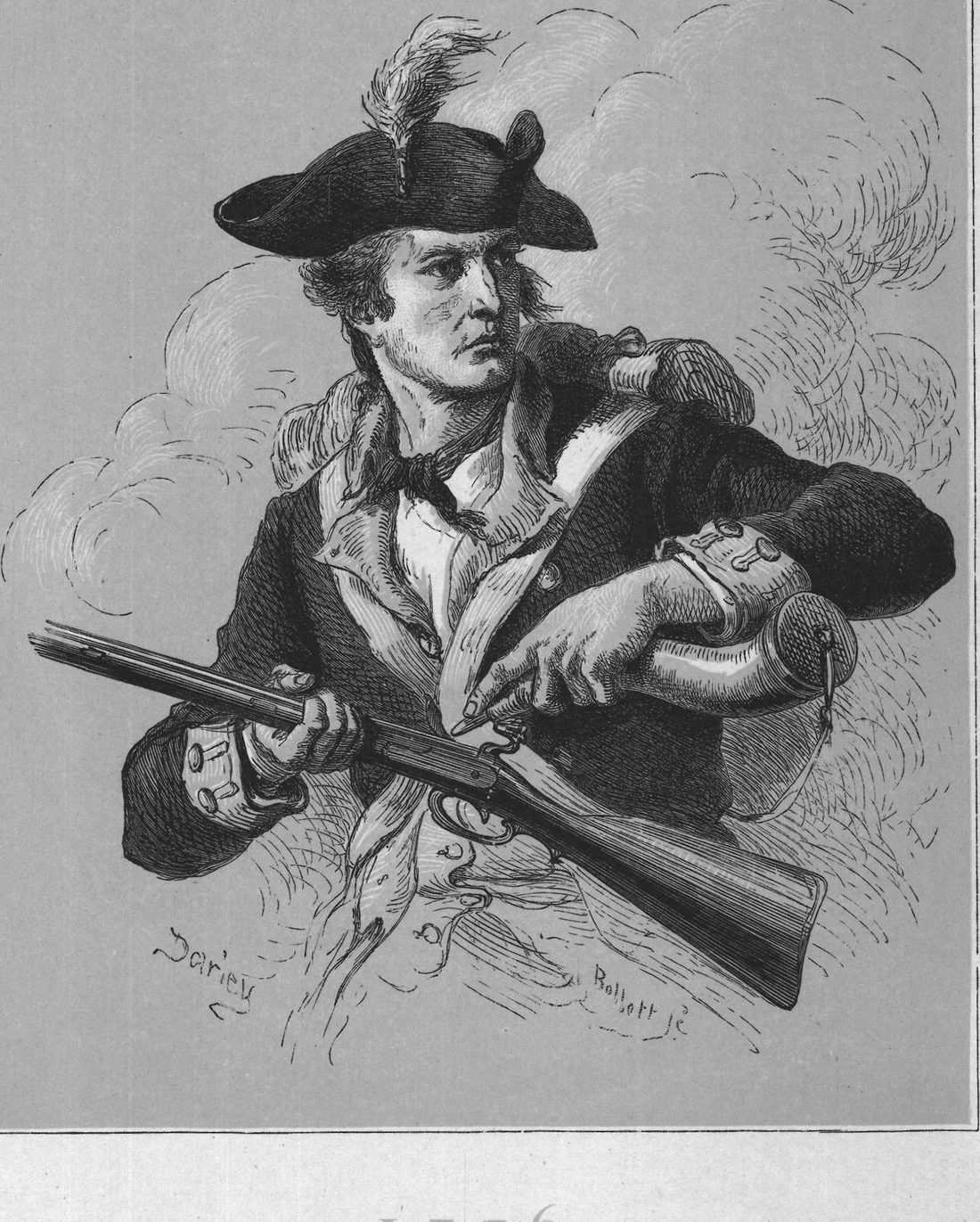
August had now arrived. A large army and navy were threatening the city of New York and its vicinity. Already ships-of-war had run up the Hudson River past American batteries, and were menacing the country in the rear of Manhattan Island, with the intention of keeping open a free communication with Carleton then on Lake Champlain, and furnishing arms to the Tories in Westchester county. In the city of New York, a majority of the influential inhabitants were active or passive Tories. The provincial authorities were yet acting timidly. It was even proposed by Jay to lay Long Island waste, burn the city of New York, and retire to the rugged fastnesses of the Highlands. Washington's whole effective force, for manning batteries, securing passes, and occupying posts, some of them fifteen miles apart, did not then exceed eleven thousand men; the most of them were militia coming and going and poorly armed, and a regiment of artillery without skilled gunners and furnished with old iron field-pieces. Sectional jealousies were dividing the troops. Gates was already showing his jealousy of Washington, and an itching to take his place; and faction in his favor was breeding in the Congress, from which came frequent resolutions that interfered with the well-laid plans of the commander-in-chief and the efficient General Schuyler in Northern New York. Yet Washington was hopeful. An appeal to the country was nobly responded to at that hour of imminent danger. From the farms of Connecticut, New York, Pennsylvania, Delaware and Maryland, where ripening harvests needed them, came patriotic yeomanry, and swelled the American army to seventeen thousand effective men. The whole number, sick and well, was almost equal to that of the British.
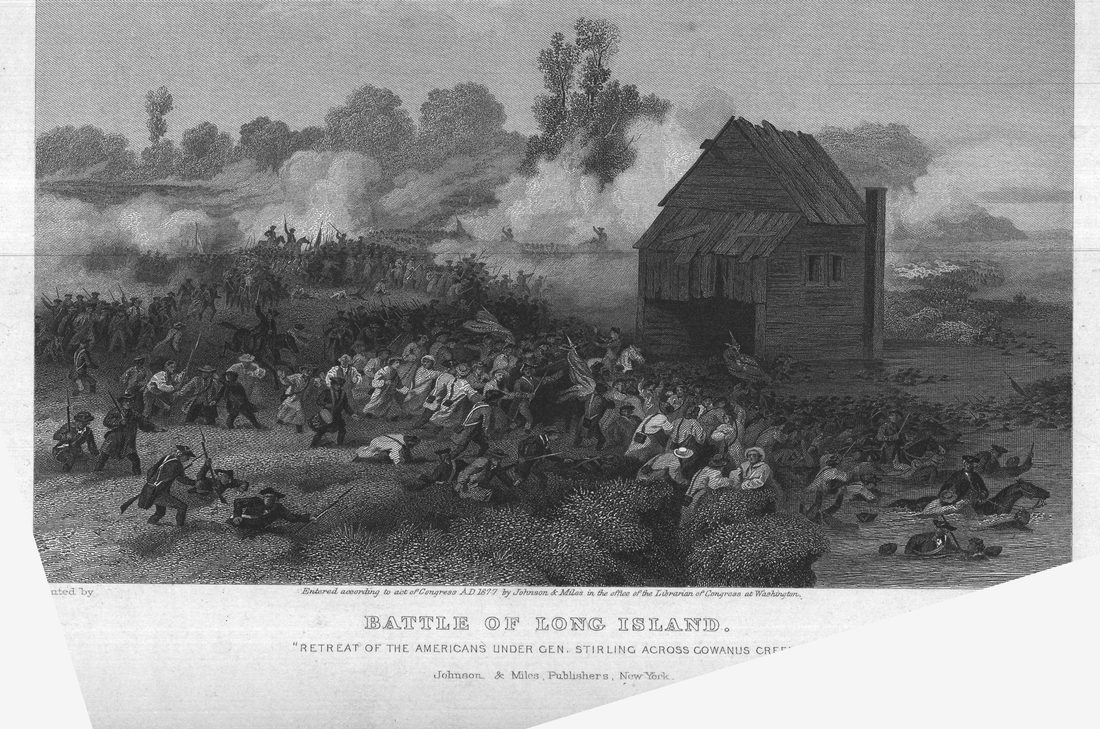
Both parties made preparations for an inevitable conflict. Hulks of vessels were sunken in the channel of the Hudson River opposite the heights on which Fort Washington was built. Fort Lee was erected on the Palisades beyond. Batteries were constructed at various points on Manhattan Island, and a considerable body of troops were sent over to take post and cast up fortifications on Long Island, back of Brooklyn, under the command of General Greene. That officer was soon prostrated by bilious fever and resigned the leadership to General Sullivan, who had lately come from Lake Champlain. A small detachment was placed on Governor's Island near the city; another was sent over to Paulus's Hook, where Jersey City now stands, and a body of New York militia, under General James Clinton, took post in Westchester county to oppose the landing of the British from vessels on Long Island Sound. Parsons' brigade took post on the East River, at Kipp's Bay (now foot of Thirty-fourth street), to watch British vessels if they should enter those waters. Sullivan placed guards at several passes through a range of hills on Long Island, which extend from the Narrows to Jamaica; and late in August he had a line of defences extending from the vicinity of Greenwood Cemetery to the Navy Yard, a distance of a mile and a half. These were armed with twenty cannon, and there was a redoubt of seven guns on Brooklyn Heights.