Public Quiet Broken by John Brown's Raid
IN the fall of 1859, the feverishness in the public mind, excited by the vehement discussion of the topic of slavery, had somewhat subsided; the Mormons were quiet; difficulties which had occurred between our Government and that of Paraguay, in South America, had been settled; troubles with the Indians on the Pacific coast were drawing to a close, and the fillibustering operations of Walker in Nicaragua were losing much of their interest. The summer had passed away in public quietude, and the topics of a Pacific Railway, Homestead and Soldiers' Pension bills, and other measures for the promotion of peace and national prosperity, were engaging the attention of the people. The equinoctial gales had swept over the land and sea, when suddenly a rumor went out of Baltimore, as startling as a thunder peal on the genial October air, that the Abolitionists had seized the Government Armory and Arsenal at Harper's Ferry, at the junction of the Shenandoah and Potomac rivers, and that an insurrection of the slaves in Virginia was imminent.
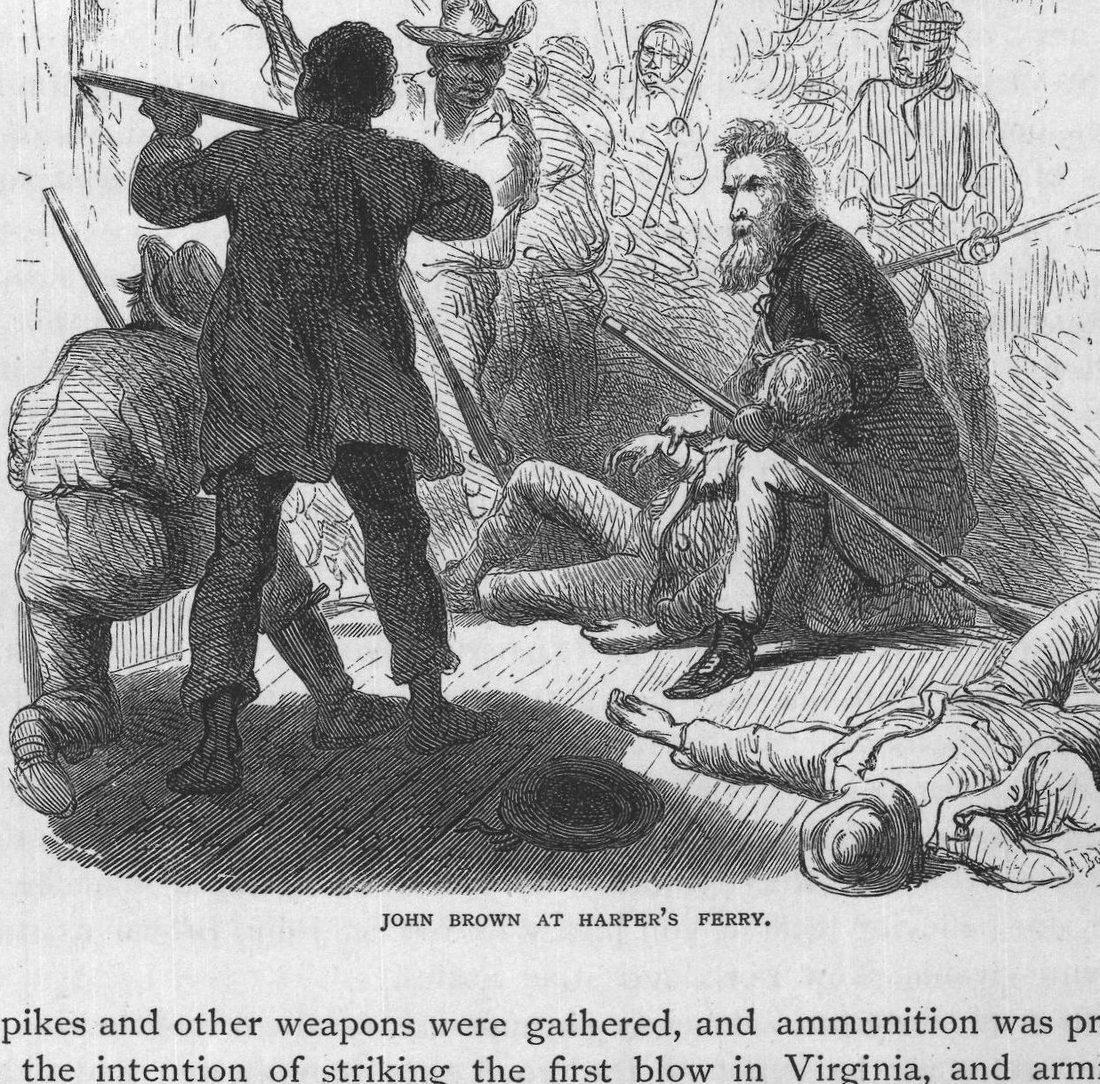
The rumor was true. John Brown, of Ossawatamie, who had fought and won a battle on the Kansas prairie in 1856, had struck a blow at slavery, on Sunday evening, the 16th of October. Brown was a native of Connecticut, in the sixtieth year of his age, and had espoused the cause of the Abolitionists (as the opponents of the slave-labor system, who wished to abolish it, were called) in early life. He was enthusiastic, fanatical, and brave. He had been active in the midst of the troubles in Kansas, and had suffered much; and he believed himself to be the destined liberator of the slaves in our Republic. With a few white followers and twelve slaves from Missouri, he went into Canada West, and at Chatham a convention of sympathizers was held in May, 1859, whereat a "Provisional Constitution and Ordinances for the People of the United States" was adopted, not, as the instrument declared, "for the overthrow of any government, but simply to amend and repeal." This was part of a scheme for promoting the uprising of the slaves for obtaining their freedom.
Brown spent the summer of 1859 in preparation for his work. He hired a farm a few miles from Harper's Ferry, where he was known by the name of "Smith." There, one by one, a few followers congregated stealthily; and pikes and other weapons were gathered and ammunition was provided, with the intention of striking the first blow in Virginia, and arming the insurgent slaves. Under cover of profound darkness, Brown, at the head of seventeen white men and five negroes, entered the village of Harper's Ferry on that fatal Sunday night, put out the street lights, seized the Armory and the railway bridge, and quietly arrested and imprisoned in the Government buildings the citizens found here and there in the streets at the earliest hours of the next morning, each one ignorant of what had happened. The invaders had seized Colonel Washington, living a few miles from Harper's Ferry, with his arms and horses, and liberated his slaves; and at eight o'clock on Monday morning, the 17th of October, Brown and his few followers (among whom were two of his sons) had full possession of the village and Government works. When asked what was his purpose and by what authority he acted, Brown replied, "To free the slaves, and by the authority of God Almighty." He felt assured that when the blow should be struck, the negroes of the surrounding country would rise and flock to his standard. He sincerely believed that a general uprising of the slaves of the whole country would follow, and that he would win the satisfaction and the honors of a great liberator. He was mistaken.
The news of this alarming affair went speedily abroad, and before Monday night Virginia militia had gathered at Harper's Ferry in large numbers. Struggles between these and Brown's little company ensued, in which the two sons of the leader perished. The invaders were finally driven to the shelter of a fire-engine house, where Brown defended himself with great bravery. With one son dead by his side, and another shot through, he felt the pulse of his dying child with one hand, held his rifle with the other, and issued oral commands to his men with all the composure of a general in his marquee, telling them to be firm and to sell their lives as dearly as possible.
On Monday evening, Colonel Robert E. Lee arrived at Harper's Ferry, with ninety United States marines and two pieces of artillery. The doors of the engine-house were forced open, and Brown and his followers were captured. He was speedily indicted for murder and treason; was found guilty, and on the 3d of December (1859) he was hanged at Charlestown, not far from the scene of his exploits. The most exaggerated reports of this raid went over the land. Terror spread throughout Virginia. Its governor (Henry A. Wise) was excited almost to madness, and declared that he was ready to make war on all the free-labor States. In a letter to President Buchanan, written on the 25th of November, he declared that he had authority for believing that a conspiracy to rescue John Brown existed in Ohio, Pennsylvania, New York, and other States.