Preparations for Conflict
The public career of Mr. Otis was ended before the tempest of the Revolution which he had helped to engender, burst upon the colonies. In 1769, his bright intellect was clouded by a concussion of the brain, produced by a blow from a bludgeon in the hands of a custom-house officer whom he had offended. Ever afterward he was afflicted by periods of lunacy. At such times, thoughtless or heartless men and boys would make themselves merry in the streets, at his expense. It was a sad sight to see the great orator and scholar so shattered and exposed. His ready use of Latin was remarkably illustrated one day. He was passing a crockery store, when a young man who was familiar with that language, standing in a door of the upper story, sprinkled some water upon him from a watering-pot he was using, saying: Pluit tantum, nescic quantum. Scis ne tu? "It rains so much. I know not how much. Do you know?" Otis immediately picked up a large stone, and hurling it through the window of the crockery-store, it smashing everything in its way, exclaimed: Fregi tot nescio quot. Scis ne tu ? "I have broken so many. I know not how many. Do you know?"
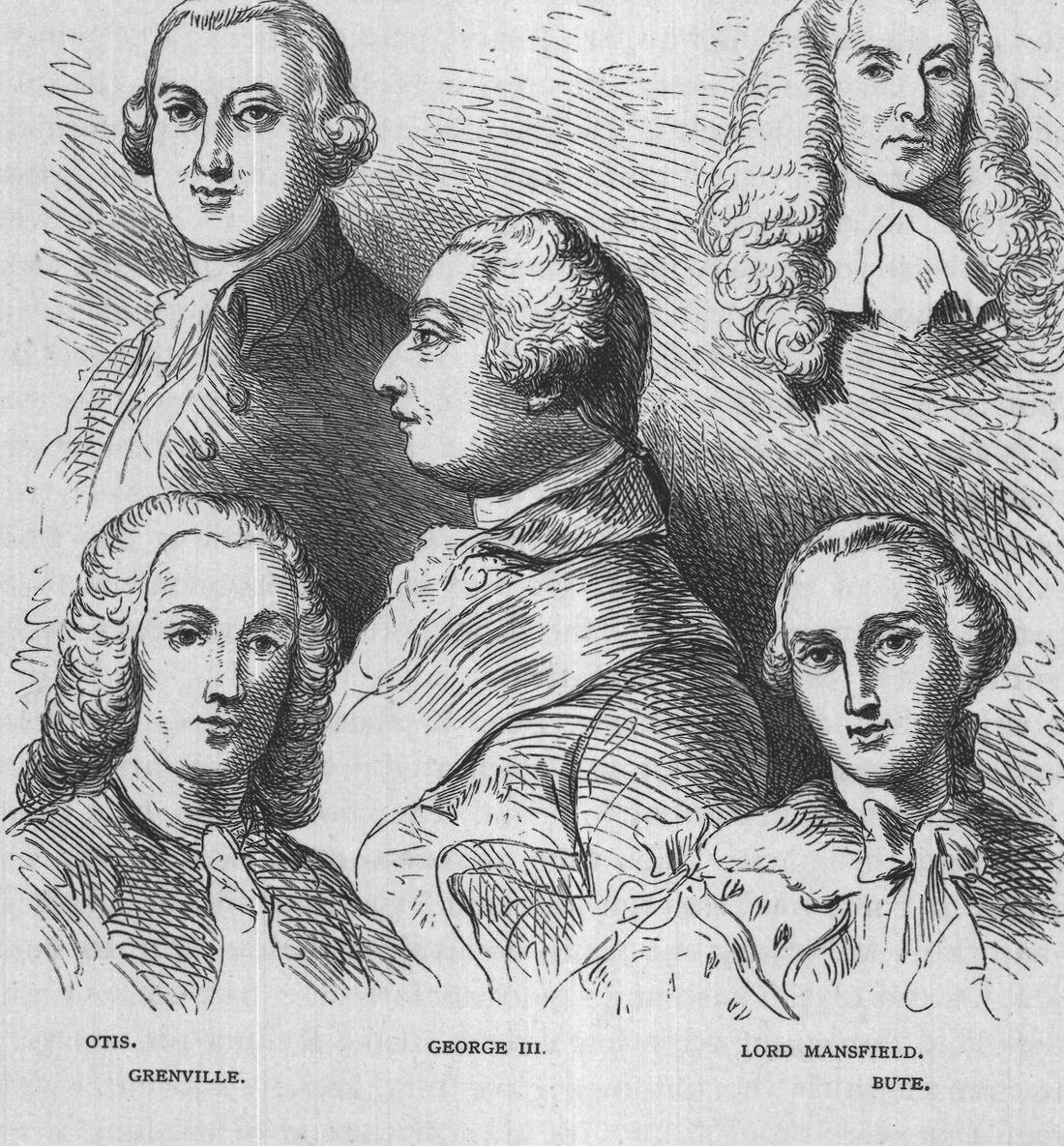
After the memorable argument in the Town Hall in Boston, the triumphs of the popular will in America began. Few writs of assistance were issued, and these were ineffectual. The Americans prepared for the impending conflict with the British ministry, animated by a prophecy of success because their warfare would be just. They measured the strength of that ministry by true standards, and found them generally weak. Bute, in 1762, became Premier, with George Grenville, who prided himself on his knowledge of the science of finance, as his chancellor of the exchequer. Pitt, who had become disgusted with the ignorance and assumptions of Bute, had left public employment the previous year and retired to his country seat at Hays, in Kent. There, though tortured by gout, he watched the drift of public affairs with intense interest, and equally intense anxiety, for he trembled at the thought of the possible fate of his country, whose destinies were held by such incompetent hands
When Pitt resigned the seals of office into the hands of the king in the autumn of 1761, the public discontent was unmistakable. Bute, in a reply to a letter from Lord Melcombe congratulating the former on being delivered of a most impracticable colleague (Mr. Pitt), said: "My situation, at all times perilous, is become much more so; for I am no stranger to the language held in this great city--` Our darling's resignation is owing to Lord Bute, and he must answer for all the consequences.'" The king, too, felt unpleasant forebodings concerning the future; and when the great statesman laid the seals before him, his majesty expressed his deep concern at the loss of so able a minister. The king showered kind words so profusely that Pitt, acknowledging the royal condescension, burst into tears. The king offered to confer a title of honor upon the retiring statesman, but Pitt was "too proud to receive any mark of the king's countenance and favor," he wrote to Bute, and declined it. He intimated, however, that he should be happy could he see those dearer to himself "comprehended in that monument of royal approbation and goodness" with which his majesty should condescend to distinguish him. The king acted upon this hint, and conferred upon Pitt's wife the honorary title of Baroness of Chatham, with a pension for Lady Chatham, her husband and their eldest son, of fifteen thousand dollars a year. With these marks of royal approbation, Pitt remained in retirement, maintaining his popularity and appearing in Parliament only when great questions came up, until 1766, when he was elevated to the peerage with the title of Viscount Pitt and Earl of Chatham. His acceptance of the title damaged his popularity. Chesterfield said: "Pitt has gone to the hospital for incurable statesmen"--the House of Lords.
When Bute became prime minister, the opposition press attacked him without mercy, and innumerable caricatures appeared: some of the latter were coarse and indecent. Intoxicated by power, the minister lavished offices upon his countrymen in profusion, as did James the First. This called out many caricatures. One of these represents a northern witch on an enormous broomstick, conveying Scotchmen through the air to the land of promotion. Another entitled "The Royal Dupe," represents the Princess of Wales seated on a sofa, lulling the young king to sleep in her lap, while Lord Bute is stealing his sceptre, and another is picking his pockets. Caricatures and satires concerning Bute's private relations with the princess were highly libellous and sometimes obscene. In the spring of 1763, his administration, which was founded on prerogative and power, was ended. He suddenly resigned, for causes never clearly understood, and was succeeded by George Grenville, Pitt's brother-in-law.