Hutchinson and his Friends
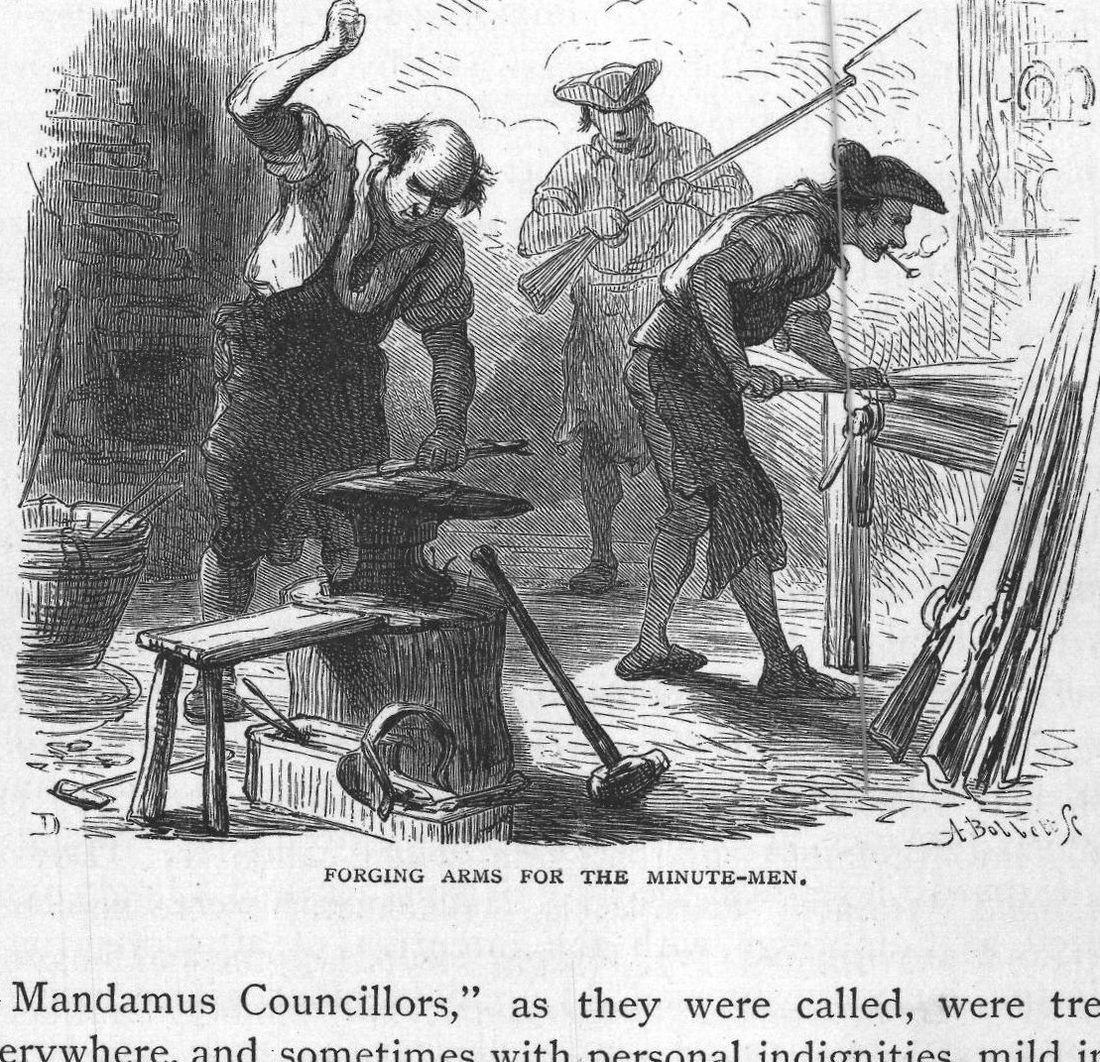
While the leading patriots were preparing for the Grand Council of deputies, the people, everywhere, were preparing for impending war. They armed themselves, and practised military tactics almost every day. Men of all stations in life might be found in the ranks for discipline. Deacons of churches were often captains, having more than half of the young men of the congregations with whom they worshipped, as their followers. There was seldom any military organization besides a company, but they were ready to fall into regiments and brigades when called for. Boys imitated their elders, and "trained" with sticks. Blacksmiths were kept busy all of the summer and autumn of 1774, forging swords, guns and bayonets, and other men were compounding gunpowder, and making bullets of lead. When the Congress at Philadelphia had closed late in the autumn, the Provincial Congress of Massachusetts voted to enrol twelve thousand of these patriots under the general title of Minute-men--volunteers who would be ready at a minute's warning to take the field with arms in their hands. Rhode Island and Connecticut were invited to do likewise. They did so; and when the time came for armed resistance nearly all New England was disciplined, in a degree, for the struggle. The example was contagious. Other colonies followed, and in Virginia the Minute-men were of special service to the patriot cause at a critical juncture. As the summer of 1774 wore away, Gage found himself greatly perplexed by his peculiar situation. Early in August he received official copies of the several acts of Parliament, which completely subverted the Charter of Massachusetts. Gage was made a ruler irresponsible to the people. He proceeded to form a council of thirty-six members, by a mandamus--a positive command to serve--and most of those so appointed accepted the honor. They soon felt the peltings of the pitiless storm of popular indignation so keenly, that twenty of them resigned, and the remainder sought protection under the troops in Boston. These "Mandamus Councillors," as they were called, were treated with scorn everywhere, and sometimes with personal indignities, mild in form but severe in effect, as in the case of a respected citizen of Plymouth. On the Sunday after he accepted the appointment, as soon as he took his seat in the house of worship, his neighbors and friends all put on their hats and walked out of the house. As they passed his pew, he hid his face by leaning his head over his cane. This public disapproval by those whom he loved, he could not bear, and immediately resigned.
Gage was puzzled more by the forbearance of the people, than by their defiance. Nobody committed any overt acts of treason or sedition that might justify him in using power for administering punishment, and yet the air was full of the spirit of insurrection. He was helpless in a vortex of irritating words and acts that were ominous of evil. There were inflammatory handbills, newspapers, and tongues all around him exciting the people to rebel, but nobody stepped over the confines of law. Several times he was on the point of executing his discretionary orders to arrest Hancock and other leaders, but unoffended law bade him be cautious. Squibs, epigrams, sonnets, parables and dialogues of remarkable pith filled the whig journals, not only in Boston, but elsewhere, in which logic and argument were contained in a nut-shell, as in the following example from a New York newspaper:
"The Quarrel with America Fairly Stated
Spills the tea on John Bull--John falls on to bang her;
Massachusetts, enraged, calls her neighbors to aid
And give Master John a severe bastinade.
Now, good men of the law, pray who is in fault,
The one who begins or resists the assault?"