Growth, Extent and Population of Our Domain
THE progress of our Republic in all departments of activity during the past one hundred years has been marvellous. In 1776, its domain comprised only a narrow border of the continent along the ocean coasts for almost a thousand miles, with an average width between the sea and the lofty Alleghany mountains of about thirty leagues. The extent of the domain of the new-born Republic was then 800,000 square miles; now (1876) it forms an irregular belt across the continent from ocean to ocean, embracing an area of 3,500,000 square miles of land and water. Our population in 1776 was a little more than a million and a half; now it is full 42,000,000.
Agriculture, the primary source of wealth, wooes manufactures as a help-mate, and these, wedded, become the parents of commerce. The latter promotes social refinement as manifested by the cultivation of the fine arts, science, literature and education; and these foster true religion and morality, the basis of highest civilization. These processes of growth may be seen in the history of our country within the past one hundred years.
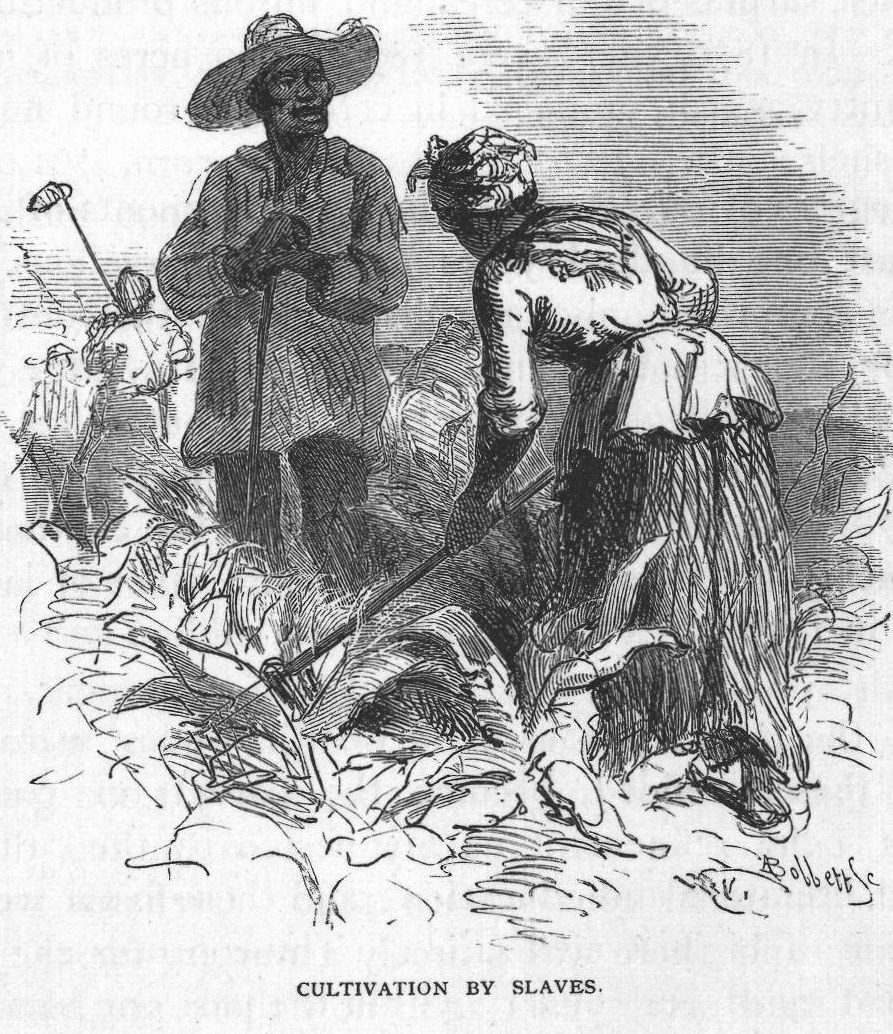
Agriculture here, in 1776, was simply an art, not a science. The tillers were ignorant of the principles of vegetable production and followed the methods of their forefathers, without question. The country was sparsely settled; and social attrition, which expands the mind, was then very slight. The implements of labor, made by common carpenters or blacksmiths, were very rude. They were nearly all moved by human muscle, for the use of labor-saving machinery was unknown in our country, and improvements were opposed as innovations. Farm work was then far more laborious and less productive than now. The plow of that day required more than double the strength of man and beast to manage it, than does the plow at present; and the improvements made in that implement alone, within the last fifty years, save, annually, to the farmers of our country in the cost of work and teams, at least $12,000,000. A large proportion of the agricultural work was performed then by negro slaves in the region south of Baltimore; and in the loose soil of the cotton-growing States, the hoe was the substitute for the plow in the hands of men and women.
The cereals, potatoes, flax and tobacco, were the chief products of the soil in 1776; for the cultivation of the cotton-plant, as an article of commerce, was then unknown. The invention of Whitney's Cotton-Gin, for separating the seed from the fibre, gave a wonderful impetus to this branch of agriculture in the closing decade of the last century. That machine performed the work of a thousand hands, and made the cotton culture profitable. The entire production of cotton in the United States, in 1791, was 2,000,000 pounds; now the average annual product is over 1,500,000,000 pounds. It is estimated that one-half of the entire cotton product of the earth is raised in the United States.
The seed of our cereals was all sown by hand a hundred years ago, and the standing grain was cut with a sickle and threshed with a flail. Now drills scatter the seed, and ingenious machines not only cut the crop and gather it into sheaves, but thresh and winnow it for market. Then the hay crop was cut with a hand-scythe, and cured and gathered entirely by human labor; now ingenious machines do all that labor with very little of man's strength. These machines and a hundred others that now do the work of men's hands, have nearly all been invented within fifty years.
In 1776, almost the whole agricultural products of our country, including live-stock, were used for the support of the million and a half inhabitants; now, not only 42,000,000 are fed and largely clothed from the products of our soil, but a vast surplus of our cereal and fibrous productions are sent to other countries. In 1870, there were 189,000,000 acres of improved farm land in our country, which produced in cereals (in round numbers) wheat, 288,000,000 bushels; rye, 17,000,000; Indian corn, 761,000,000; oats, 282,000,000; barley, 30,000,000; buckwheat, 10,000,000 bushels; and rice, 74,000,000 pounds. Of the common potato, there were raised 143,000,000 bushels, and of the sweet potato, 22,000,000 bushels. The hay crop amounted to 28,000,000 tons, and the tobacco crop to 363,000,000 pounds. Of the principal fibrous products there were raised that year over 1,200,000,000 pounds of cotton. The average annual product, as we have observed, is now greater. The amount of flax raised was 27,000,000 pounds; wool, 100,000,000 pounds; silk cocoons about 4,000 pounds, and 13,000 tons of hemp.
There were also produced 87,000 hogsheads of cane sugar, and 28,000,000 pounds of maple sugar; also nearly 7,000,000 gallons of molasses from the cane, 16,000,000 gallons from sorghum cane, and 921,000 gallons of maple molasses. Fruit culture in our country was so limited that it was not recognized in the national census until 1840. Orchards were small, and bore inferior fruit; and there was scarcely a nursery for the sale of apple-trees in our broad land sixty years ago; now there are hundreds, and full 30,000,000 trees are sold annually. In 1870, the products of our orchards were valued at $48,000,000; and the total value of the increasing grape crop in the United States, cannot now be less than $30,000,000. The choicest varieties of fruit and berries are now cultivated everywhere in the Republic.