Governor Bernard's Interference
GOVERNOR BERNARD had assured the Massachusetts Convention of his displeasure, and his intention to enforce the laws. He said to them, in a proclamation, when they assembled: "It is my duty to interpose this instant, before it is too late (for he declared the gathering unlawful). "I do, therefore, earnestly admonish you that instantly, and before you do any business, you break up this assembly, and separate yourselves. I speak to you now as a friend to the province and a well-wisher to the individuals of it. But if you should pay no regard to this admonition, I must, as governor, assert the prerogative of the crown in a more public manner; for, assure yourselves (I speak from instruction), the king is determined to maintain his entire sovereignty over this province, and whoever shall persist in usurping any of the rights of it will repent of his rashness." So spoke the governor bravely, when he knew that a fleet and army were near to support him. But the Convention, as we have observed, did not heed the admonition. They stayed in session six days until they had accomplished their intended business, and they had just adjourned, when the white sails of eight vessels-of-war appeared at the entrance to Boston Harbor, bearing two regiments of British soldiers, which General Gage had ordered from Halifax, commanded by Colonels Dalrymple and Carr. Gage had sent his engineer, Montressor, to assist the troops, if necessary. That officer bore an order, in accordance with the wishes of Governor Bernard, to land the troops in the settled parts of Boston. Accordingly, on Saturday morning, the 1st day of October (1768), the ships moved up to the city, anchored with springs on their cables, and in spite of the solemn remonstrances of the people, the troops were landed on the Long Wharf, under cover of the guns of the war-vessels. The cowardly governor had gone into the country to avoid the expected storm of popular indignation, leaving the military to bear the brunt of the odium and its effects.
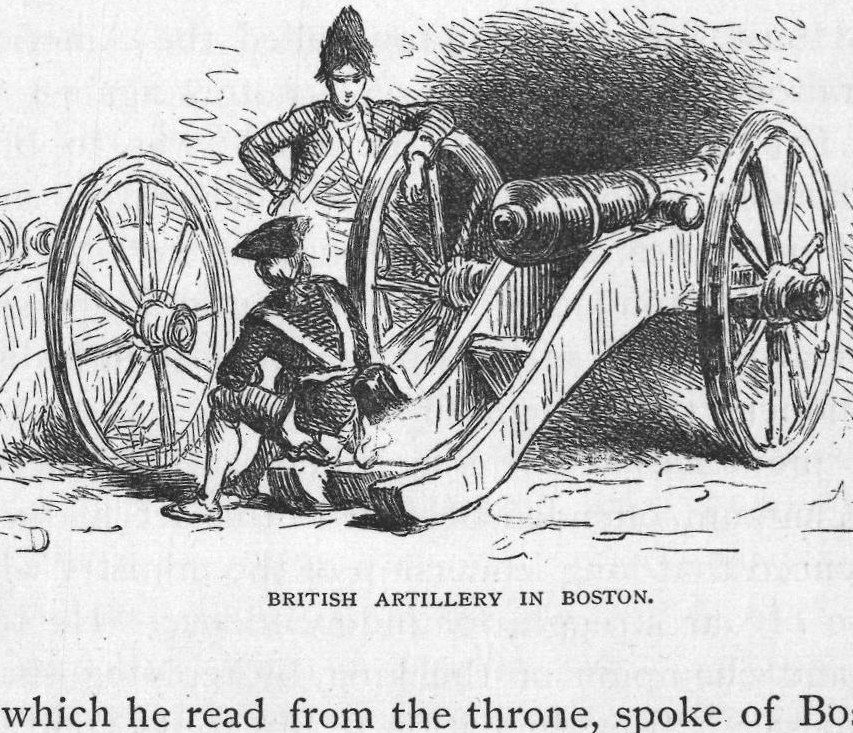
Bernard had tried to induce his council to sanction an order for quartering the troops in the town. They refused, and he took upon himself the whole responsibility of the act. The selectmen, regarding the order as illegal, refused to provide quarters for the soldier. Dalrymple blustered and threatened, but they were firm. He had prepared for wicked work by providing each of his soldiers with sixteen rounds of ammunition. This fact he made known, and hoping to overawe the inhabitants, he marched his whole force through the town, with fixed bayonets, colors flying, drums beating, and a train of artillery following, with all the parade of a triumphant army entering a conquered city. The unarmed inhabitants looked on with sorrow but not with fear. They knew that a single act of violence on the part of the troops would cause twenty thousand men, from the hundred towns of Massachusetts, to spring up for their defence like the harvest of dragons' teeth; and that war once begun, a vast host would come from the other provinces like trailing clouds full of wrath and potency.