Fire-Ships: High Bridge and Spuyten Duyvel Creek
On the day of the battle at White Plains, Knyphausen, with six German battalions, crossed the Harlem River at Dyckman's Bridge (present head of navigation), and encamped on the plain between Fort Washington and Kingsbridge. The Americans in the redoubts near by stood firm till the fort was closely invested by the foe. Washington had left it and Fort Lee in charge of Greene. When he heard of the peril that menaced it, he advised that officer to withdraw the garrison and stores, but left the matter to Greene's discretion. When, on the 15th, he reached Fort Lee, he was disappointed in not finding his wishes gratified. Greene desired to hold the fort as a protection to the river; Congress had ordered it to be held till the last extremity, and Magaw, its commander, said he could hold out against the whole British army until December. Washington was not satisfied of its safety, but yielded his judgment and returned to Hackensack. There, at sunset, he received a copy of a reply which Magaw had made to a summons of Howe to surrender, accompanied by a threat to put the garrison to the sword in case of a refusal. To this summons Colonel Magaw replied, protesting against the savage menace, and declaring that he would defend the post to the last extremity. Washington immediately rode to Fort Lee. Greene had crossed over to the island. The chief started in a row-boat in the same direction, and met Greene on the river in the star-light returning with Putnam. They told the chief that the garrison were in fine spirits, and confident that they could successfully defend themselves. It was then too late to withdraw them, and Washington returned to Fort Lee, but was not satisfied.
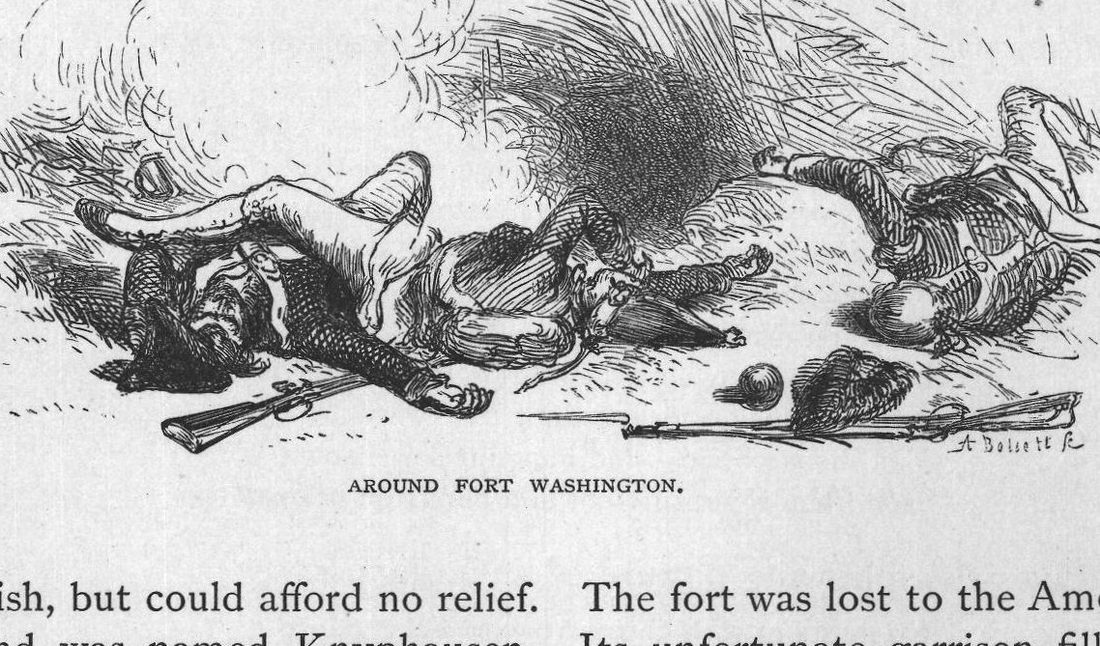
Howe had planted heavy guns on the lofty banks of the Harlem River just above the present High Bridge, and from there he opened a severe cannonade early in the morning of the 16th, upon the northern outworks of Fort Washington, to cover the landing of attacking troops from a flotilla of flat-boats which had passed up the Hudson in the night, and been concealed in Spuyten Duyvel Creek. These outworks were defended on the north-east by Colonel Rawlings, with Maryland riflemen and militia from Mercer's Flying Camp under Colonel Baxter. The lines toward New York were defended by Pennsylvania commanded by Colonel Lambert Cadwallader. Magaw commanded in the fort. Rawlings and Baxter occupied redoubts on rugged and heavily-wooded hills.
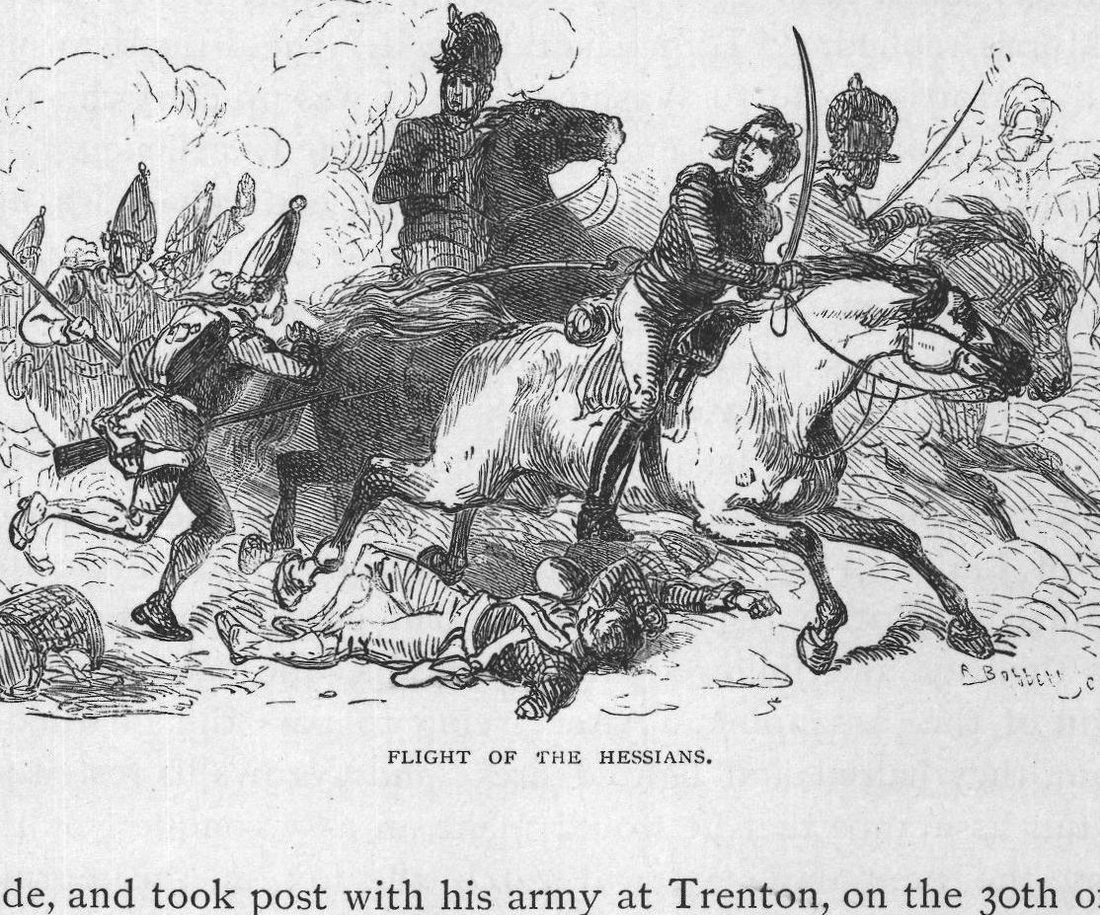
The attack was made by four columns. Knyphausen, with Hessians and Waldeckers, moved from the plain along the rough hills nearest the Hudson River on the north at the same time Lord Percy led a division of English and Hessian troops to attack the lines on the south. General Matthews, supported by Lord Cornwallis, crossed the stream near Kingsbridge, with guards, light-infantry, and grenadiers, under cover of the guns near the High Bridge, while Colonel Sterling, with the 42d regiment of Highlanders, crossed at a point a little above the High Bridge. Knyphausen divided his forces. One division under Colonel Rall (killed at Trenton a few weeks afterward) drove the Americans from Cock Hill Fort, a small redoubt near Spuyten Duyvel Creek, while Knyphausen, with the remainder, penetrated the woods near Tubby Hook, and after clambering over rocks and felled trees, attacked Rawlings in a redoubt afterward called Fort Tryon. Meanwhile Percy had driven in the American pickets at Harlem Cove (Manhattanville), and attacked Cadwallader at the advanced line of intrenchments. A gallant fight ensued, when Percy yielded and took shelter behind some woods.