Expedition against New Orleans
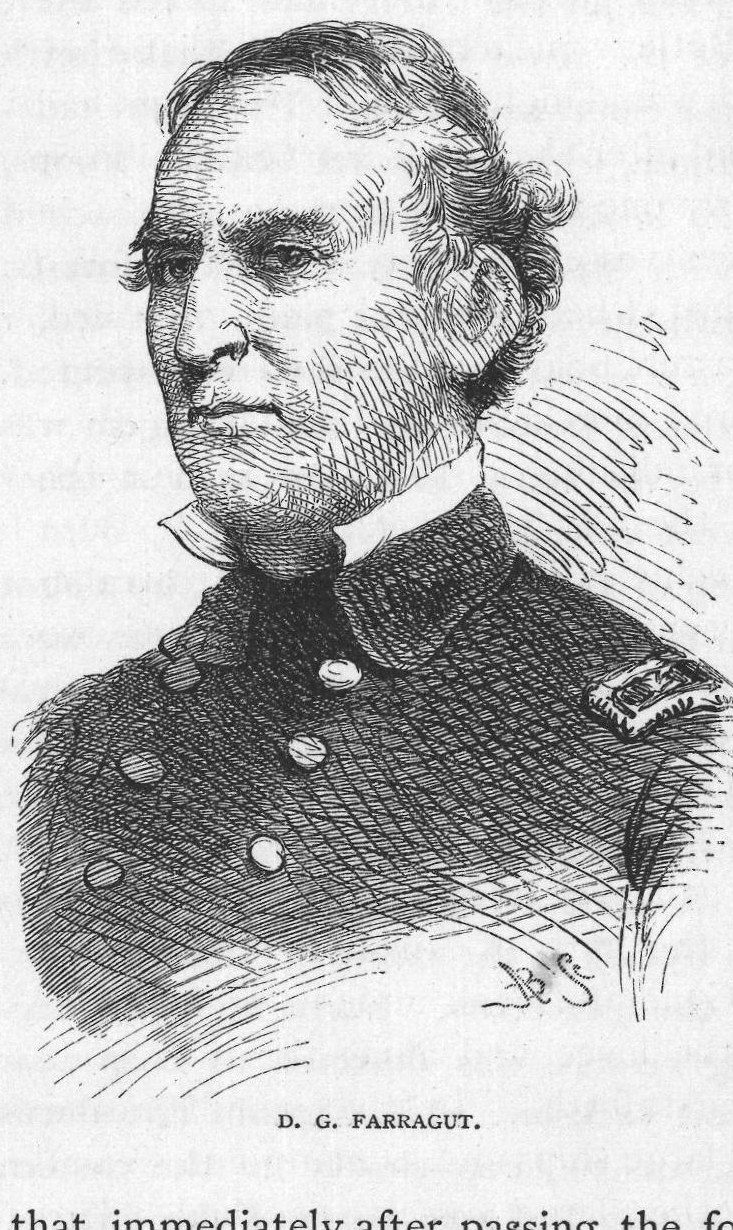
At the beginning of 1862 the National Government had determined to repossess itself of the important positions of Mobile, New Orleans, Baton Rouge and Galveston, by which it might maintain the National supremacy over the Lower Mississippi, and attempt the occupancy of Texas. General Benhamin F. Butler was placed in command of the Department of the Gulf, which included these points, and comprised the whole theatre of proposed operations. He was directed to co-operate with the navy in the important enterprise; and as the first object of the expedition was New Orleans, he suggested Ship Island, off the coast of Mississippi, as a rendezvous for the land and naval forces. He gathered his troops at Fortress Monroe. When all was in readiness, he visited Washington, and on leaving the President, he said: "Good-bye; we shall take New Orleans or you will never see me again." Secretary Stanton said: "The man who takes New Orleans is made a lieutenant-general." Butler embarked at Fortress Monroe, with his wife, his staff, and about fourteen thousand troops, in the magnificent steam-ship Mississippi. He suffered vexatious delays at Port Royal; and it was thirty days before he reached Ship Island, a desolate sand-bar, without a house; and only a few charred boards could be found to make a shanty for the shelter of Mrs. Butler. General Phelps was there with Massachusetts and Connecticut troops, and had strengthened an unfinished fort on the Island. Admiral Farragut had also arrived with a naval force; also a fleet of bomb-vessels commanded by Commodore David D. Porter, prepared to co-operate with the land and naval forces.
At a short bend in the Mississippi River, seventy-six miles from its passage into the Gulf of Mexico, were two forts-Jackson and St. Philip. These, with some fortifications above and obstructions in the river below, seemed to the Confederates to make the stream absolutely impassable by vessels of an enemy; and they believed New Orleans, where there were ten thousand insurgent troops under General Mansfield Lovell (a former politician of New York), to be perfectly safe from invasion. The people continued their occupations, as usual; and one of the journals said: "Our only fear is, that the northern invaders may not appear. We have made such extensive preparations to receive them that it were vexation if their invincible armada escapes the fate we have in store for it." The test was soon made.
General Butler and the two naval commanders arranged a plan for the capture of New Orleans, which comprehended an attack on the forts below the city, first, by Porter's bomb-vessels, Farragut with his stronger vessels remaining as a reserve until the guns of the fort should be silenced. Failing in this, Farragut was to attempt to run by the forts, clear the river of Confederate vessels, isolate the forts and cut off their supplies and supports. Then General Butler was to land his troops in the rear of Fort St. Philip (the weaker one), and attempt to carry it by assault. This done, the land and naval forces were to press on toward New Orleans. The general command of the river defences of the Confederates was intrusted to General J.K. Duncan, formerly an office-holder in New York.
On the 17th of April the fleets of Farragut and Porter were in the river, with the former as chief commander of the naval forces; and Butler, with about nine thousand troops, was at the Southwest Pass. The fleets comprised forty-seven armed vessels, and these, with transports bearing troops, went up the river, Porter's mortar-boats leading. When these approached the forts, their hulls were besmeared with Mississippi mud; and the masts, yards and rigging, were so covered with the branches of trees, that under this disguise they were enabled to take a position near the forts unsuspected. As when "Birnam Wood" moved "toward Dunsinane," the stratagem was successful. The Mississippi was full to the brim; and a boom and other obstructions near Fort Jackson was swept away by the flood.
A battle was begun on the morning of the 18th (April, 1862), by a shot from Fort Jackson. Porter's mortar-boats responded. The latter were supported by the gun-boats; but after pounding the fortifications several days, Farragut, satisfied that he could not reduce them, prepared to run by them in the night of the 23d. The mortar-boats led the way, and the remainder of the navy followed, gallantly breasting the swift-flowing current that went over the river banks and flooded every bayou. The perilous passage of the forts was begun at two o'clock in the morning. The mortar-boats were to cover the movement of the gun-boats. Farragut, in his flag-ship Hartford, with two other strong vessels, was destined to keep near the right bank of the river and fight Fort Jackson; while Captain Theodorus Bailey, commanding eight gun-boats, was to keep closely to the eastern bank and fight Fort St. Philip. To Captain Bell was assigned the duty of attacking the Confederate fleet above the forts, with six gun-boats.