Capture of New Berne and Fort Macon
We left General Burnside and Commodore Rowan in Albemarle Sound after the capture of Roanoke Island and Elizabeth City and vicinity, preparing to make other important movements on the coast of North Carolina. They appeared in the Neuse River, eighteen miles below New Berne, on the evening of the 12th of March (1862); and early the next morning National troops led by Generals Foster, Reno and Parke, about fifteen thousand strong, were landed and marched against the defences of that town. The Confederates, under General Branch, who were inferior in numbers, occupied a strongly intrenched position. The Nationals moved against them at daylight on the morning of the 14th. The Confederates sustained a severe battle with great bravery and skill until, closely pressed on all sides by superior numbers, they broke, and fled across the Trent closely pursued by Foster. They burned the bridges behind them and so escaped, leaving their killed and wounded and two hundred men, who were made prisoners. The Nationals then took possession of New Berne; when General Parke proceeded to capture Fort Macon, on a point of Bogue Island near the entrance to Beaufort harbor. In this enterprise the National troops were assisted by gun-boats controlled by Commander Samuel Lockwood. The garrison made but slight resistance, and on the 25th of April, it was surrendered. At the same time the National troops under General Reno were quietly taking possession of important places on the coast of North Carolina, and threatening Norfolk in the rear. Plymouth, Winton and Washington were occupied by the National forces. Garrisons for these places so widely dispersed Burnside's troops, that he could no longer make aggressive movements, and he remained quietly in his department until he was summoned to Fortress Monroe at the middle of July. He held almost undisputed sway over the coast region from the Dismal Swamp to the Cape Fear River.
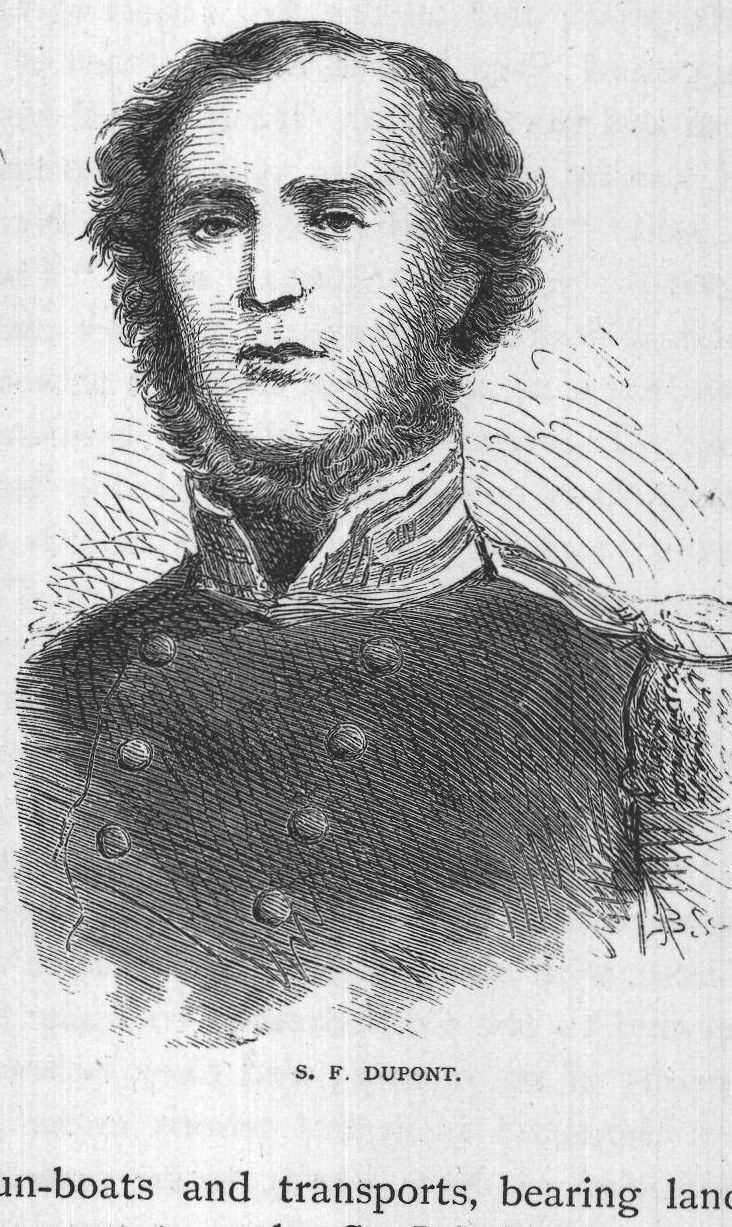
At the close of 1861, the National authority (as we have observed) was supreme along the Southern coast from Warsaw Sound, below the Savannah River, to the North Edisto well up toward Charleston. At the close of the year, General T.W. Sherman, in command in that region, directed his chief engineer, General Q.A. Gillmore, to reconnoitre Fort Pulaski, and report upon the feasibility of a bombardment of it. It was done, and Gillmore reported that it might be reduced by planting batteries of rifled guns and mortars on Big Tybee Island southeast of Cockspur Island, on which the fort stood. Explorations were made to discover some channel by which gun-boats might get in the rear of the fort, and a New York regiment was sent to occupy Big Tybee Island. A channel was found, and land troops under General Viele, borne by gun-boats commanded by Captain John Rodgers, went through it to reconnoitre. Another expedition composed of land troops under General Wright, and gun-boats commanded by Fleet-Captain Davis, were sent by Admiral Dupont up to the Savannah River, by way of Warsaw Sound, Wilmington River and St. Augustine Creek, in rear of Fort Pulaski. The gun-boats of Rodgers and Davis had a skirmish with Tattnall's "musquito" fleet; and having accomplished their object, the whole National force returned to Hilton Head, to the great relief of the inhabitants of Savannah, who supposed the expedition was abandoned. Soon afterward, however, the Nationals made a lodgement on Jones's Island, and erected a heavy battery at Venus's Point, also a smaller one on Bird Island, and so effectually closed the Savannah River in the rear of Fort Pulaski. It was absolutely blockaded near the close of February (1862); and on the 8th of March General David Hunter arrived as successor of General Sherman in command of the Department of the South, and he and Commodore Dupont, who was in command of the navy on that coast, acted in concert.
With great skill General Gillmore had planted his siege-guns on Big Tybee Island that commanded the fort; and on the 10th of April (1862), after Hunter had demanded its surrender and the commander of the fortress had refused compliance, thirty-six heavy rifled cannons and mortars were opened upon it under the direction of Generals Gillmore and Viele. It was gallantly defended until the 12th, when it was so battered that it was untenable, and it was surrendered. This was an important victory, for it enabled the Nationals to close the port of Savannah against the blockade-runners, which had become numerous and bold all along our coast.
In the meantime Commodore Dupont and General Wright had been making easy conquests on the coast of Florida. Early in February they captured Fort Clinch, on Amelia Island, which the Confederates had seized, and drove the insurgents from Fernandina. The Confederates speedily abandoned their other forts along the coasts of Florida and Georgia, which the Nationals took possession of; and a flotilla of gun-boats and transports, bearing land troops under Lieutenant T.H. Stevens, went up the St. John's River and captured Jacksonville on the 11th of March. St. Augustine was taken possession of at about the same time by Commander C. P. Rodgers, and the alarmed Confederates abandoned Pensacola and all their fortifications on the main opposite Fort Pickens. When Dupont returned to Port Royal, he found General T. W. Sherman in possession of Edisto Island; and before the first anniversary of the evacuation of Fort Sumter, the whole coast from Cape Hatteras to Perdido Bay west of Fort Pickens, excepting at Charleston and its immediate vicinity, had been abandoned by the Confederates.