Enthusiasm of the People
The suggestions of the President and the heads of departments were followed by prompt action on the part of Congress. They at once made provisions for the sinews of war and to strengthen the arm of the Chief Magistrate of the Republic. They approved of the President's call for militia and volunteers. They authorized the raising of five hundred thousand troops; and they made an appropriation of $500,000,000 to defray the expenses of the kindling Civil War. They carried out the suggestions of the Secretary of the Treasury concerning methods for procuring the money, by increased taxes and the issue of interest-bearing Treasury notes or bonds. Each House was purged of disloyal members by the expulsion of ten Senators and one Representative. The Secretary of the Navy was upheld by Congress; and, putting forth extraordinary exertions to increase the naval force of the country, he purchased, before the close of the year, and put into commission, no less than one hundred and thirty-seven vessels, and contracted for the building of a large number of substantial steamships for sea service. He called attention to the importance of iron-clad vessels; and so promptly were his requisitions for recruits complied with, that no vessel was ever detained for more than two or three days by want of men. Two hundred and fifty-nine officers had resigned or been dismissed from the service for disloyalty since the 4th of March, and several vessels were sent to sea without a full complement of officers; but the want was soon supplied, for many retired officers, who had engaged in civil pursuits, now came to the aid of their country in its hour of need, and were re-commissioned. Many masters and mates were appointed from the commercial marine. The Naval School and public property at Annapolis had been removed to Newport, Rhode Island, for safety, and the seminary found temporary accommodations in Fort Adams there.
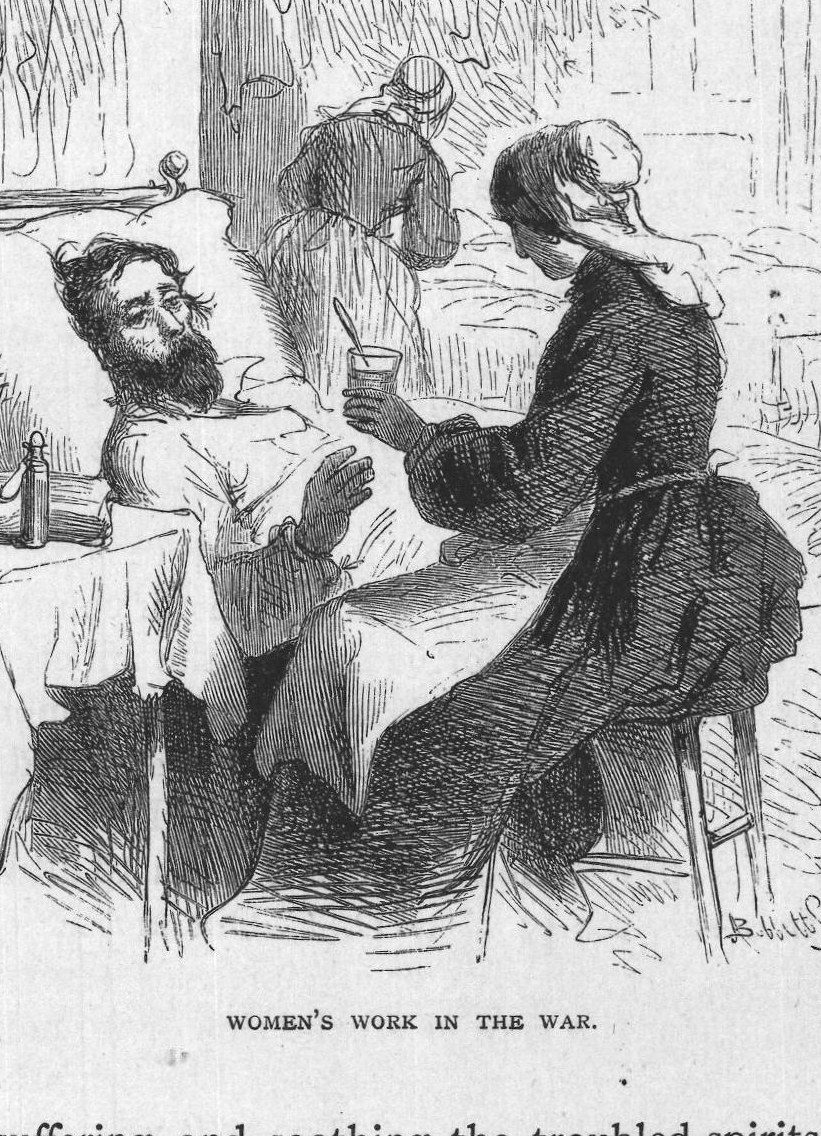
When Congress met, there were about three hundred thousand Union troops in the field, and the enthusiasm of the people in the free-labor States was at fever heat. They contributed men, money and soldiers, with lavish generosity. Women, animated by their natural zeal in labors of mercy, went to work with busy fingers preparing lint and bandages for the wounded, and hospital garments for the sick and maimed. In tens of thousands of households in the land, women and children might be seen engaged in the holy toil; while hundreds of the gentler sex, many of whom had been tenderly nurtured in the lap of ease and luxury, hastened to hospitals in camps and towns, and there, with saintly self-sacrifice, they performed the duties of nurse, night and day, and administered, in every way, with all the tenderness of affectionate mothers and sisters, to the wants of the sick, the wounded, and the dying.
Associated efforts in this benevolent work were first organized by Miss Dorothea L. Dix, a woman extensively known in our country for her labors of love in behalf of the poor, the unfortunate, and the afflicted. Perceiving war to be inevitable, she offered her services to the Government gratuitously, in organizing a system for providing comfort for the sick and wounded soldiers. They were accepted. Only eight days after the President's call for troops, the Secretary of War proclaimed: "Be it known to all whom it may concern, that the free services of Miss D. L. Dix are accepted by the War Department, and that she will give, at all times, all necessary aid in organizing military hospitals for the care of all the sick or wounded soldiers, aiding the chief surgeons by supplying nurses and substantial means for the comfort and relief of the suffering; also, that she is fully authorized to receive, control, and disburse special supplies bestowed by individuals or associations for the comfort of their friends or the citizen soldiers from all parts of the United States." Surgeon-General R. C. Wood, recognizing the ability of Miss Dix for the task she had volunteered to perform, publicly requested all women who offered their services as nurses to report to her.
"Like an angel of mercy," says a historian of the war, "this self-sacrificing woman labored day and night throughout the entire war for the relief of the suffering soldiers, without expecting or receiving any pecuniary reward. She went from battle-field to battle-field when the carnage was over; from camp to camp; and from hospital to hospital, superintending the operations of the nurses, and administering with her own hands physical comforts to the suffering, and soothing the troubled spirits of the invalid or dying soldier with a voice low, musical and attractive, and always burdened with words of heartfelt sympathy and religious consolation. Yet she was not the only Sister of Mercy engaged in this holy work. She had hundreds of devoted, earnest, self-sacrificing co-workers of the gentler sex all over the land, serving with equal zeal in the camp and hospitals of National and Confederate armies; and no greater heroism was displayed by soldiers in the field, than was exhibited by these American women everywhere."