Desolation of the Wyoming Valley
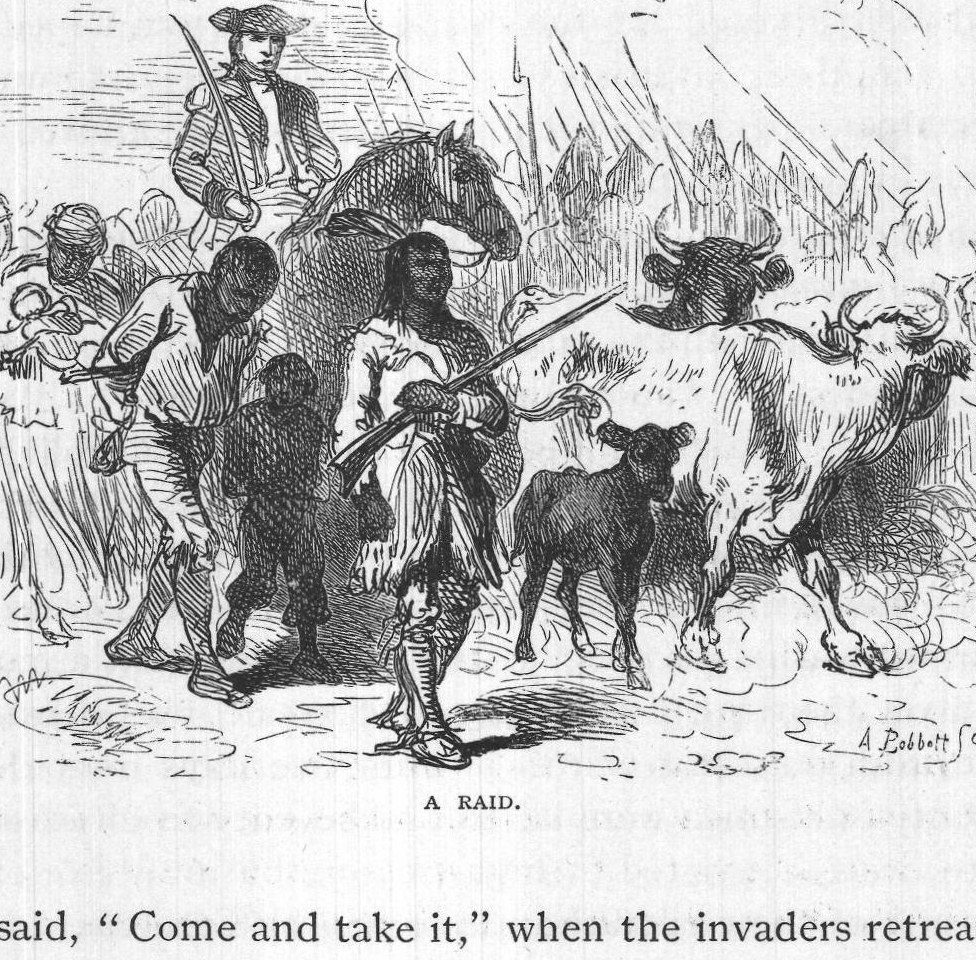
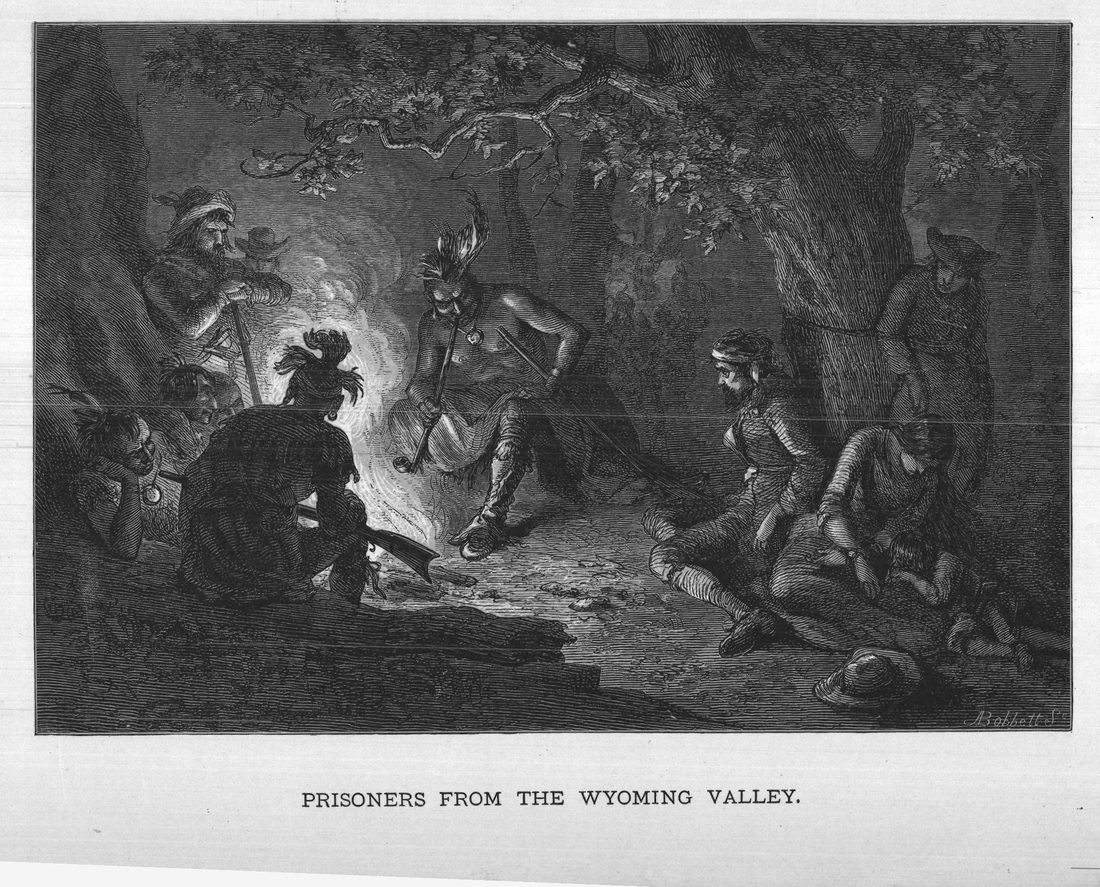
The yells of the Indians had been heard by the feeble ones at Forty Fort, and terror reigned there. Colonel Dennison, who had reached the valley that morning, had escaped to the stronghold, and prepared to defend the women and children to the last extremity. Colonel Butler had reached Wilkes-Barre fort in safety. Darkness put an end to the conflict, but increased the horrors. Prisoners were tortured and murdered. At midnight sixteen of them were arranged around a rock, and strongly held by the savages, when a half-breed woman, called Queen Esther, using a tomahawk and club alternately, murdered the whole band one after the other excepting two, who threw off the men who held them and escaped to the woods. A great fire lighted up the scene and revealed its horrors to the eyes of friends of the victims, who were concealed among the rocks not far away. Early the next morning, Forty Fort was surrendered, on a promise of safety for the persons and property of the people. The terms were respected a few hours by the Indians while John Butler remained in the valley. As soon as he was gone, they broke loose, spread over the plains, and with torch, tomahawk, and scalping-knife made it an absolute desolation. Scarcely a dwelling or an outbuilding was left unconsumed; not a field of corn was left standing; not a life was spared that the weapons of the savages could reach. The inhabitants who had not fled during the previous night were slaughtered or narrowly escaped. Those who departed made their way toward the eastern settlements. Many of them perished in the great swamp on the Pocono Mountains, ever since known as "The Shades of Death." The details of that day of destruction in the beautiful Wyoming Valley, and the horrors of the flight of survivors, formed one of the darkest chapters in human history. Yet Lord George Germain, the British Secretary for the colonies, praised the savages for their prowess and humanity, and resolved to direct a succession of similar raids upon the frontiers, and to devastate the older settlements. A member of the bench of Bishops in the House of Lords revealed the fact, in a speech, that there was "an article in the extra-ordinaries of the army for scalping-knives."
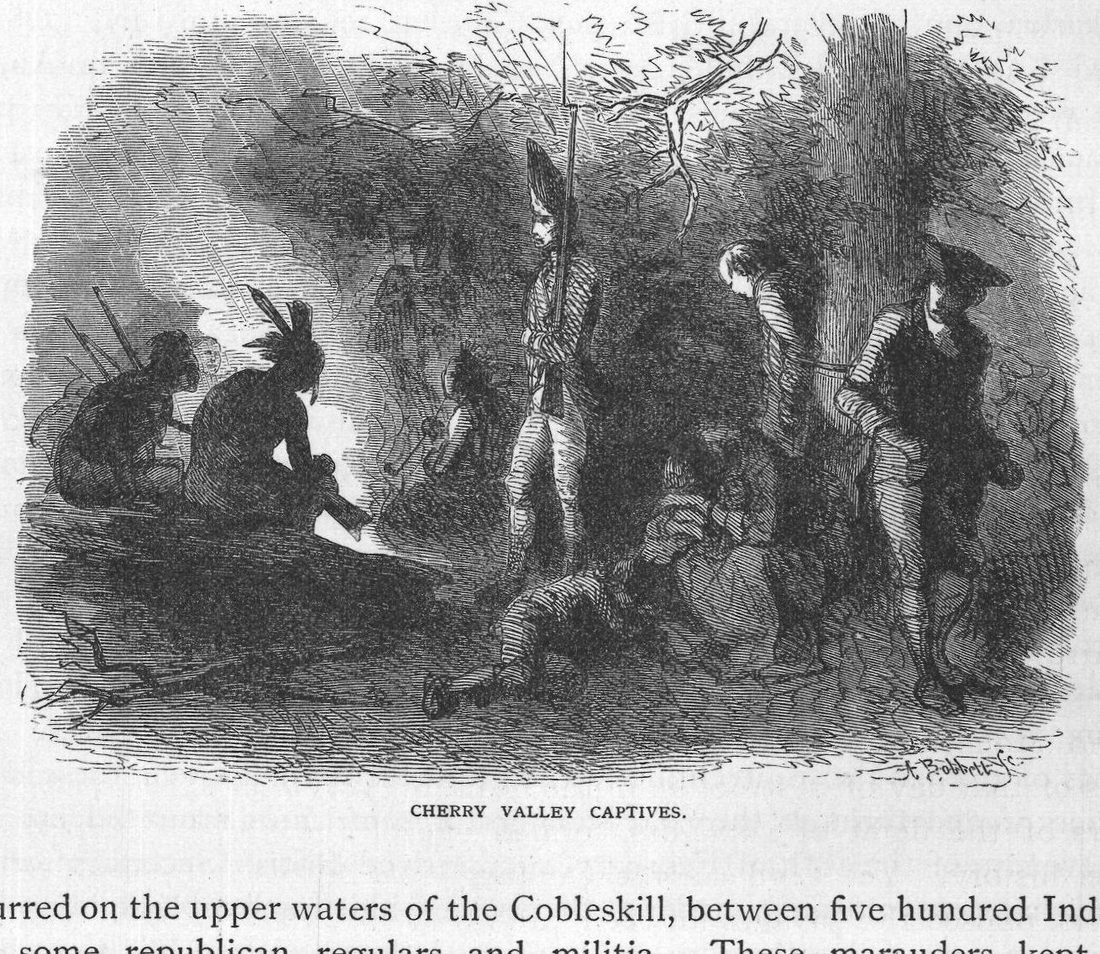
The settlements in the valleys of the Mohawk and Schoharie were great sufferers from Indian and Tory raids, during 1778. The Johnsons were anxious to recover their property and influence in the Mohawk country, and Brant, their natural ally by blood relationship and interest, joined them. Their spies and scouts were out in every direction. At a point on the upper waters of the Susquehanna, Brant organized scalping-parties and sent them out to attack the border settlements. These fell like thunderbolts upon isolated families or little hamlets in the Schoharie country, and the blaze of burning dwellings lighted the firmament almost every night in those regions, and beyond. Springfield, at the head of Otsego Lake, was laid in ashes in May. In June, Cobleskill, in Schoharie country, and the blaze of burning dwellings lighted the firmament almost every night in those regions, and beyond. Springfield, at the head of Otsego Lake, was laid in ashes in May. In June, Cobleskill, in Schoharie county, was attacked by Brant and his warriors, who killed a portion of a garrison of republican troops stationed there, and plundered and burned the houses. In July a severe skirmish occurred on the upper waters of the Cobleskill, between five hundred Indians and some republican regulars and militia. These marauders kept the dwellers in that region in continual alarm all the summer and autumn of 1778, and, finally, at near the middle of November, during a heavy storm of sleet, a band of Indians and Tories, the former led by Brant and the latter by Walter N. Butler, fell upon Cherry Valley and murdered, plundered, and destroyed without stint. Butler was the arch-fiend on the occasion, and would listen to no appeals from Brant for mercy to their victims. Thirty-two of the inhabitants, mostly women and children, were murdered, with sixteen soldiers of the garrison. Nearly forty men, women, and children were led away captives, marching down the valley that night in the cold storm, huddled together half-naked, with no shelter but the leafless trees and no resting-place but the wet ground. Tryon county, which then included all of the State of New York west of Albany county, was a "dark and bloody ground" for full four years.
Meanwhile there had been stirring events in the western wilderness, where the Indians had been stirred up to hostilities against the frontier settlements, by emissaries sent out among them by Colonel Henry Hamilton, the British commandant at Detroit. Major George Rogers Clarke, an active young Virginian, was commissioned to defend the settlements and attack Kaskaskia, one of several British posts in that region. In July, 1778, he seized Kaskaskia and Cahokia, near the Mississippi River, and in August took possession of Vincennes, on the Wabash River, a hundred miles from its mouth. The latter was a most important post, for it was in the heart of the Indian country, whose tribes bore allegiance to the British. The capture of Vincennes inspired the savages with great respect for American skill and courage, and Clarke found it a comparatively easy matter to pacify them and cause them to agree to assume a neutral position. Hearing of this and fearing the consequences, Colonel Hamilton sent an armed force from Detroit to retake Vincennes. This was done in January, 1779.