Capture of Andre
The usage of both armies and the implacable demands of the military code toward a spy forbade a compliance with his wishes. The British officers, on all occasions, had been quick to hand American captives. We have seen how brutally they gibbeted young Nathan Hale; and scores of patriots in South Carolina had recently perished by the rope by order of Cornwallis, for no other offence than loving the service of their own country better than that of their oppressors. Every officer in the American army would gladly have exchanged Andre for Arnold, and efforts to accomplish that end were made, but failed. Arnold died in his bed twenty-one years afterward; while Andre, the more innocent victim of the wicked complot of Clinton and Arnold, perished on a gibbet four days after he was convicted. The last words of Andre to the multitude who saw him die were--" I pray you bear me witness that I met my fate like a brave man." The American people and their annalists have ever done so. His king knighted his brother, and pensioned his mother and sisters; and the custodians of Westminster Abbey dishonored that sanctuary of the virtuous and noble dead of the kingdom, by allowing a conspicuous monument to his memory to be placed in it. Arnold escaped punishment altogether, for his was too coarse a nature to suffer the mental anguish of remorse. He was shunned and neglected by those who accepted the treason but despised the traitor, excepting the king and a few persons in office; and he died in London, in poverty and obscurity. His children were placed on the pension-list of the realm.
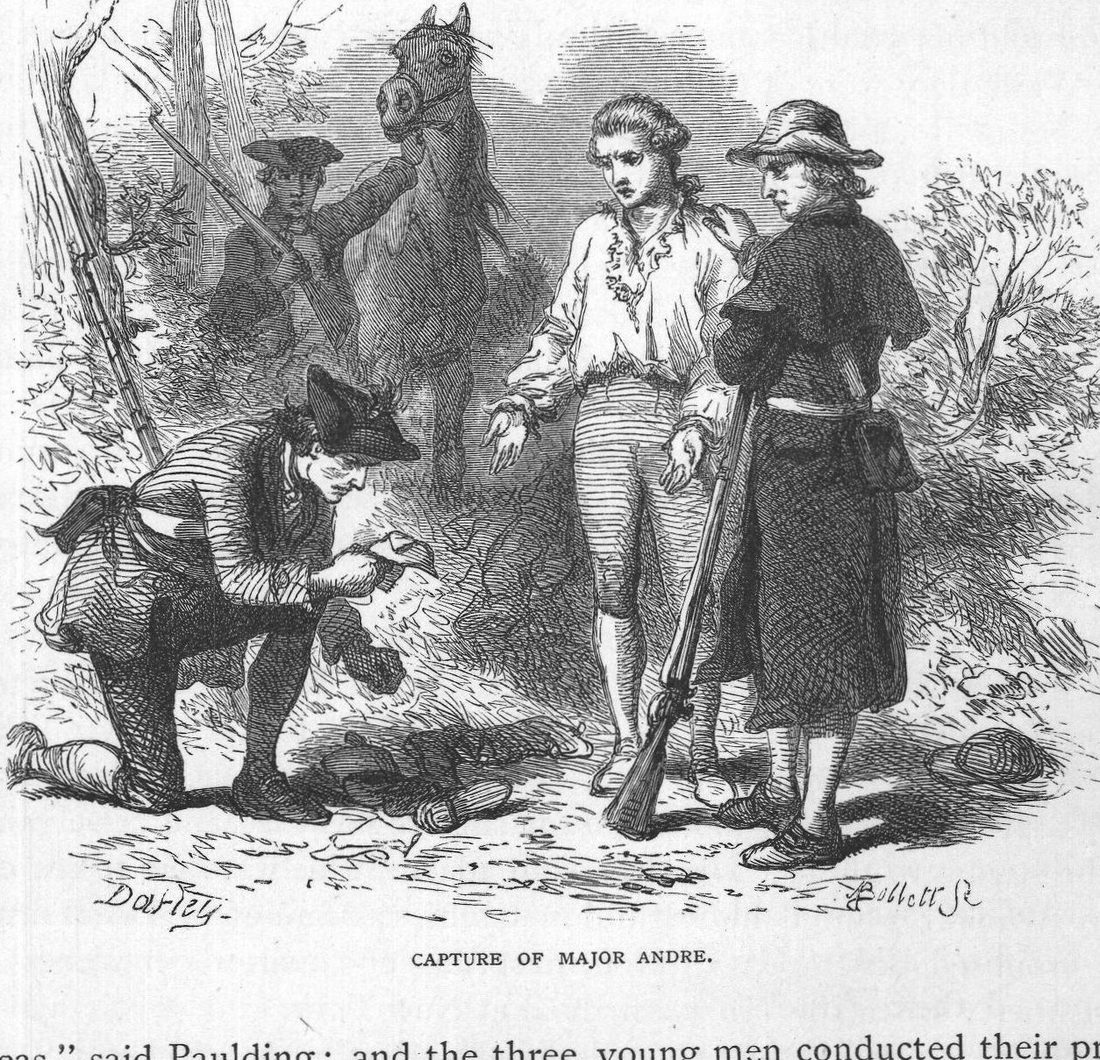
The captors of Andre--the three young militiamen--were rewarded by the Congress with a vote of thanks; and to each was awarded a commemorative medal of silver and two hundred dollars a year for life. At the burial place of each a marble monument has been erected; and another marks the spot where Andre was arrested.
The year 1780 now drew to a close, yet the patriots were far from being subdued. The British government had expended vast sums of money and many precious lives in endeavors to subjugate them, and had involved the nation in a war with France, as a consequence. Yet English pluck would not yield an iota to adverse circumstances. Great Britain seemed to acquire fresh vigor when any new obstacle presented itself. Seemingly unmindful of the fact that large French land and naval forces were on the shores of America, the British ministry, when satisfied that Holland would give national aid to the "rebellious colonies," caused a declaration of war to be made against that power by the king, and procured from Parliament immense appropriations of men and money, ships and stores, to sustain the power of the empire on land and sea. British cruisers had already depredated upon Dutch commerce in times of peace; and the British government treated the Netherlands more as a vassal than as an independent nation. So early as May (1780) the British minister at the Hague had been instructed to inform his government concerning the current voyages of Dutch merchantmen, "that the British cruisers might know where to go for the richest prizes."
To prevent Holland joining the Armed-Neutrality league, the ministry sought a decent pretext for making war on that republic. It was found in October (1780) when Henry Laurens, late president of the Congress, who had been authorized by that body a year before to negotiate a commercial treaty with Holland and for a loan of ten million dollars from that government, was captured on the high seas by a British cruiser. Among his papers (which he threw into the sea, but which were recovered) were found an unofficial copy of a treaty with the Netherlands, and evidence that such negotiations had been going on between Holland and the United States. Here was the coveted pretext. Laurens was confined as a state prisoner in the Tower of London under circumstances of great severity, and on the 20th of December, the king declared war against Holland. Before his declaration had been promulgated, and while efforts were a-making at the Hague to conciliate England and avoid war, British cruisers pounced upon and captured two hundred unsuspecting Dutch merchantmen, laden with cargoes valued at more than five million dollars; and orders had gone forth for the seizure of the Dutch island of St. Eustatius. It was a cruel and unjust war, and deepened the hatred of Continental Europe for Great Britain. That government was regarded as a bully ready to oppress and plunder the weak.