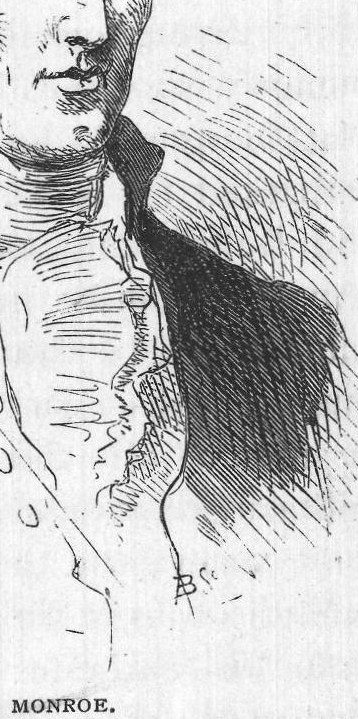
Beginning of Monroe's Administration
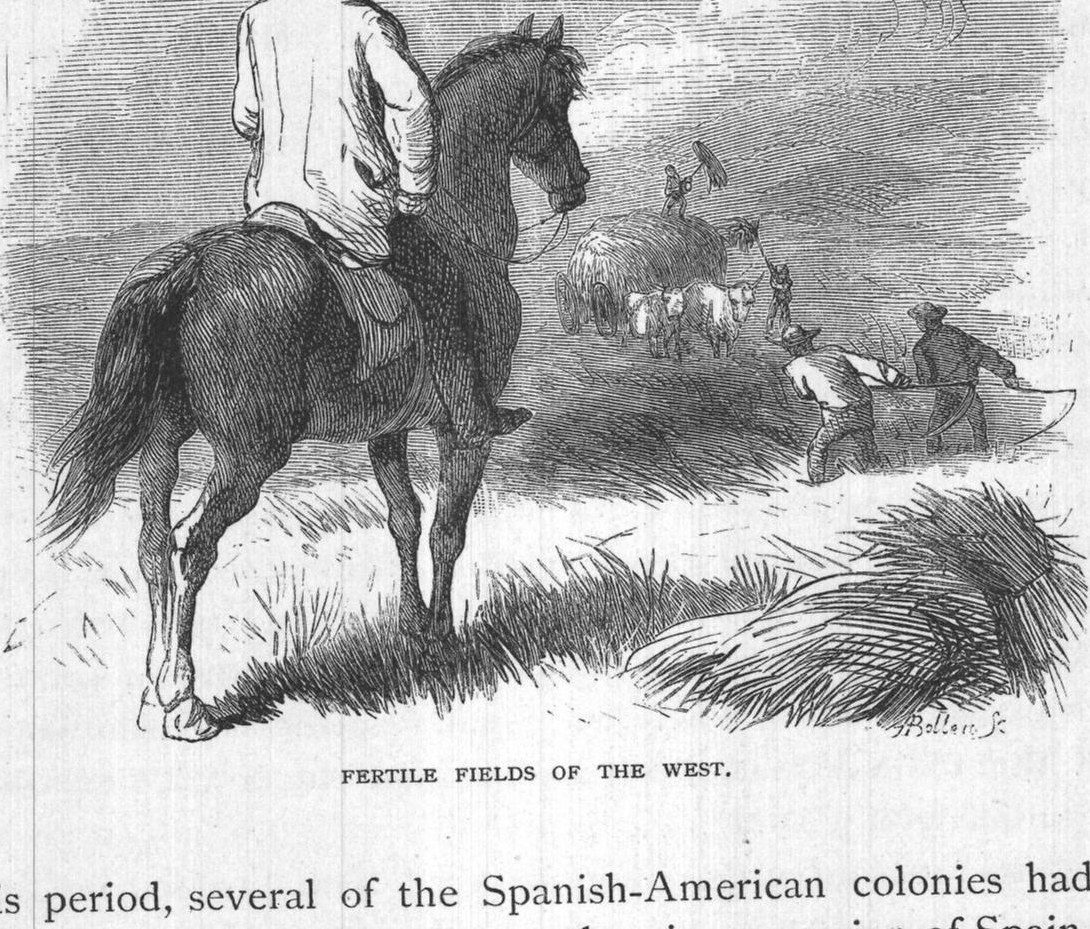
Mr. Monroe was conservative, judicious, and conciliatory; just such a man as was then needed in the place which he filled. It was a critical time in the history of the republic, for the country was in a transition state from that of war to one of peace. The demand for domestic manufactures and the high prices obtained for them during the war, had stimulated that particular industry, and many manufacturing establishments had been nurtured into vigorous life. When the war was ended and European manufactures came like a flood in quantity and at low prices, that industry was suddenly over-whelmed in disaster. Thousands of men and women were compelled to seek other employments, and many turned their eyes and their hopes to the millions of fertile acres beyond the Alleghany Mountains, where sure wealth, or at least a competence, awaited the tiller's industry and skill. Bankrupts sought and found relief in the pursuits of agriculture. Homes in the east were left by swarms of sturdy people. Emigration flowed over the mountains in a broad and continuous stream; and before the close of Monroe's administration, the Great West had begun its wonderful career. That administration was marked by an immense expansion in the material growth of the United States. Five independent States had been created and added to the Union, namely, Mississippi in 1817, Illinois in 1818, Alabama in 1819, Maine in 1820, and Missouri in 1821.
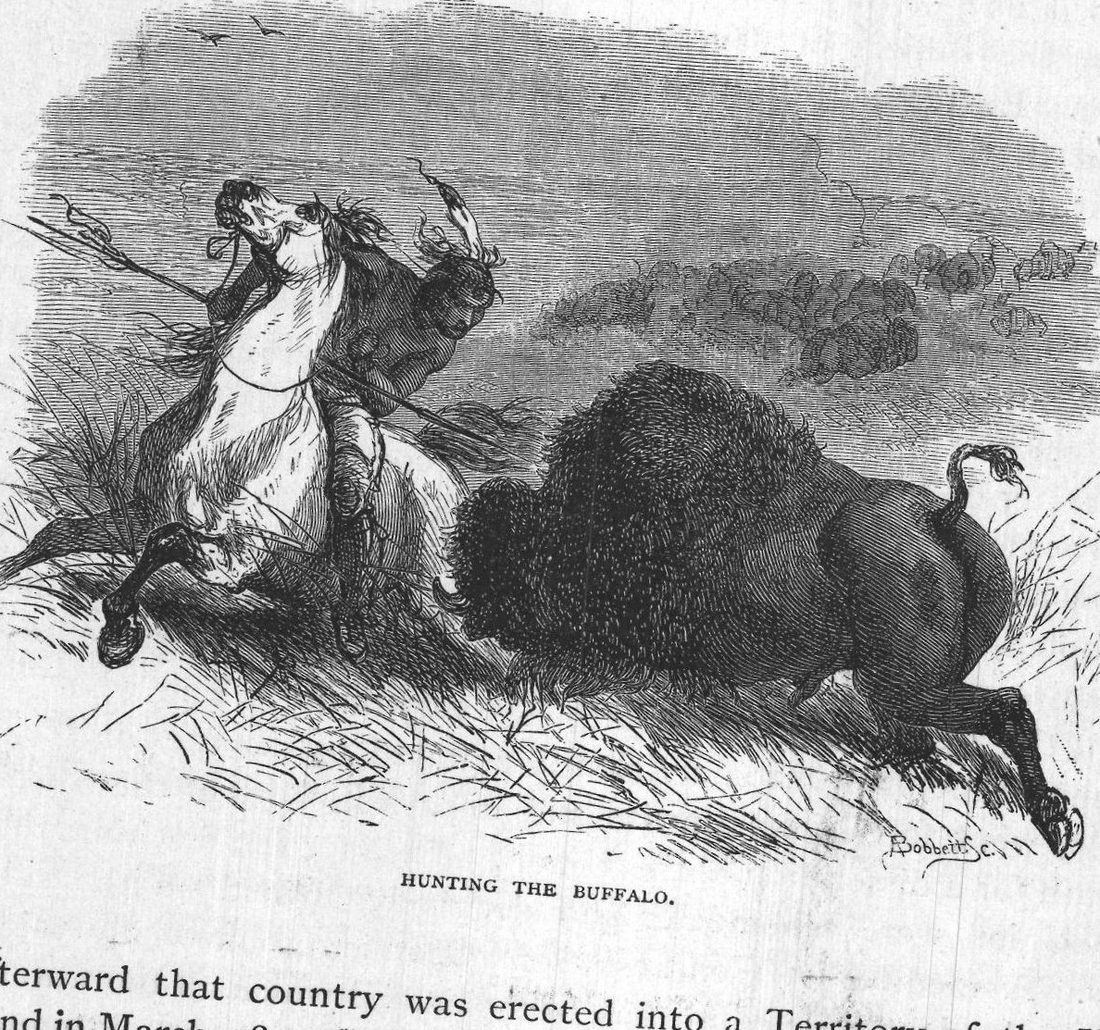
The growth of "The West" in wealth and population has been marvelous. The five great lakes are over fifteen hundred miles in aggregate length, and drain a region estimated to be nearly thirty-six thousand square miles in extent. The regions around these lakes (especially the more western ones), less than fifty years ago, were almost a wilderness. In 1830, there were less than five thousand white people in the vast region between Lake Michigan and the Pacific Ocean; now there are millions, and populous States and Territories exist where, within a generation, the buffalo and the Indian hunter were lords of the soil. On the borders of these lakes now cluster great commercial centres. Chicago is a model for illustration. It was first surveyed and a small village was marked out there in 1831. A small garrison depended for grain-food upon Mackinaw. Now Chicago is a city of over three hundred thousand inhabitants, and it is the greatest grain market in the world. Its commerce amounts to $450,000,000 annually.
Monroe determined to know more of the country and the people he was called upon to preside over, and sixty days after he was seated in the chair of state he left the capital for an extensive tour. He was clad in the undress uniform worn by officers of the Revolution-a blue coat of domestic manufacture, light waistcoat and breeches, high top-boots known as "Wellingtons," and a cocked-hat. He journeyed to far-eastern New England, and thence passed through the sparsely settled country to Vermont. He visited Plattsburg, and journeyed through the forests to the St. Lawrence, where he embarked for Lake Ontario. He halted at Sackett's Harbor, Fort Niagara and Buffalo, and then sailed over Lake Erie to Detroit. From that then remote region he journeyed through the woods of Michigan, Ohio, Pennsylvania and Maryland, and reached the capital after an absence of more than three months. In the journey the President became acquainted with leading men of all parties, and was cordially received everywhere with civic and military escorts and the profound respect of the people. The effect of that tour was every way beneficial. Partisan asperity was softened, and genuine patriotism filled the hearts of the people. There was then an almost perfect union of sentiment throughout the country; but the slave system soon awakened the most bitter sectional feeling that disturbed the repose of the people for about forty years.
Congress had passed laws, after the year 1808, prohibiting the African slave trade in our country; but after the war, the rapid increase in the cultivation of cotton made the demand for slave labor greater than the supply, and the African slave trade was reopened on the southern coasts in violation of law. There was also a brisk inter-state slave-trade act established, which continued until the breaking out of the late civil war. At that time (1860) the inhabitants of Virginia were receiving many millions of dollars from the sale of persons born on the soil of that State and sent to the cotton-growing States.
Before the Revolution the unpleasant situation of free colored people among the slaves on account of their social disabilities had attracted the attention of benevolent persons, and efforts had been made to form a settlement for them in Africa. Nothing of great importance was accomplished until about the beginning of Monroe's administration, when the American Colonization Society was formed for that purpose, and for sending to such settlements slaves who had been unlawfully brought to the United States. The society founded the Republic of Liberia on the western coast of Africa, which, since 1848, has been an independent state governed by its own people.