Banks: Missouri and Union
Now began the first earnest debate in Congress on the subject of the extension of the slave-labor system in our country. The first effort to check that extension was, as we have observed, in 1787, when the North-western Territory was organized. The subject was only briefly considered incidentally, from time to time, until 1819, when the inhabitants of the Missouri Territory asked for its admission into the Union as a State. A bill for that purpose was introduced into Congress which contained a provision forbidding the existence of slavery in the new State when admitted. This caused one of the most violent debates in the House of Representatives on the subject of slavery that had ever occurred in the national legislature. Extreme doctrines and foolish threats were uttered on both sides; and there was much adroit management by the party leaders, who used great dexterity in trying to avoid a compromise which had been agreed to at a previous session, when the subject was before the House. One party wished to have Missouri enter the Union as a slave-labor State, and the other party desired its admission as a free-labor State.
As compromise seemed to be the only door through which Missouri might enter the Union, at that time, Henry Clay, who then first assumed the character of a pacificator, moved a joint committee to consider whether or not it was expedient to admit Missouri into the Union, and if not, what provision adapted to her actual condition ought to be made. This motion was adopted, a committee was appointed, but the final result, which was a compromise, was not reached until early in 1821. During the session of 1820-21, the discussions were sometimes very angry. The whole country, in the meantime, had become violently agitated by disputes on the subject, and a cry went forth from unwise and unpatriotic lips at the North and in the South for a dissolution of the Union. Then for the first time the people of the Union were vehemently and decisively divided on the subject of slavery. A member of Congress from Georgia prophetically said in the course of the debate; "A fire has been kindled which all the waters of the ocean cannot put out, and which only seas of blood can extinguish." A compromise was effected by the adoption of a provision in the bill (February, 1821) for the admission of Missouri, that in all territory south of thirty-six degrees and thirty minutes north latitude (the southern boundary of the State of Missouri) slavery might exist, but was prohibited in the region north of that line. This agreement, known as the "Missouri Compromise" (by which that Territory was admitted as a free-labor State), was respected for more than thirty years, when, in 1854, it was violated in favor of the slaveholders. Maine was admitted in 1820.
By this compromise the "fire" was smothered, but not extinguished. It was kept alive by philanthropists and politicians in the North, who soon reproduced the anti-slavery societies which had existed at an early period in the history of the nation. So early as 1775, Dr. Franklin was president of an anti-slavery society, whose objects were approved by Washington and other leading patriots. The New York Manumission Society was established in 1785, with John Jay president; and similar societies were founded in other States, including Delaware, Maryland and Virginia, and these efforts resulted in the final abolition of slavery in all the States north of those just named. But the cotton-gin, invented by Eli Whitney in the closing decade of the last century, had made the cultivation of cotton so profitable, that there was a large increase in the demand for slave labor and a consequent enhancement in the value of slaves. This change in the commercial aspect of the cotton plant and slave labor caused the dying institution of slavery to revive and assume extraordinary vigor.
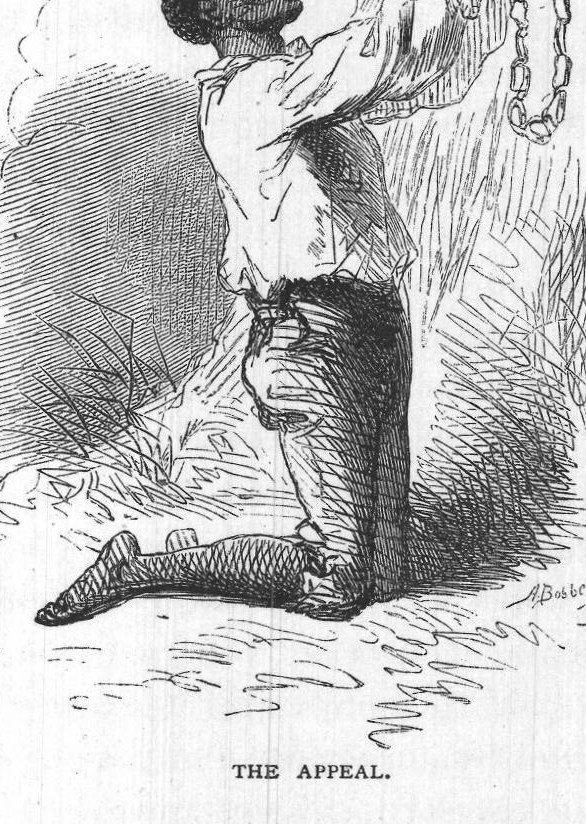
Opposition to it practically ceased at the South, while at the North, the slave-system being unprofitable, that opposition continued, though for many years in a state of repose. It was aroused to action by the debates on the Missouri question. That agitation was succeeded by repose for ten years, when William Lloyd Garrison began the publication of The Liberator (1831) in Boston, which advocated the emancipation of the slaves as the duty of every master and the right of every bondman, and denounced slave-holding as a "sin against God and a crime against humanity." Arnold Buffum, a member of the Society of Friends, and some others, formed an anti-slavery society in Boston in 1832; and in 1833 a similar society was formed in Philadelphia by Arthur Tappan and others. Violent agitations ensued. By lectures, tracts and newspapers, the antislavery doctrine was disseminated all over the land; and so perilous to the Union seemed these proceedings, that official efforts were made to prevent anti-slavery publications being carried in the mail-bags of the United States. This stimulated the Abolitionists to more vigorous action, and the friends and opponents of their causes threatened the dissolution of the Union. Churches were dismembered, and political parties were formed with the great question of slavery as the central point of action. The Liberal Party was formed in 1840, and in 1848 it was absorbed by the Free-Soil Party. This, in turn, was absorbed by the Republican Party formed in 1856, which still exists, and which carried on the contest against the institution of slavery until it was utterly extinguished at the close of the late civil war. Thus the prophecy of the Georgian was fulfilled--the "fire" was extinguished by "seas of blood."