Home › Lieut. Allen Fires a Shot › Lieut. Allen Fires a Shot: Rodgers
Lieut. Allen Fires a Shot: Rodgers
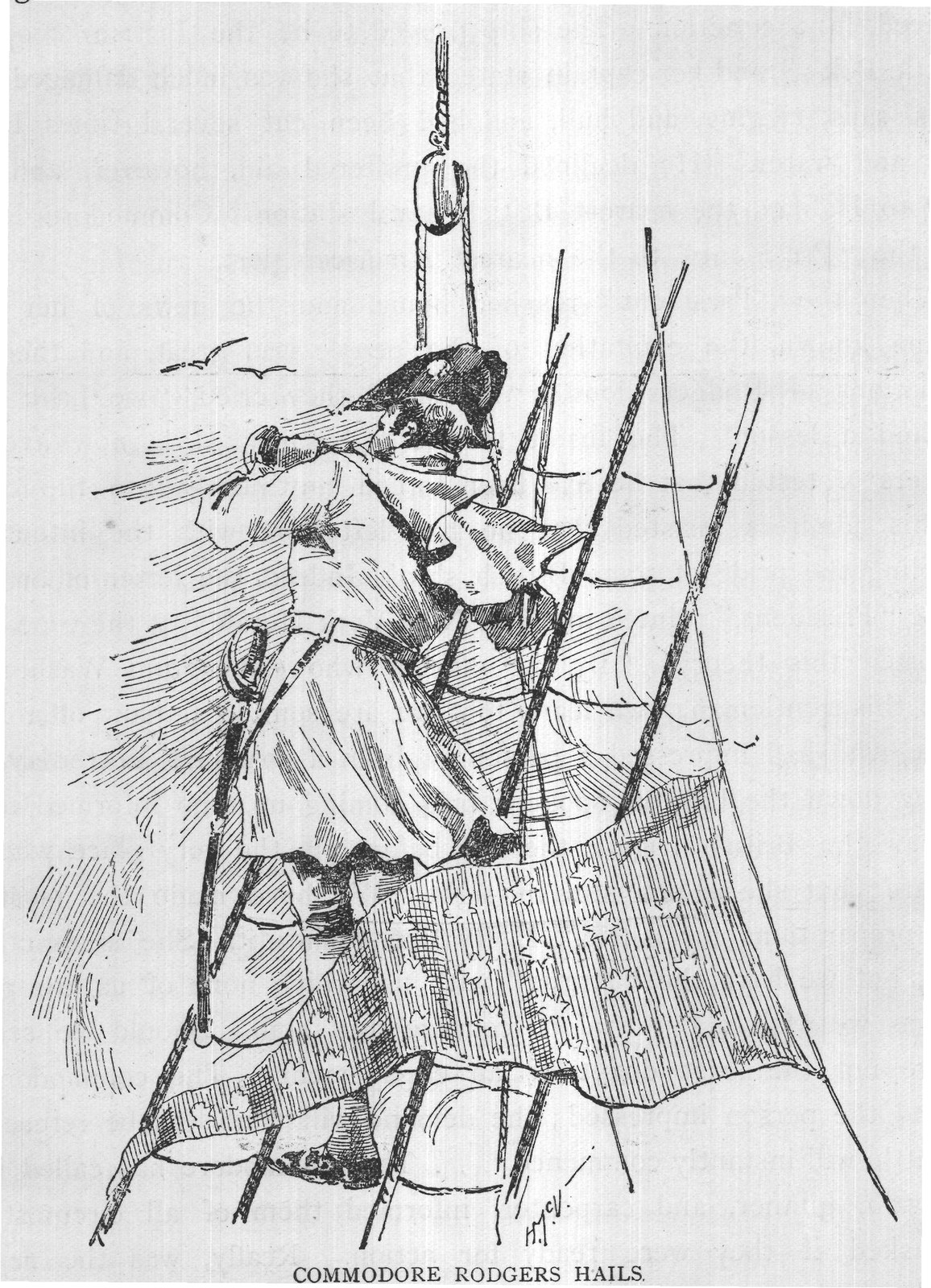
As the stranger came up, the "President" set her broad pennant and ensign; on seeing which the stranger hoisted several signal flags, the significance of which was not understood by the Americans. Finding her signals unanswered, the stranger wore ship, and bore away to the southward, hotly followed by the "President." During all these manœuvres, Rodgers's suspicion of the strange vessel had increased; and her apparent flight only convinced him the more of the hostile character of the stranger. It was a stern chase and a long one, for at the outset the stranger was hull down on the horizon. After an hour it became evident that the "President" was gaining, for the hull of the fugitive was plainly seen. The breeze then died away, so that night had fallen over the waters before the ships were within hailing distance. A little after eight in the evening the "President" was within a hundred yards of the chase, which could be seen, a dark mass with bright lights shining through the rows of open ports, rushing through the water directly ahead. Rodgers sprang upon the taffrail, and put. ting a speaking-trumpet to his lips, shouted, "What ship is that?" A dead silence followed. Those on the "President" listened intently for the answer; but no sound was heard save the sigh of the wind through the cordage, the creaking of the spars, and the rush of the water alongside. Rodgers hailed again; and, before the sound of his words had died away, a quick flash of fire leaped from the stern-ports of the chase, and a shot whizzed through the rigging of the "President," doing some slight damage. Rodgers sprang to the deck to order a shot in return; but, before he could do so, a too eager gunner pulled the lanyard of his piece in the second division of the "President's" battery. The enemy promptly answered with three guns, and then let fly a whole broadside, with discharges of musketry from the deck and the tops. This exhausted Rodgers's patience. "Equally determined," said he afterwards, "not to be the aggressor, or to suffer the flag of my country to be insulted with impunity, I gave a general order to fire." This time there was no defect in the ordnance or the gunnery of the American ship. The thunderous broadsides rang out at regular intervals, and the aim of the gunners was deliberate and deadly. It was too dark to see what effect the fire was having on the enemy, but in five minutes her responses began to come slowly and feebly. Unwilling to continue his attack on a ship evidently much his inferior in size and armament, Rodgers ordered the gunners to cease firing; but this had hardly been done when the stranger opened again. A second time the guns of the "President" were run out, and again they began their cannonade. The stranger was soon silenced again; and Commodore Rodgers hailed, that he might learn the name of his adversary. In answer came a voice from the other vessel, - "We are his Majesty's ship." A gust of wind carried away the name, and Rodgers was still in doubt as to whom he had been fighting. Hoisting a number of bright lights in her rigging, that the stranger might JA