Home › Woodrow Wilson › Woodrow Wilson
Woodrow Wilson
THE explanation of President Wilson will be found in a certain inferiority. When all his personal history becomes known, when his papers and letters have all been published and read, when the memoirs of others have told all that there is to be told, there will stand clear something inadequate, a lack of robustness, mental or nervous, an excessive sensitiveness, over self-consciousness, shrinking from life, a neurotic something that in the end brought on defeat and the final overthrow. He was never quite a normal man with the average man's capacity to endure and enjoy but a strange, impeded, self-absorbed personality.
History arranged the greatest stage of all time, and on it placed a lot of little figures, "pigmy minds"--all save one, and he the nearest great, an unworldly person summoned from a cloister, with the vision of genius and the practical incapacity of one who has run away from life, hating men but loving all mankind, eloquent but inarticulate in a large way, incapable of true self expression in his chosen field of political action, so self-centered that he forgot the world's tragedy and merged it into his own, making great things little and little things great, one of "life's ironies," the everlasting refutation of the optimistic notion that when there is a crisis fate produces a man big enough to meet it.
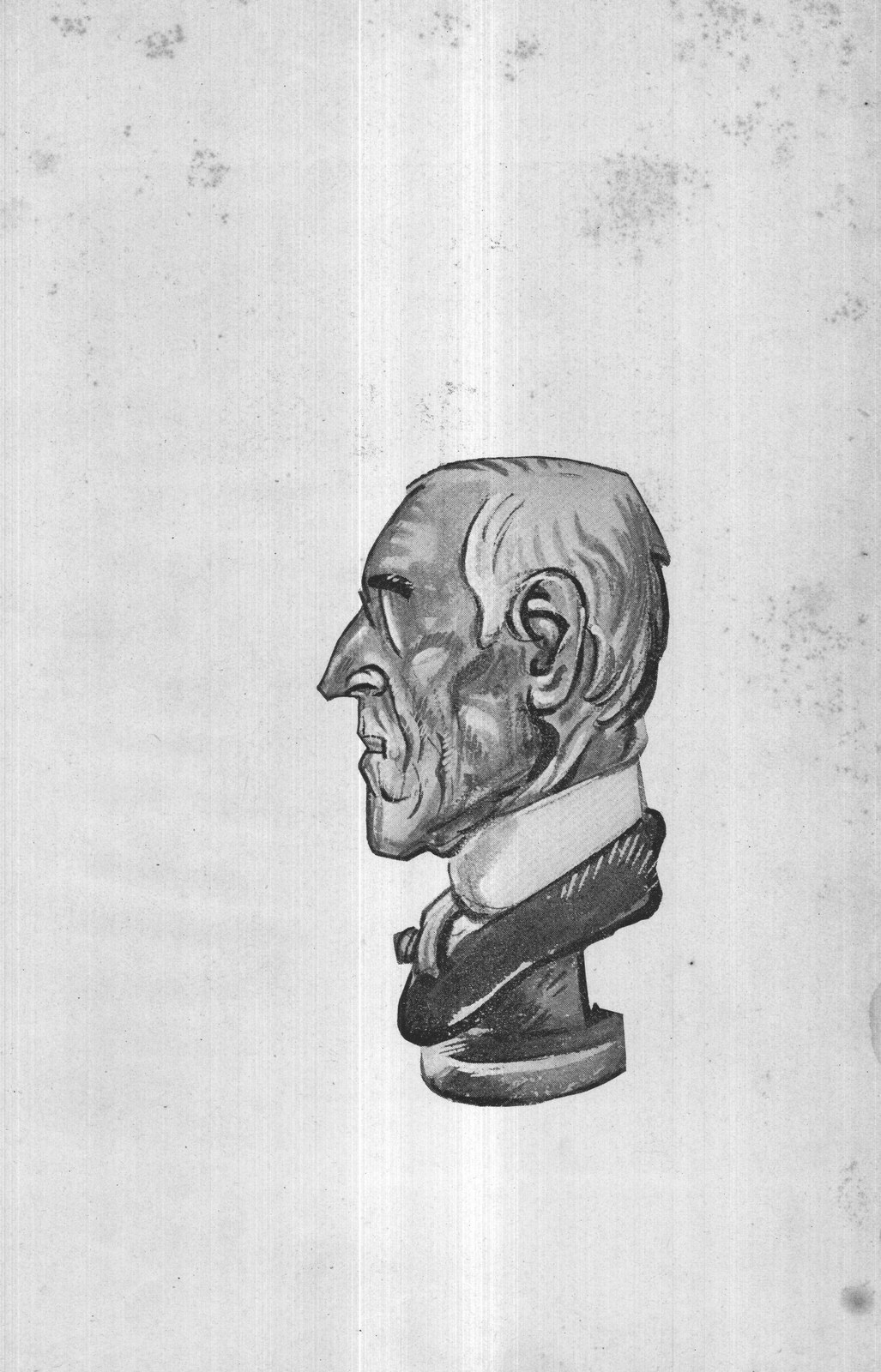
The world finds it hard to speak of Mr. Wilson except in superlatives. A British journalist called him the other day, "the wickedest man in the world." This was something new in extravagance. I asked, "Why the wickedest?" He said, "Because he was so unable to forget himself that he brought the peace of the world down in a common smash with his own personal fortunes." On the other hand General Jan Christian Smuts, writing with that perspective which distance gives, pronounces it to be not Wilson's fault but the fault of humanity that the vision of universal peace failed. Civilization was not advanced enough to make peace without vindictiveness possible. This debate goes on and on. Mr. Wilson is either the worst hated or the most regretted personality of the Great War. The place of no one else is worth disputing. Lloyd George is the consummate politician, limited by the meanness of his art. Clemenceau is the personification of nationality, limited by the narrowness of his view. Mr. Wilson alone had his hour of superlative greatness when the whole earth listened to him and followed him; an hour which ended with him only dimly aware of his vision and furiously conscious of pin pricks. You observe this inadequacy in Mr. Wilson, this incapacity to endure, at the outset of his career. It is characteristic of certain temperaments that when they first face life they should run away from it as Mr. Wilson did when, having studied law and having been admitted to the bar, he abandoned practice and went to teach in a girls' school. That was the early sign in him of that sense of unfitness for the more arduous contacts of life which was so conspicuous a trait during his presidency. He could not endure meeting men on an equal footing, where there was a conflict of wills, a rough clash of minds, where no concession was made to sensitiveness and egotism. Some nervous insufficiency causes this shrinking, like the quick retreat from cold water of an inadequate body. Commonly a man who runs away from life after the first contact with it hates himself for his flight and there begins a conflict inside him which ends either in his admission of defeat and acknowledgement of his unfitness or in his convincing himself that his real motive was contempt of that on which he turned his back. If he admits to himself that he is really a little less courageous, a little more sensitive, a little less at home in this world, then he is gone. If he does satisfy himself that he is superior, has higher ideals, worthier ends, despises the ordinary arts of success he becomes arrogant, merely in self defense. Mr. Wilson's "intellectual snobbism" was this kind of arrogance, acquired for moral self preservation, like that of the small boy who when his companions refuse to play with him says to himself that he is smarter than they are, gets higher marks in school, that he has a better gun than they have or that he, when he grows up, will be a great general while they are nobody. Almost everyone who feels himself unequal in some direction can satisfy himself that he exceeds in others. It is a common and human sort of arrogance, and Mr. Wilson had it inordinately.
He hated and contemned the law, in which life had given him his first glimpse of his frailty. He would have no lawyers make the peace or draft the covenant of the league of nations. Lawyers were pitiful creatures,--he kept one of them near him, Mr. Lansing, admirably chosen, to remind him of how contemptible they were, living in fear of precedents, writing a barbarous jargon out of deeds and covenants, impeding the freedom of the imagination with their endless citations.