Home › Charles Evans Hughes › Charles Evans Hughes: Brandegee
Charles Evans Hughes: Brandegee
When the news of this appointment reached the Capitol, Senator Brandegee, of Connecticut, hurried down to that structure across the street from the White House whose architectural style so markedly resembles the literary style of President Harding, the State War and Navy Building, official residence of Mr. Hughes.
Harvey being, in a sort, Brandegee's ambassador to the Court of Saint James, the Senator's object was to tell Mr. Hughes what Harvey should do in the Supreme Council. Mr. Brandegee has the gift of direct and forceful speech. In his earnestness, he dispenses with the elegancies and amenities. The upper ranges of his voice are not conciliatory.
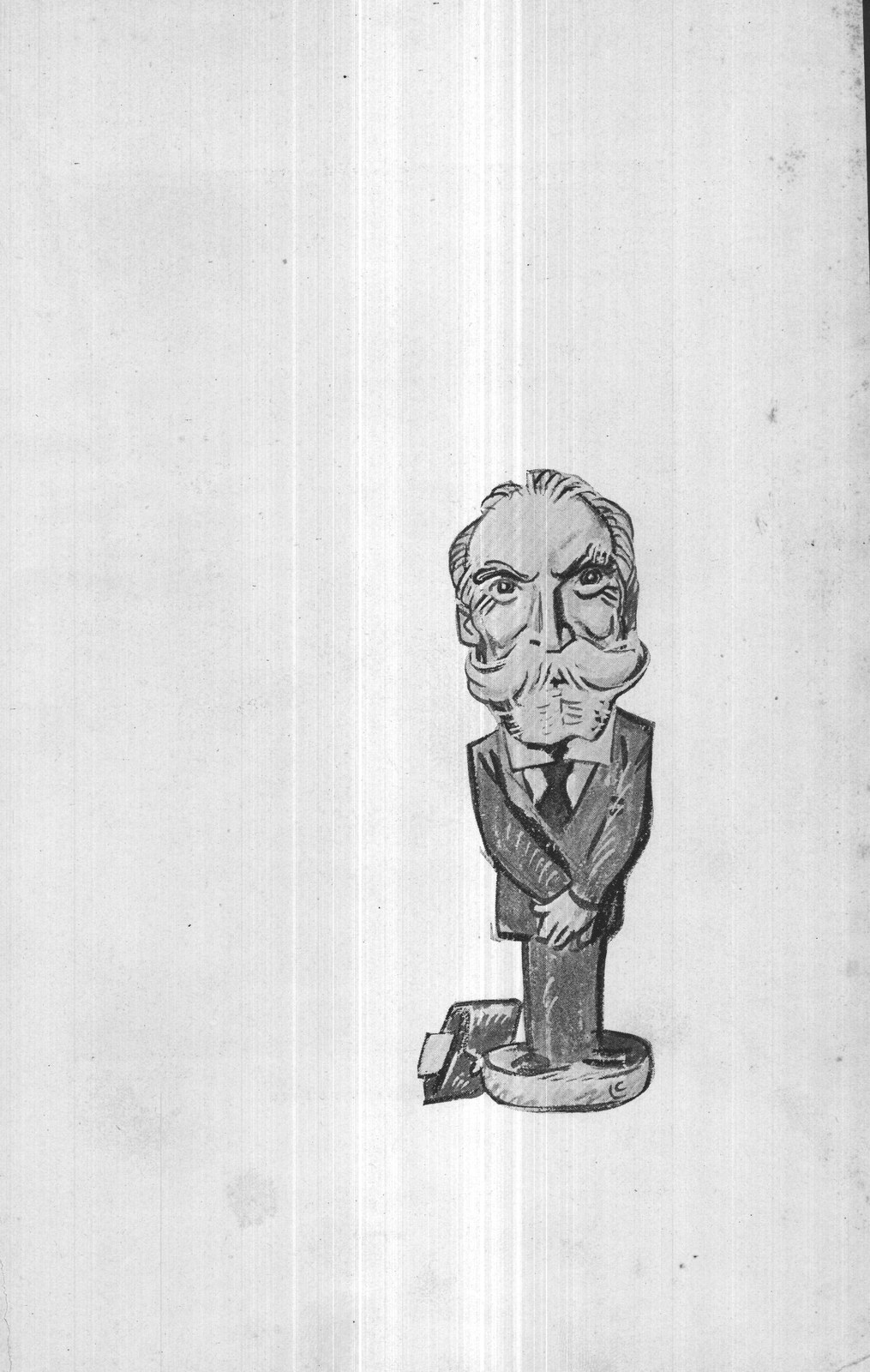
In this tone, he developed views regarding this country's foreign relations with which Mr. Hughes could not agree. The Secretary of State combatted the Senator from Connecticut precisely as he combats counsel of the other side when a $500,000 fee is at stake. The discussion was energetic and divergent. Mr. Brandegee hurried back to the Capitol and summoned other senators to his office, all those who were especially concerned about the exposure of Colonel Harvey to European entanglements.
He was excited. His voice was nasal. His language, in that select gathering, did not have to be parliamentary. He told the senators that they could expect the Versailles treaty by the next White House messenger; that "that whiskered,but nothing lies like direct quotes,--that "that whiskered" Secretary of State would soon get us into the League of Nations, being able for his purposes to wind President Harding about his little finger! His excitement in such an emergency naturally communicated itself to his hearers. What to do? It was unanimously decided that the only adequate course was for Senator Henry Cabot Lodge to resign as Chairman of the Senate Foreign Relations Committee, by way of protest.
Henry Cabot Lodge running away from his chairmanship would be Henry Cabot Lodge behaving as romantically as Horace's wolf. The good are terrible, as Anatole France said in the words with which this sketch begins. It is not so much that you can not resist them, as that they lead you to make such fools of yourselves.
Mr. Hughes prevails, however, not merely by his virtue, but by his intelligence. His is the best mind in Washington; to this everyone agrees, and it is not excessive praise, for minds are not common in the Government. Mr. Harding has not a remarkable one, the people having decided by seven million majority that it was best not to have one in the White House, choosing instead, a good heart, excellent intentions, and reasonable common sense. Mr. Hoover has a fine business instinct, great but diffused mental energy, but hardly an organized mind. From this point the Cabinet grades down to the Secretary of Labor, who, when Samuel Gompers, Jr., his Chief Clerk, addressed him before visitors as, "Mr. Secretary," said, "Please don't call me, 'Mr. Secretary,' Sam. Call me, 'Jim.' I'm more used to it." "Call me Jim" is the mental sea level of the Administration, by which altitudes are measured, so let us not exalt Mr. Hughes' mind unduly, but merely indicate what its habits are. Its operations were described to me by a member of the Cabinet, who said that no matter what subject was up for discussion at a Cabinet meeting, it was always the Secretary of State who said the final convincing word about it, summing it all up, saying what everyone else had been trying to say but no one else had entirely succeeded in saying, simplifying it, and all with an air of service, not of self-assertion. Mr. Harding, speaking to an intimate friend, said he had "two strong advisers,--Hughes and Hoover."
It is a satisfaction, even though it is not a delight, to come in contact with a mind like Mr. Hughes'; it is so definite, so hard and firm and palpable. You feel sure that it rests somewhere on the eternal verities. It is never agnostic. It has none of the malaise of the twentieth century. Mr. Justice Brandeis, when Mr. Hughes was governor of New York and a reformer and progressive, said of him, "His is the most enlightened mind of the eighteenth century."
I think the Justice put it a century or two too late, for by the eighteenth century skepticism had begun to undermine those firm foundations of belief which Mr. Hughes still possesses. For him a straight line is the shortest distance between two points,--Einstein to the contrary, notwithstanding. Conclusions rest upon the absolute rock of principle, as morality for his preacher father rested upon the absolute rock of the Ten Commandments. There is no doubt, no uncertainty, no nuance, no on the one hand, on the other, no discursiveness, no yielding to the seductions of fancy, but a stern keeping of the faith of the syllogism; a thing is so or it is not so. Mr. Hughes never hesitates. He never says, "I must think about that." He has thought about it. Or he turns instantly to his Principle and has the answer. You speak of Mr. Hughes to ten men in the Capitol, and nine of them will say to you, "Of course it is easy to understand; his is the one real mind in Washington."
Everyone is impressed, for, starting with no other initiation into the mysteries of foreign relations than having had a father born in Wales and having spent his vacations in England, probably in the lake region studying the topography of Wordsworth's poetry,--a certain oft detected resemblance to Wilson must make Wordsworth his favorite poet, as he was Wilson's,--in ten days was he not a great Secretary of State; and in three months the greatest Secretary of State? To be sure, back of him was the strongest nation on the earth, left so by the war, the one nation with resources, the creditor of all the others, to which a successful foreign policy would be naturally easy if it could only decide what that policy should be.
It was left to Mr. Hughes to say what it should be. His discovery of the word "interests," amazed Washington; it was so obvious, so simple that no one else had thought of it. Mr. Hughes' mind works like that;--hard, cold, unemotional, not to be turned aside, it simplifies everything, whether it be a treaty fight that has confused everyone else in the land, or a rambling Cabinet discussion; whether it be the mess in which the war left Europe, or the chaos in which watchful waiting left Mexico. His is a mind that delights in formulae. He has one for Europe. He has one for Mexico. It is an analytical, not a synthetical mind, a lawyer's mind, not a creator's, like Wilson's, with, perhaps it may turn out, a fatal habit of oversimplification. Life is not a simple thing after all.