Home › Boies Penrose › Boies Penrose
Boies Penrose
THE most striking victim of the American propensity for exaggeration is the senior Senator from Pennsylvania, Boies Penrose. He has a personality and contour that lend themselves to caricature. Only a few deft strokes are needed to make his ponderous figure and heavy jowl the counterpart of a typical boss, an institution for which the American people have a pardonable affection in these days of political quackery. For, when the worst is said of the imposing array of bosses from Tweed down to the present time, they could be forgiven much because they were what they were. That is why, perhaps, the altogether fanciful picture of Penrose, propped on his pillows with his telephone at his bedside directing the embattled delegates at Chicago, who in sheer desperation turned to Warren G. Harding, is dwelt upon fondly by a deluded public. Penrose does not despise the appurtenances of bossism. If the truth were told he probably likes the idea of being represented as the hard-fisted master of party destinies. He knows that such a reputation inspires awe if not respect, on the part of the rank and file, from the humble precinct worker to the gentleman of large affairs who provides the necessary campaign funds. It has its value, sentimental as well as practical, for the American people likes to set up its own political idols. The politicians who for the moment guide the destinies of the nation are so misdrawn, so illuminated with virtues and endowed with vices quite foreign to them, that they frequently achieve a personality quite fictitious, but which, none the less, passes current in the popular mind as genuine.
Nothing could be more grotesque, for example, than the picture of Senator Smoot, who is merely a sublimated messenger boy, as one of the arbiters of the Republican policies; or of Senator Lodge, by sheer strength of leadership, restraining the discordant Republican elements in the Senate from kicking over the traces. This is journalist "copy" written for a popular imagination which finds the truth too tepid.
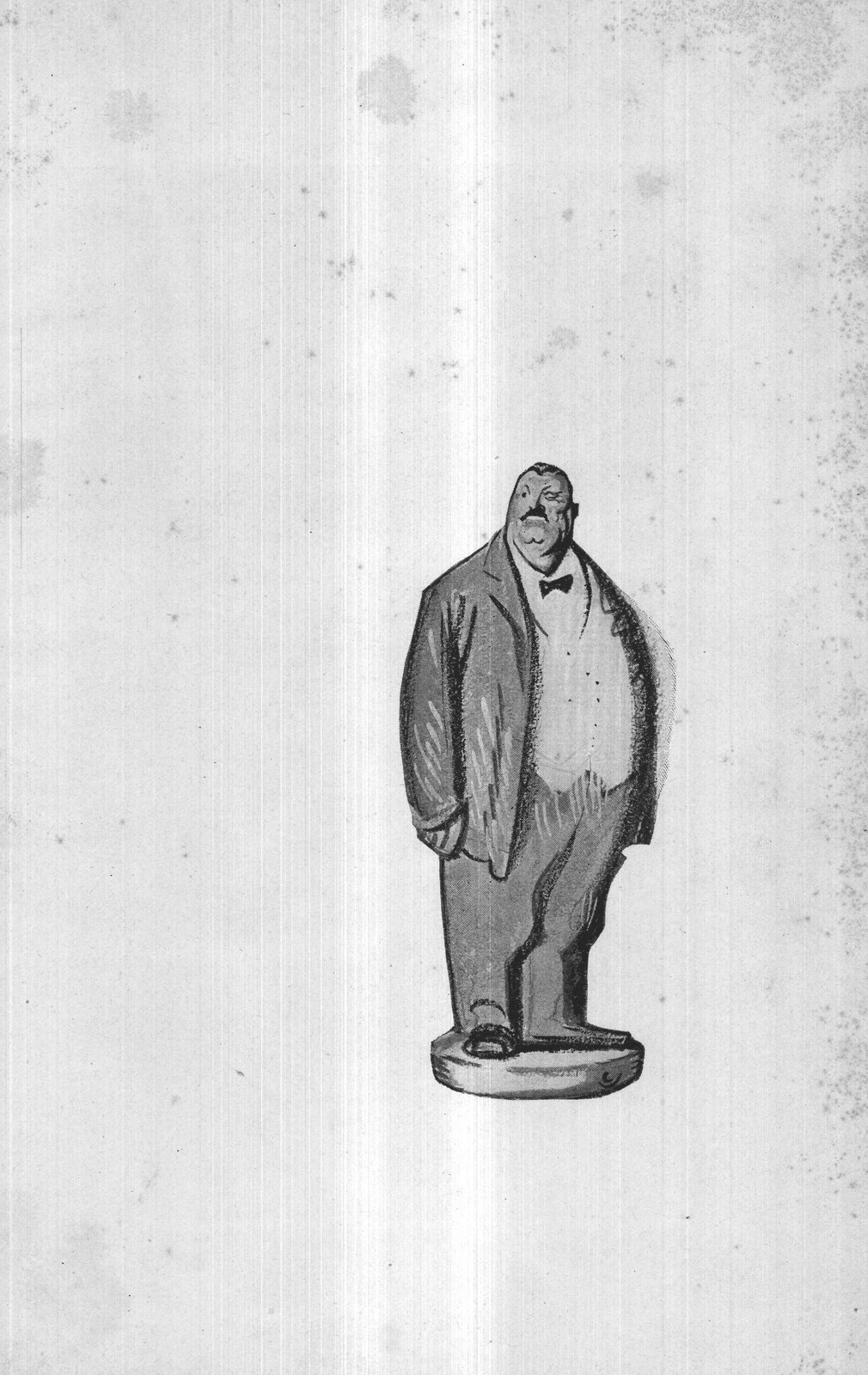
Boies Penrose serves the purpose of appeasing national appetite for what the magazine editors call "dynamic stuff."
But the real Boies Penrose is not all as he is pictured. At a cursory glance he might appear to be a physiological, psychological, and political anachronism. At least he is sufficiently different from his colleagues to be, if not actually mysterious, not easily understandable. There is something fundamental about him. He inspires a certain awe which may not be magnetic but has the same effect upon those who surround him; where he sits is the head of the table.
I doubt if Lodge or Knox or Hughes could ever fathom the secret of his power; they are not cast in the same mould. His colleagues smile at his idiosyncracies--behind his back--but they approach him with the respect due to a master. Many of them admire him, not a few hate him, but all of them fear him. It is rather a singular thing that Senator La Follette, himself at the pinnacle of his championship of the Wisconsin progressive idea, was probably on friendlier terms with the senior Senator from Pennsylvania than any of the other leaders of those reactionary forces with whom he was tilting. He knew where Penrose stood and it is not at all improbable that behind the Penrose reticence there was a modicum of admiration for the methods of the redoubtable little colleague, who in his way, was a more inexorable boss than Penrose himself ever dreamed of being. The mutual understanding was there, even if it never became articulate.
Penrose has peculiarities which put him in a niche quite his own. He eschews conversation as an idle affectation. He dislikes to shake hands, preferring the Chinese fashion of holding his on his own expansive paunch. When he finds it necessary to talk at all he speaks the precise truth as he sees it without consideration for the feelings of those he happens to be addressing. The results are frequently so ludicrous, particularly when he enters a colloquy on the Senate floor, that he is given credit for a much more pronounced sense of humor than he actually possesses. I doubt that he is always conscious of the element of humor and I suspect that if he realized that his observations were to evoke laughter he would deliberately choose a less satirical or flippant method of expression.