Home › Bernard M. Baruch › Bernard M. Baruch: Street--of
Bernard M. Baruch: Street--of
After twenty-five years in the jungle of Wall Street, there is--contradictions multiply in his case--much of the child about Mr. Baruch, simple, trustful--outside of Wall Street,--incapable of concealment,--outside of Wall Street--of that which art has taught the rest of us to conceal. His humility makes him wonder; his naivete makes him talk quite frankly, unrestrained by the conventions that balk others. After all, is not wondering at yourself a sign of humility? A vain man, become great by luck, by force of circumstances, by the possession of gifts which he does not himself fully understand, would still take himself for granted. He would not be a romance to himself, but a solid, unassailable fact.
For Baruch the great romance is Baruch, the astonishing plaything of fate, who started life as a three-dollar-a-week broker's clerk; made millions, lost millions, made millions again, lost millions again; finally, still young, quit Wall Street with a fortune that left the game of the market dull and commonplace, seeking a new occupation for his energies; became during the war next to the President, the most powerful man in Washington; emerged from the war, which wrecked most reputations, with a large measure of credit, prepared by the amazing past for an equally amazing future. A career like that makes it impossible for the man who knows it best not to expect anything. Why not the "Disraeli of America?"--a phrase he once, rather confidentially, employed concerning his anticipated future.
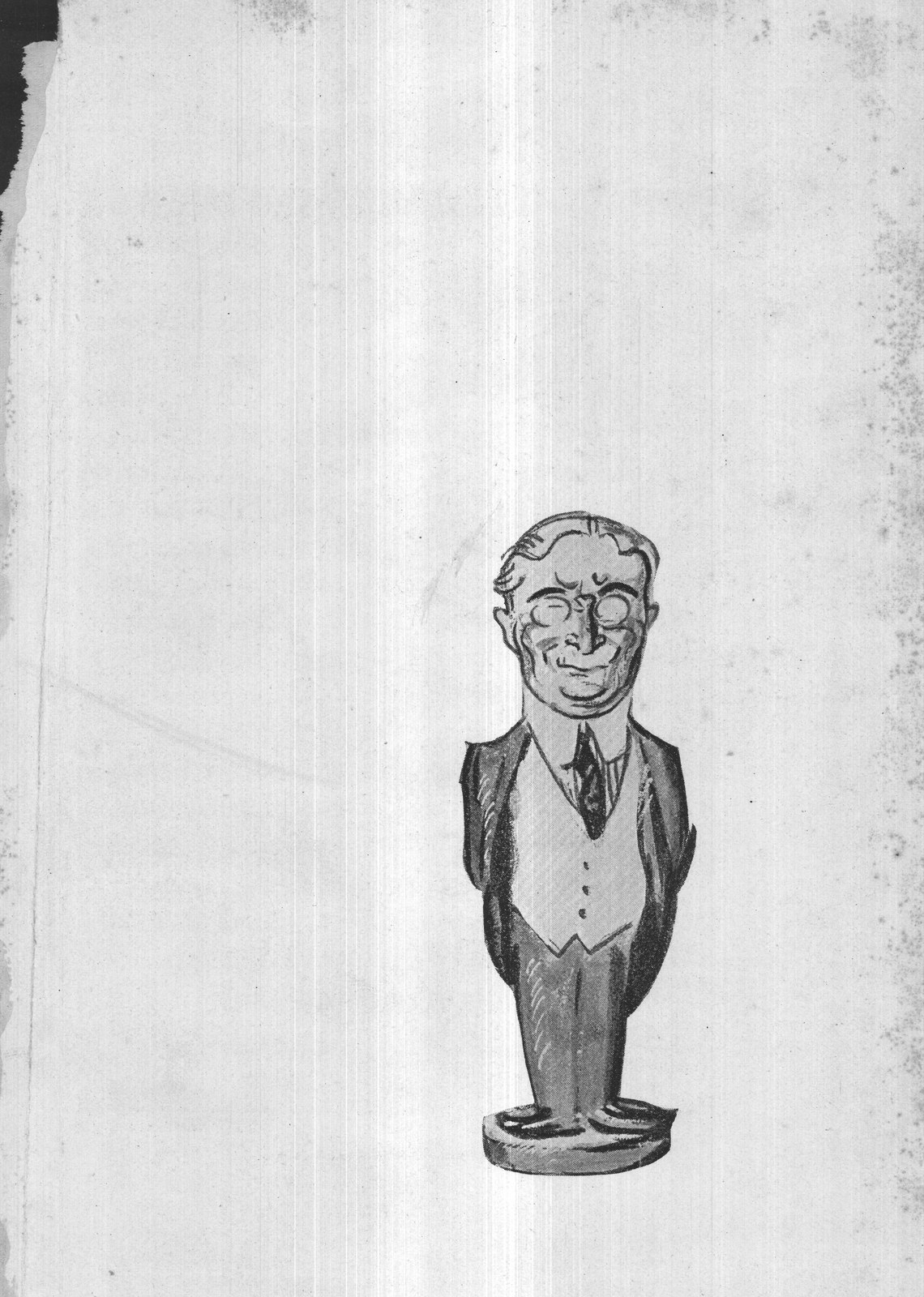
Did you ever see a portrait bust smiling, not softly with the eyes or with a slight relaxation of the mouth, but firmly, definitely, lastingly smiling, with some inward source of satisfaction? Look at Jo Davidson's bust of Baruch, among the famous men at the Peace Conference.
I once saw the various sketches in clay that went to the making of that portrait--the subject was proving elusive to the sculptor. There were two obvious traits to be represented; the unusual knot in the brow between the eyes and the smile, without which it was evident that you had not Baruch. The extraordinary concentration in the forehead was easy enough to transfer to clay; but the smile kept defying the artist. When a smile was traced in the clay it softened the face out of character, destroyed that intensity which the central massing of the brow denoted; and when the smile was deleted the face lost all its brilliance, became merely intense, concentrated, racial, acquisitive perhaps, clearly not Mr. Baruch's face. Ultimately the sculptor succeeded in wedding a smile to that brow, and the bust went on exhibition with those of Wilson, Foch, House, Clemenceau, and the others; but the union was never more than a compromise, a marriage of convenience for the artist. That smile is as inevitable a part of Baruch as his engaging naivete in talking about himself. It is always there, brilliant, unrelated to circumstances. It does not spring from a sense of humor,--Mr. Baruch, like the rest of the successful, has not a marked sense of humor; a sense of the irony of fate he has, perhaps, but not more. It does not denote gaiety, nor sympathy, nor satire; it is not kind nor yet unkind; it does not relax the features, which remain tense as ever even when smiling; it suggests satisfaction, self-confidence, and a secret inner source of contentment. It is with Mr. Baruch when he is tired, or ought to be tired; the romance of Baruch is an internal spring of refreshment. It does not leave him when he is angry, if he is ever angry; the romance of Baruch diverts him. Though always there, it is not a fixed smile, a mask, something worn for the undoing of Wall Street; it is a real smile. Somewhere subconsciously there abides the picture of the poor clerk become amazingly rich, of power in Washington, of a beckoning future with possibilities as extraordinary as the wonders of the past. Life is not logical, dull, commonplace, a tissue of cause and effect; it proceeds delightfully by daily miracles. The American Disraeli is no further away to-day than was the Baruch of to-day from the Baruch of yesterday. Enough to account for a smile in marble, bronze, or in whatever metal the human face is made of.